 Follow Us on Google News
 Follow Us on Google Discover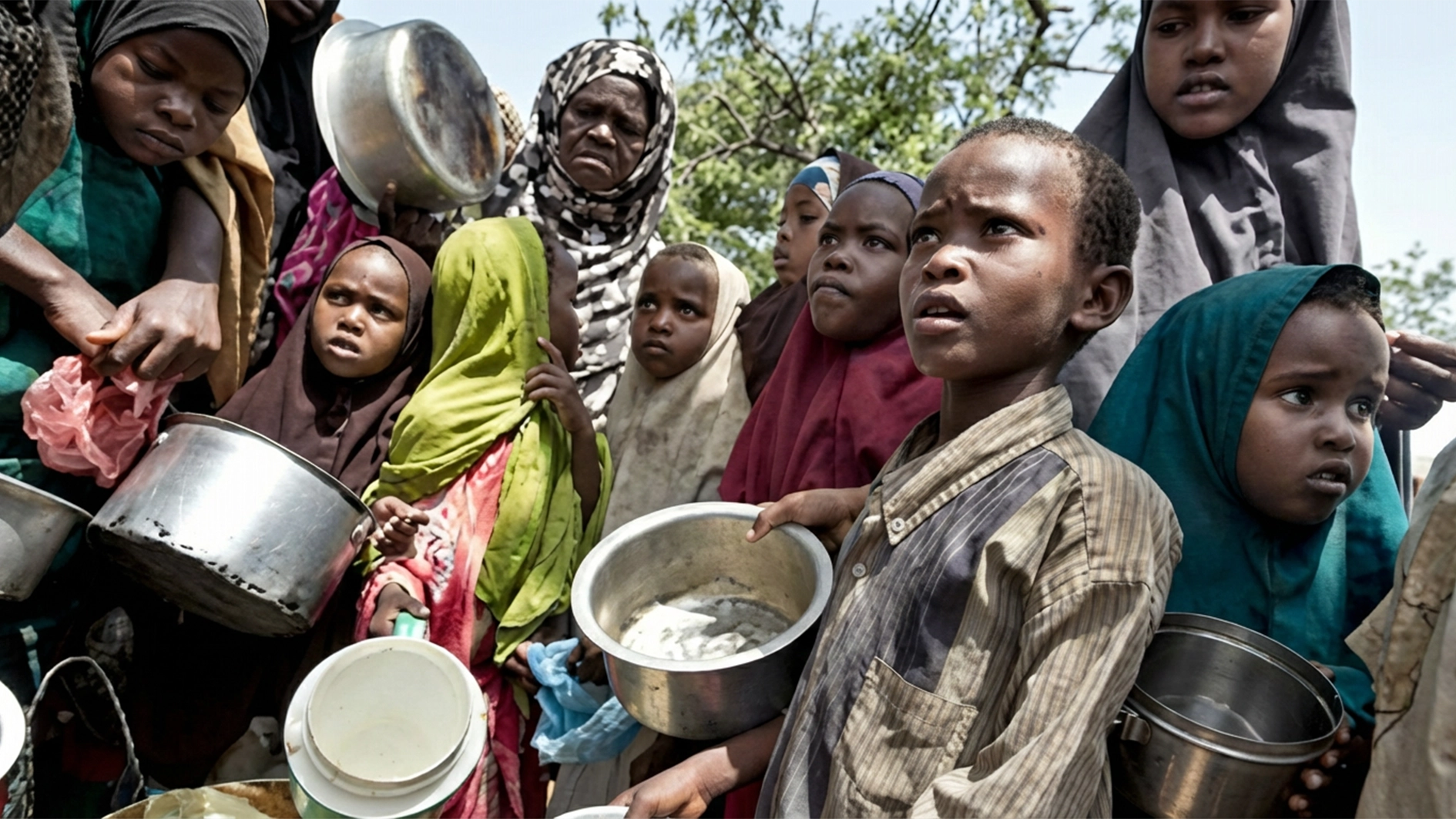
Around 55 million people in violence-wracked west and central Africa face acute food insecurity this year and some are on the verge of famine in northern Nigeria, the United Nations said Friday.
Violence across the region has triggered a hunger crisis that is being exacerbated by aid cuts, the UN’s World Food Programme said.
WFP said it had had to slash its food assistance in the area as funding dries up.
In west and central Africa, “a staggering 55 million people will be facing acute food insecurity in the upcoming lean season between June and August 2026”, Jean-Martin Bauer, WFP’s food security and nutrition analysis director, told reporters in Geneva.
Those people are in the crisis, emergency and catastrophe phases of hunger — the three worst of five levels used to assess food insecurity.
The number of people in emergency conditions has doubled since 2020, to three million, he said.
And 15,000 people in certain areas of Borno state in northeastern Nigeria are in the catastrophe phase — the first time this level has been reached in a decade.
“This is a group that’s one step away from famine,” Bauer said, speaking from WFP’s headquarters in Rome.
“That does mean that people are dying… people are starving.”

Borno state is the epicentre of a jihadist insurgency that began in 2009.
The conflict has killed more than 40,000 people and displaced around two million others in the northeast and spilled into neighbouring countries.
– ‘Humanitarian vacuum’ –
Bauer said the last rainy season in west Africa, which ended in October, was relatively favourable and crops in the region were doing well.
“This is not due to the climate. The vulnerabilities we’re seeing in west and central Africa right now are really due to violence,” he stressed.
“They’re also due to the fact there have been large funding cuts to the central systems that support the population.”
Under President Donald Trump, the United States has heavily slashed foreign aid, while other key donor countries have also been tightening their belts.
Bauer said last year, WFP stopped providing assistance to around 300,000 children in Nigeria due to funding cuts, and in Cameroon, it might need to cut services to 500,000 due to lack of resources.
In Nigeria, WFP is planning on providing aid to 72,000 people next month, compared to a monthly reach of about 1.3 million in 2025.
“The funding cuts are exacerbating the problem,” said Bauer.
He said the situation had “gotten so bad that in some places we can talk about a humanitarian vacuum, as humanitarian agencies have withdrawn from the front line”.
Over the next six months, WFP needs $453 million to implement its programme of work in the region.
“If these programmes are not funded, what we see is a very quick decline in food consumption indicators at the household level,” said Bauer

