
GDN SIDEBAR
From bowls of pounded yam and traditional soups to forest waterfalls, rocky hills and a dialect shaped by generations of local history.
Known for its hills, cultural traditions and strong Yoruba identity, Ekiti is a state worth exploring beyond its better-known attractions. Its natural sites offer opportunities for walking and adventure, while its towns invite visitors to learn about local food, language and customs. The experience can begin with a plate of pounded yam, continue with a walk beneath the trees at Ikogosi, and end with a conversation in a market where the words sound a little different from the Yoruba a visitor may already know.
The state government identifies attractions including Ikogosi Warm Springs, Arinta Waterfalls and Abanijorin Rock among its tourism assets. It also recognises the variations in the Ekiti dialect across different communities, a reminder that the state is culturally connected but not linguistically uniform.
The following dishes are worth asking about as you travel through the state.
1. Iyán (Pounded Yam)
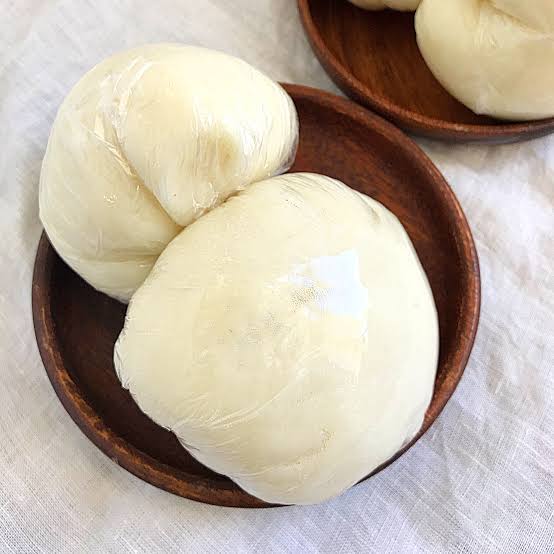
Pounded yam is a familiar feature of Yoruba meals and a natural starting point when exploring Ekiti’s food. Prepared by boiling yam and pounding it until smooth and stretchy, iyán is usually served as an accompaniment to soup. Its mild taste makes it a good match for richly seasoned dishes, particularly vegetable and draw soups.

The texture matters as much as the flavour. A well-prepared serving should be smooth, firm, and easy to shape into small portions for eating with soup. It is a filling meal often enjoyed at family gatherings, celebrations and everyday lunches. For visitors, it offers a straightforward introduction to the place of yam and soup in local dining.
2. Ẹ̀fọ́ Worowo Soup
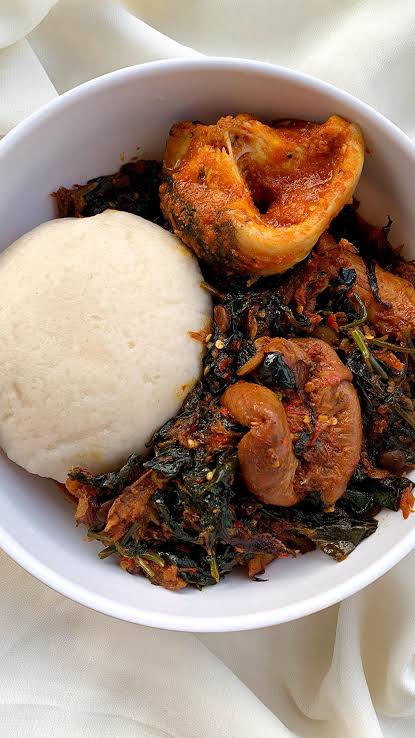
Ẹ̀fọ́ worowo is a traditional Yoruba vegetable soup made with worowo leaves. As with many Nigerian soups, its preparation can vary from one household to another, depending on the ingredients available and the cook’s preference. The leaves are combined with seasonings and other ingredients to create a dish that can be served with pounded yam and other swallows.
For visitors interested in local food, it is worth asking about the vegetables used and how the soup is prepared. Traditional recipes are often passed down through families, and small differences in seasoning or cooking technique can shape the final dish. Served with a suitable swallow, the soup offers a taste of the vegetable-based dishes found in Yoruba cooking.
3. Ìṣápá Soup
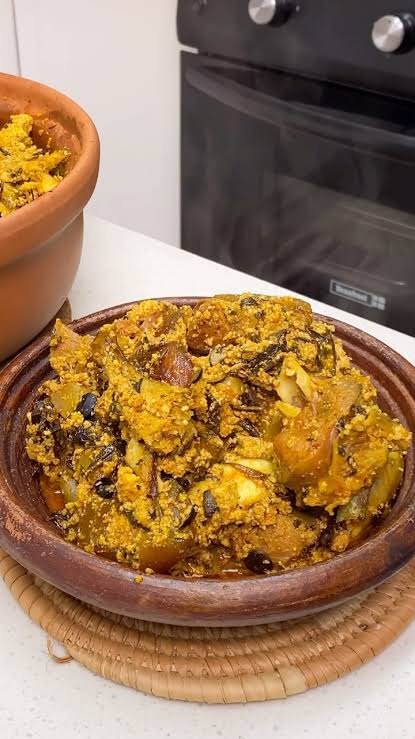
Ìṣápá soup is made with the leaves of the roselle plant, which are known for their distinctive tangy taste. The leaves give the soup a flavour that sets it apart from dishes prepared with milder vegetables. As with other traditional soups, recipes differ between households, and ingredients may be adjusted to suit personal taste or what is available.
The slight sourness is part of its appeal. It offers a contrast to the richness of many Nigerian soups and pairs well with swallows such as pounded yam. For anyone exploring Ekiti through its food, Ìṣápá is a dish to ask about when sampling traditional cooking. Its ingredients and preparation also offer a glimpse into how local cooks make use of plants that grow in their surroundings.
4. Ògbòkúrú

Ògbòkúrú is among the traditional food names associated with Ekiti’s local food culture. As with dishes whose names and preparations are rooted in particular communities, the exact ingredients and method may vary, so it is worth asking the person preparing it about the version being served.
Food is often best understood in the setting in which it is made: the ingredients chosen, the time spent preparing them, and the occasions on which the dish appears. Visitors who encounter Ògbòkúrú can use the opportunity to learn how it is prepared locally and how it fits into everyday meals or special gatherings. Asking questions at the table is a simple way to discover details that a menu may not explain.
5. Òjòjò (Water Yam Fritters)

Òjòjò is made from grated water yam, which is seasoned and fried into small fritters. The outside becomes lightly crisp while the inside remains soft, giving the snack a contrast in texture. Depending on the recipe, seasonings and other ingredients may be added to deepen the flavour.
It can be enjoyed as a snack or served as part of a larger meal. Water yam has a different texture from the more familiar white yam, and grating it creates a mixture that can be shaped and fried. For visitors exploring local food, Òjòjò is a useful reminder that traditional Nigerian cooking is not limited to soups and swallows. Roots and tubers also appear in snacks that are easy to eat between stops.
6. Olóùrúkú (Plantain Pottage)
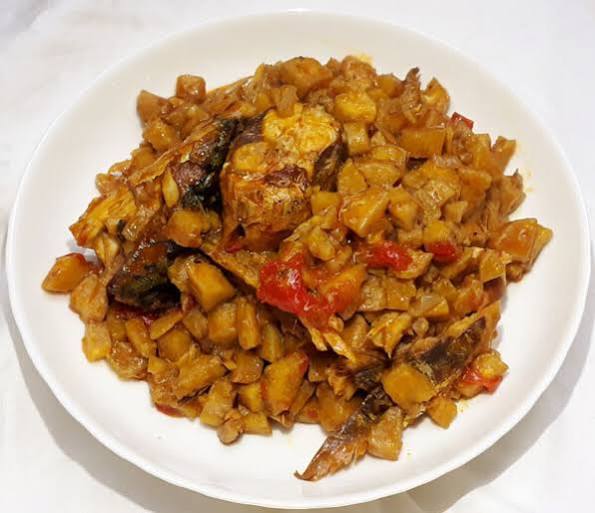
Plantain pottage brings together plantain and the ingredients used to build a satisfying one-pot meal. Depending on the recipe, the plantain may be cooked with pepper, onions, oil, and seasonings, with other ingredients added to suit the household. The result is a dish in which the plantain absorbs the flavour of the cooking liquid and seasonings.
Ripe and unripe plantains produce different results: ripe plantains lend sweetness, while firmer, less ripe ones hold their shape and offer a more savoury taste. The balance depends on the cook’s preference. For visitors, this is the kind of meal that shows how familiar ingredients can be prepared in different ways across Nigerian homes. It is hearty, practical and well suited to a relaxed meal.
7. Àbàrí (Maize Mọ́ímọ́í)
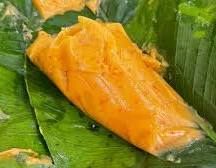
Àbàrí is a steamed maize-based dish associated with traditional Yoruba cooking. Like other steamed foods, it is prepared by mixing the main ingredient with seasonings and other additions before cooking the mixture until it sets. The final texture depends on the ingredients and method used.
Its preparation makes it an interesting dish for visitors who want to look beyond the better-known Nigerian staples. Steamed foods often require preparation before cooking, and their recipes can reflect household habits passed from one generation to the next. When trying Àbàrí, ask about the ingredients and how it differs from other maize-based dishes. The answer may reveal local preferences and the small distinctions that give traditional foods their character.
8. Obé Ẹ̀fìrin (Scent Leaf Soup)
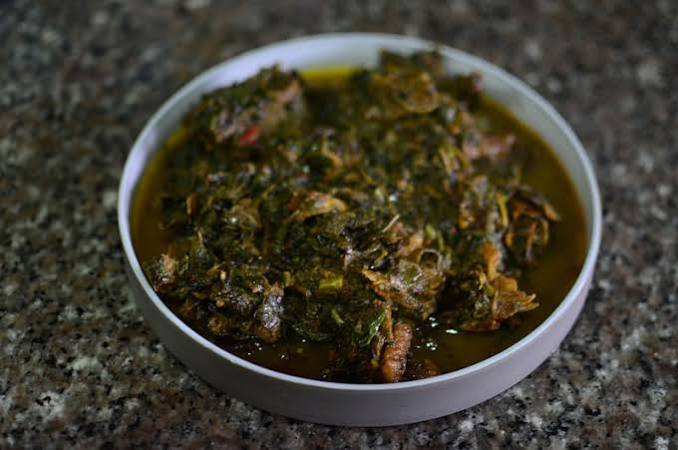
Obé ẹ̀fìrin is a soup prepared with scent leaves, known for their distinctive aroma. The leaves bring a strong herbal note to the dish, while the other ingredients determine its richness and level of seasoning. As with many traditional soups, the recipe may differ between households.
Scent leaf is used in several Nigerian dishes, but its fragrance gives this soup a recognisable character. It can be served with a swallow, allowing the flavour of the soup to take centre stage. Visitors interested in local cooking can ask how the leaves are prepared and which ingredients are traditionally paired with them. It is a good way to learn more about the role of herbs and leafy vegetables in the region’s food traditions.
9. Ẹ̀pípá Kòkò

Ẹ̀pípá kòkò is another local food name worth exploring when learning about Ekiti’s culinary traditions. Preparation and ingredients can depend on the community and household, making it useful to ask local cooks to explain the version they know rather than assume that every recipe is the same.
For visitors, discovering a dish is about more than tasting it. Learning what goes into it, how it is prepared, and when it is usually eaten helps place the food within everyday life. Traditional names also carry local knowledge, and asking about their meaning can open a conversation about the people and customs behind the meal. When available, Ẹ̀pípá kòkò offers an opportunity to explore a less familiar part of Ekiti’s food culture.
10. Fèrègèdè (Local Beans)

Beans are an important ingredient in Nigerian cooking, used in dishes ranging from steamed bean pudding to porridge and fried snacks. Fèrègèdè is a local food name associated with Ekiti’s culinary traditions, and the particular preparation may vary. Asking a local cook about the ingredients and method is the best way to understand the dish as it is made in that community.
Beans are valued for their substance and versatility, and they can form the centre of a meal. For visitors, trying local preparations is a way to discover how familiar ingredients are given different identities through naming, seasoning and technique. The experience can be as much about the story behind a dish as the food itself.
Ten Ekiti greetings and phrases to know
A greeting can be the start of a conversation. In Ekiti, visitors will hear Yoruba spoken in local forms that vary across the state. The differences are not simply a matter of accent: local vocabulary and pronunciation can also differ from one community to another. The Ekiti State Government notes these variations, particularly between areas such as Ado, Ijero, Ikole and Ikere.
The phrases below are drawn from the local list supplied for this feature. Their spellings, translations, and precise use should be checked with fluent speakers from the communities concerned before publication or use as a definitive language guide.
1. Orah weye / Orah o
What it means: Hello or greetings to you.
When to use it: Presented in local word lists as a greeting. Ask a resident to demonstrate the pronunciation and explain when the expression is most natural.
2. Olúwa a d’úle d’ọ̀nà o
What it means: May God protect your home and your path.
When to use it: Supplied as a blessing associated with a traveller’s journey or arrival. Confirm its wording and context with a local speaker.
3. Otún rìn o
What it means: Welcome, or well done for walking.
When to use it: Listed as a greeting for someone who has arrived on foot. Ask whether the expression is used throughout Ekiti or mainly in particular communities.
4. Káàsán o, o jire l’úle?
What it means: Good afternoon; is everyone at home well?
When to use it: Presented as an afternoon greeting that also asks after the household. A local speaker can help clarify its pronunciation and wording.
5. Ún k’úle o
What it means: Greetings to those at home.
When to use it: Used as a greeting for people inside a home or compound. Ask a host how they would normally greet people on arrival.
6. Ẹ mọ́ k’úṣe o
What it means: Well done with your work.
When to use it: Listed as an expression for greeting someone who is working. It is a useful idea for travellers to understand: acknowledging another person’s effort can be a respectful way to begin a conversation.
7. Ún jẹun o
What it means: Come and eat, or join me.
When to use it: Used as an expression of hospitality around a meal. Ask a local speaker how to respond politely if someone offers you food.
8. Ẹ súnun o / O súnun o
What it means: Goodnight or sleep well.
When to use it: Listed as a parting expression for the end of the day. Confirm which form is appropriate for elders, peers or a group.
9. Ẹ ṣéun / Mo dúpẹ́ dúpẹ́
What it means: Thank you very much.
When to use it: Used as an expression of gratitude. Visitors should confirm the most natural local form and pronunciation with a speaker.
10. Odìbàbà / Ó d’àbọ̀
What it means: Goodbye or until we meet again.
When to use it: Listed as a farewell for leaving a place or parting from someone. Ask a local host which expression they would use in everyday conversation.
For a reliable foundation, visitors can also learn widely used Yoruba expressions such as Ẹ káàárọ̀ (good morning), Ẹ káàsán (good afternoon), and Ẹ ṣé (thank you). These are standard Yoruba greetings, not necessarily expressions unique to Ekiti. The most useful lesson is to listen carefully, greet people respectfully, and be willing to learn the local form.
Places to explore in Ekiti
Ekiti’s landscape provides a natural counterpoint to its food and language. The state has waterfalls, hills, springs and historic sites, some of which are recognised in official tourism listings. Visitors should confirm access, conditions and any local guidance before travelling to individual sites.
1. Ikogosi Warm Springs
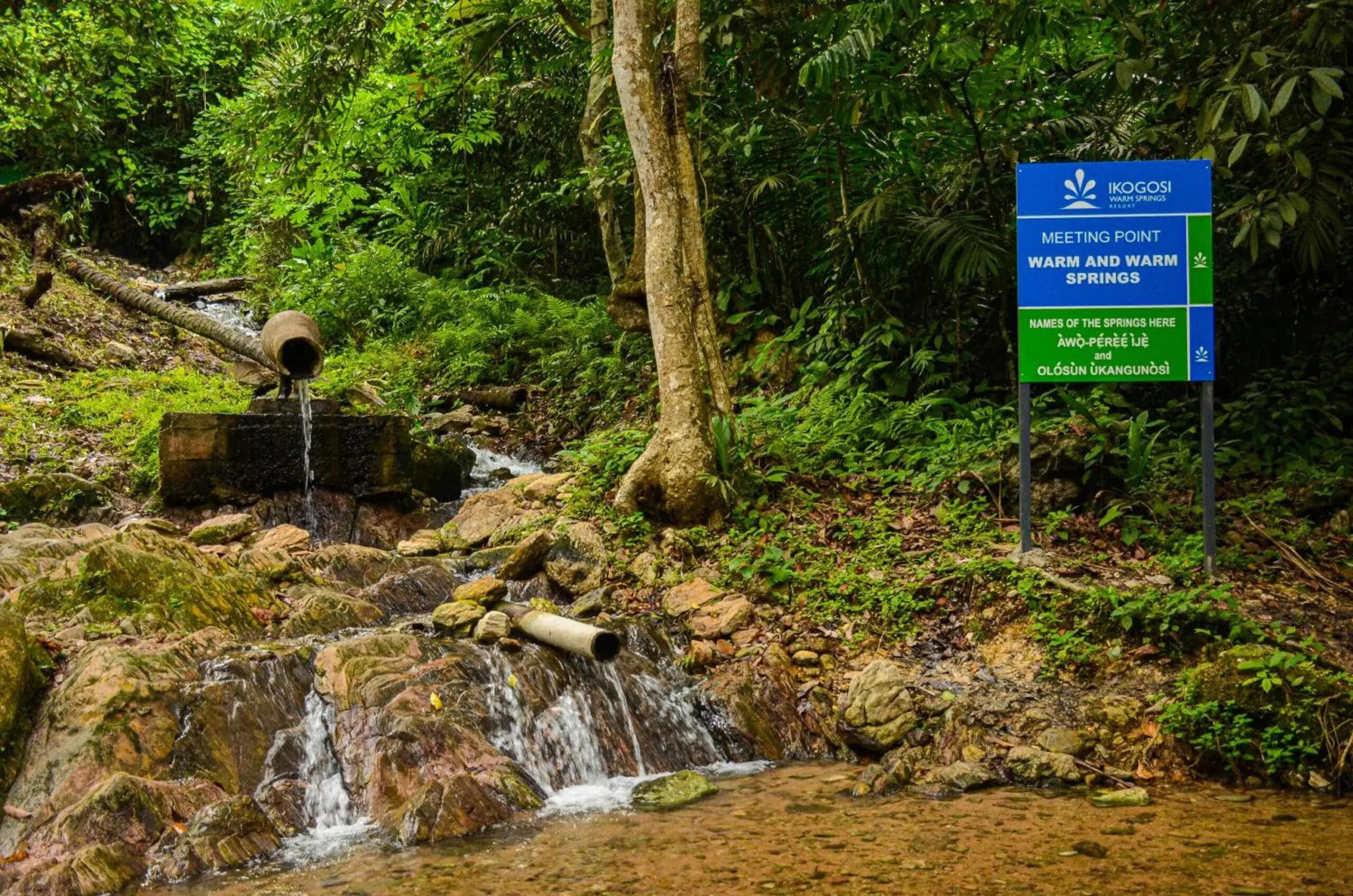
Ikogosi Warm Springs is one of Ekiti’s best-known natural attractions. Its defining feature is the meeting of warm and cold springs, whose waters flow towards one another while retaining their different temperatures. The site sits among green hills and vegetation, giving visitors a reason to spend time in the landscape as well as at the spring itself. The Ekiti State Government identifies the attraction as being in Ikogosi, in Ekiti West Local Government Area.
The springs are also connected to local oral tradition. One account tells of two wives who became the warm and cold springs, while their husband became the surrounding hills. The story forms part of the site’s cultural history, alongside scientific explanations for the difference in water temperature.
The Ikogosi Warm Springs Resort advertises accommodation and visitor experiences, including hiking and dining. As facilities and arrangements can change, contact the resort before travelling to confirm current access, activities and opening arrangements.
2. Arinta Waterfalls
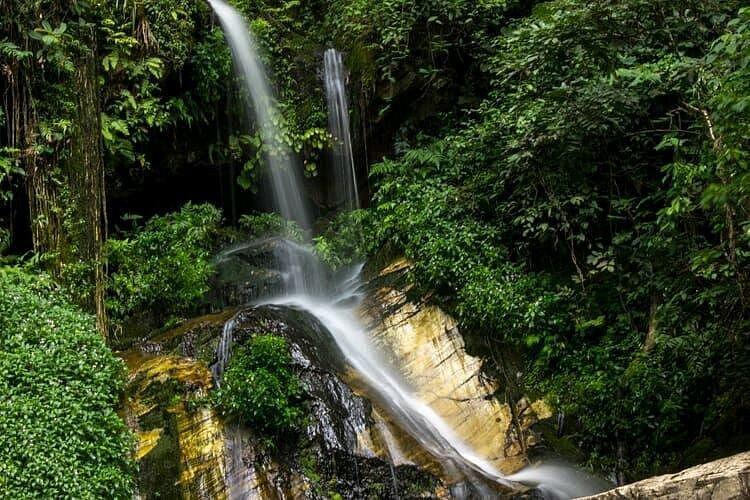
Located near Ipole-Iloro in Ekiti West Local Government Area, Arinta Waterfalls is a natural attraction surrounded by forested hills and vegetation. The falling water and the landscape around it make the site an option for visitors interested in spending time outdoors and exploring a different side of the state. Arinta is also listed among Ekiti’s tourism attractions by the state government.
A visit can offer a change of pace from moving between towns and built attractions. The surrounding terrain, however, means visitors should plan sensibly, wear suitable footwear, and be mindful of weather conditions, particularly after rainfall when paths and rocks may be slippery.
Current opening hours, access conditions and available visitor facilities could not be independently confirmed. Before setting out, check with the Ekiti State Bureau of Tourism Development or local tourism representatives for the latest information.
3. Abanijorin Mountain and Cave

Abanijorin Rock is among the natural attractions promoted by the Ekiti State Bureau of Tourism Development. Its rocky terrain makes it an appealing prospect for visitors interested in the state’s geological features and outdoor landscapes.
However, this is not a site to approach as an informal walk-in attraction. In a notice published on 1 November 2024, the Ekiti State Government warned against unauthorised activities at Abanijorin Rock and stated that visitors must obtain explicit permission from the state Bureau of Tourism Development before visiting or undertaking activities there.
Anyone planning a visit should contact the Bureau through the official Ekiti State Government website to confirm the approval process, permitted activities and current access conditions. Do not join an unauthorised tour or attempt to enter the protected site without permission.
4. Fajuyi Memorial Park

Situated in Ado-Ekiti, Fajuyi Memorial Park commemorates Lieutenant-Colonel Adekunle Fajuyi, the military governor of the former Western Region who died during Nigeria’s 1966 military coup. The Ekiti State Government identifies the park as a memorial site in the state capital.
The park offers a place to reflect on a significant moment in Nigeria’s history. Fajuyi is remembered for his death alongside Major-General Johnson Aguiyi-Ironsi during the coup, an episode that remains part of the country’s political and military history. For visitors exploring Ado-Ekiti, the memorial provides a connection to events that shaped Nigeria’s early post-independence years.
Before visiting, confirm current opening arrangements and access with local authorities or tourism representatives, as reliable, up-to-date official visiting hours could not be established.
5. Olosunta and Orole Hills
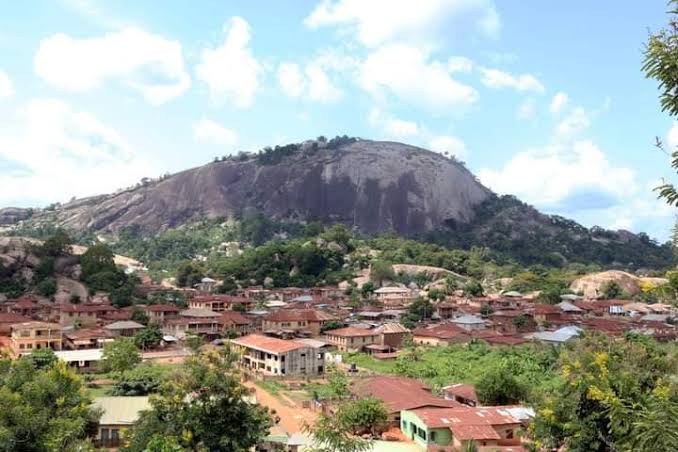
Olosunta and Orole Hills rise around Ikere-Ekiti and are recognised for their rocky landscapes and cultural significance. The Ekiti State Government lists the hills among the state’s tourism attractions, while local tradition connects them with spiritual beliefs and the history of the community. The Guardian has also covered the state’s tourism potential in its report on Ekiti’s plans to become a destination hub.
These are not simply places to view from a distance. Their significance to local people means visitors should approach them with respect and find out whether there are particular customs or restrictions to observe. Access arrangements, especially for culturally significant sites, may differ according to the location and occasion.
Before planning a visit or hike, contact local authorities or traditional custodians to confirm current access arrangements, whether permission is required and whether guided visits are available. This is especially important where a site has religious or ceremonial significance.
6. Ekiti Parapo Resort and War Museum

Ekiti Parapo Resort and War Museum in Okemesi-Ekiti is listed among the state’s tourism sites in official state statistics. Its historical focus makes it a potential stop for visitors interested in the conflicts and alliances that shaped the history of Ekiti communities.
The name points to the wider history of Ekiti Parapo, the alliance associated with the nineteenth-century Ekiti and other eastern Yoruba communities during the Kiriji War. A visit to a site devoted to this history can provide another way to understand the region beyond its natural attractions, although the depth of interpretation available will depend on the facilities and information currently provided.
Current opening hours, visitor facilities and guided-tour arrangements could not be reliably confirmed. Contact the relevant tourism authorities or local representatives in Okemesi-Ekiti before travelling to establish whether the museum is open and what arrangements are available for visitors.