
GDN SIDEBAR
From prolonged sun exposure and urban pollution to harsh skincare products, stress and poor sleep, everyday conditions and habits can affect the skin in ways people may not immediately recognise.
The skin is the body’s largest organ. It protects the body from germs and the elements, helps regulate temperature and allows us to feel heat, cold, pain and touch. Yet, it is also one of the parts of the body most exposed to and affected by everyday life.
From the moment a person leaves home, the skin comes into contact with sunlight, dust, heat and air pollution. There is sweat after a long day outside, soap and water during a bath, makeup and skincare products applied before leaving home, and whatever else comes into contact with the body throughout the day.
When a skin problem develops, identifying its cause is not always straightforward. Several factors can contribute to changes in the skin, and what appears to be a single problem may have more than one underlying cause.
This is why caring for the skin is not simply about buying more products. It also involves paying attention to what the skin is exposed to and the habits that may be affecting it.
According to Dr Nwaiwu Obinna Michael, a general practitioner at Primrose Specialist Hospital, the biggest enemies of skin are too much sunlight, harsh skincare products, poor nutrition, lack of water, smoking, stress and not enough sleep.

The Sun

Sunlight is part of everyday life, but ultraviolet radiation can cause damage to the skin even when there is no obvious sunburn.
Ultraviolet radiation can damage skin cells, contribute to premature skin ageing and increase the risk of skin cancer with long-term exposure. It can also contribute to changes many people notice as they get older, including wrinkles, uneven pigmentation and changes in skin texture.
In Nigeria, where people spend considerable time outdoors for work, commuting and other daily activities, sun exposure is difficult to avoid. For some outdoor workers, traders, drivers, dispatch riders and commuters, being under the sun is part of the working day.
There is the common belief that people with dark skin do not need sunscreen. That melanin offers some natural protection against ultraviolet radiation, but it is noteworthy that this does not completely prevent sun damage.
Sunscreen is one option for reducing exposure, particularly on areas of skin that are regularly uncovered. Using hats, clothing, shade, and spending less time in direct sunlight are also useful.
For Mrs Ifunaya, a trader at Eko Market, the difference between the colour of her face and the rest of her body has become noticeable.
“The colour of my face and body doesn’t match,” she says.
She believes years of trading outdoors have contributed to the difference. While other parts of her body remain covered by clothing, her face is regularly exposed to sunlight. She also attributes some of the changes she has noticed to the repeated application of products to her face, describing it as “too much rub, rub on the face”.
Her experience reflects a concern shared by people who spend long hours outdoors. However, differences in complexion can have several causes, including sun exposure, existing pigmentation patterns and skin conditions. A medical assessment may be necessary to establish the cause of a particular change.
Temiloluwa Adebayo, a 27-year-old Lagos resident, says, “My first thought is usually, ‘What can I use for this?’ whenever I notice something different on my skin.” When she started to notice dark areas around her cheeks, that’s how she responded.
Temiloluwa commutes throughout Lagos for a large portion of the week, frequently spending a lot of time outside as she moves between bus stops, congested cars, and busy roads.
“I didn’t even think the sun was part of the problem. I was just going to work every day and coming back home. I thought that was normal,” she says.
Although she owned sunscreen, she did not use it consistently.
“I only remembered it when I was going somewhere special. If I was going to work or taking a bus, I didn’t think I needed it.”
Dr Nwaiwu advises using sunscreen, wearing protective clothing and avoiding excessive sun exposure. For people who spend significant amounts of time outdoors, protection can also include seeking shade whenever possible and covering exposed areas of the body.
The aim is not to become fearful of sunlight, but to recognise that repeated exposure is part of the skin’s daily environment.
The air around us is another consideration. For people living and working in busy cities, an ordinary day can involve traffic fumes, dust, smoke and heat. A long commute may mean spending hours on the road, walking beside moving vehicles or waiting at a bus stop in the middle of traffic.
Pollution

Research has linked exposure to air pollution, particularly traffic-related pollutants such as fine particulate matter and nitrogen dioxide, with premature skin ageing and facial pigmentation changes. A 2020 review published in Current Environmental Health Reports examined evidence linking air pollution to skin ageing, while a separate review published in 2019 explored associations between particulate matter, nitrogen dioxide and changes in facial pigmentation. However, the strength of the evidence varies, and researchers are continuing to investigate how these pollutants affect the skin.
For people living and working in busy cities, an ordinary day can involve traffic fumes, dust, smoke and heat. A long commute may mean spending hours on the road, walking beside moving vehicles or waiting at a bus stop in the middle of traffic. Repeated exposure to environmental pollutants, particularly alongside sunlight, may contribute to changes in the skin, although individual outcomes vary.
Ademola Mustapha, a hail ride driver, spends much of his working day on Lagos roads, where he encounters sunlight, dust, smoke, and vehicle exhaust. Moving between the heat outside and the air conditioning inside his car is another part of his daily routine.
He believes these conditions have affected his skin, particularly his face. After developing acne, he sought medical advice and was told during a consultation that clogged pores were contributing to the breakouts.
Acne develops when hair follicles become blocked with oil and dead skin cells, leading to inflammation. Research has also examined whether exposure to air pollution, including traffic-related emissions and fine particulate matter, can contribute to the development or worsening of acne. A 2026 systematic review published in Skin Health and Disease found evidence of associations between environmental pollution and acne exacerbation, although the researchers noted limitations in the available studies and said further research was needed to establish the relationship more clearly.
People who spend long hours on the road encounter several environmental exposures that may affect their skin. However, it is not possible to conclude that sunlight, dust, exhaust fumes or air conditioning caused Ademola’s acne based on his experience alone.
His account highlights a wider challenge for people whose jobs keep them outdoors or on busy roads for much of the day: maintaining a consistent skincare routine while managing the conditions they encounter at work.
Skincare
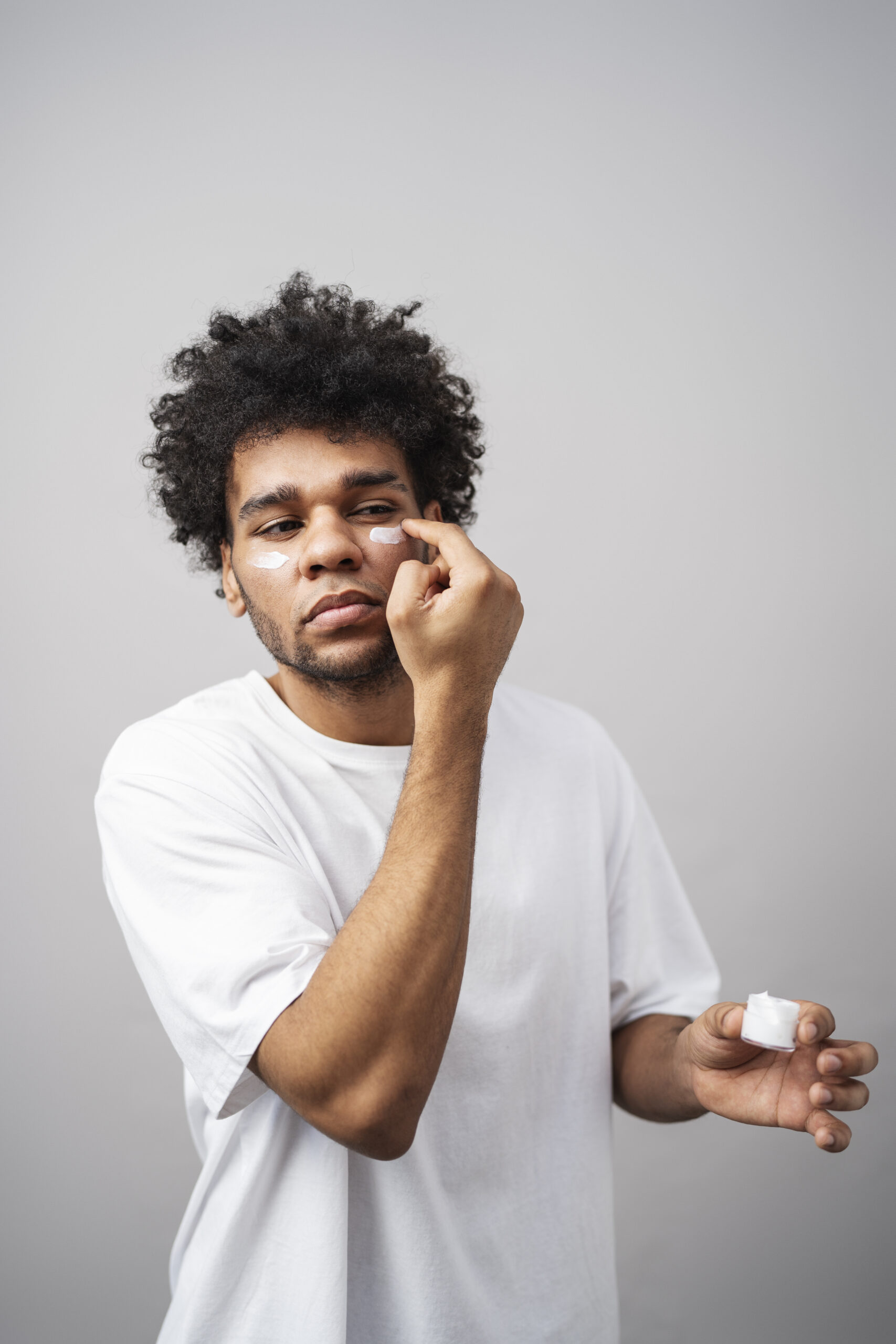
There is a point at which caring for the skin can become too much. Scrubbing harder, washing the face several times a day, using several exfoliating products or changing treatments every few weeks may seem like a way to get faster results. For some people, however, these habits can leave the skin irritated.
The American Academy of Dermatology advises people with acne-prone skin against scrubbing because irritation can make acne worse. Picking and squeezing spots can also increase inflammation and raise the risk of scarring and dark marks.
The same can happen when too many products are introduced at once. When the skin begins to burn, peel, sting or remain red, it can be difficult to know which product is responsible, particularly when several new products were added around the same time.
Amaka Nwosu, 31, began changing her routine after watching skincare recommendations online.
“I kept adding products because everybody was recommending something different. One person would say use this, another person would say try that,” she says.
What started as an attempt to improve her skin eventually became uncomfortable.
“At some point, my face started stinging whenever I applied anything. I actually thought maybe the product was working.”
She continued until her skin began peeling. “When my skin started peeling, that was when I knew something was wrong. I had been trying to make my skin better, but I was making it worse.”
According to Dr Nwaiwu, harsh soaps, bleaching products and inappropriate cosmetic products can irritate the skin and damage its protective barrier.
“The skin generally does not need an elaborate routine,” he says, noting that gentle cleansing and appropriate moisturising are often sufficient.
The desire for clearer, brighter or smoother skin can make people more willing to experiment, particularly when products are promoted through social media. But irritation is not necessarily evidence that a product is working.
A routine that is simple and appropriate for an individual may be more useful than constantly changing products in response to online trends.
Sleep, stress and everyday habits
 The relationship between sleep, stress and skin health has been examined in several scientific studies. Research suggests that psychological stress and poor sleep can affect the skin’s protective barrier, although the effects vary between individuals.
A 2019 evidence-based review by M. Maarouf, C. L. Maarouf, Gil Yosipovitch and Vivian Y. Shi, published in the British Journal of Dermatology, examined 21 studies investigating stress and the skin’s barrier function. The researchers found evidence that psychological stress can reduce skin hydration and increase transepidermal water loss, the process through which water passes from the body through the skin and evaporates. Their findings suggest that stress can interfere with the skin’s ability to retain moisture and protect itself from external irritants.
Sleep has also been investigated in relation to skin ageing and recovery. In a study published in Clinical and Experimental Dermatology in 2015, researchers including Elma D. Baron and Althea Oyetakin-White examined 60 healthy women categorised according to their sleep quality. The study found that women who slept well had lower intrinsic skin-ageing scores and better recovery of their skin’s protective barrier after experimental disruption than those who slept poorly. However, the study was relatively small and involved only Caucasian women, so its findings cannot automatically be generalised to everyone.
Sarah Williams, 29, says late nights gradually became part of her routine.
“I was sleeping very late, sometimes one or two in the morning, and I still had to wake up early for work. It became normal for me,” she says.
She also noticed that periods of stress often coincided with changes in her skin.
“Whenever I was stressed, I noticed that my skin also started looking different. Sometimes I would break out and immediately start looking for another product.”
Looking back, she believes she sometimes focused on changing her skincare routine when other aspects of her daily life also needed attention.
“There were times I was changing my skincare routine when what I probably needed was to rest.”
Sarah’s experience reflects how easily people can focus on visible changes in their skin without considering other aspects of their wellbeing. However, a breakout or change in complexion cannot automatically be attributed to stress or inadequate sleep. Hormonal changes, skincare products, existing skin conditions and other factors can also contribute.
For Dr Nwaiwu, adequate sleep is one of several lifestyle factors that contribute to healthier skin.
Diet is another subject that often comes up in conversations about acne. Although research has investigated links between particular dietary patterns and breakouts, the evidence does not support blaming every skin problem on a specific food.
Martins Kave says he stopped eating groundnuts and oily foods after being told that his skin was naturally oily and that these foods were contributing to his breakouts.
His experience reflects a common belief that eating oily food necessarily makes the skin oilier. However, dietary fat does not simply transfer to the skin, and the relationship between diet and acne is more complicated.
The American Academy of Dermatology notes that some studies have found an association between low-glycaemic diets and improvements in acne, although further research is needed. Individual experiences differ, and eliminating foods without establishing whether they contribute to a particular problem may not resolve it.
A balanced diet provides nutrients needed for normal skin function, while adequate hydration supports the body’s overall health. Neither dietary changes nor drinking additional water should be treated as guaranteed solutions to acne or other skin conditions.
Smoking is another lifestyle factor with a well-established association with premature skin ageing. According to the American Academy of Dermatology, smoking can contribute to wrinkles and a dull or uneven complexion. It can also impair wound healing.
Dr Nwaiwu includes smoking among the factors that can work against healthier skin and recommends avoiding it.
Sleep, stress, nutrition and smoking affect the body in different ways, and none should be treated as the sole explanation for every skin concern. However, together with sun protection and an appropriate skincare routine, healthy everyday habits form part of a broader approach to maintaining skin health.
Building a healthier relationship with your skin

Healthy skin is not necessarily flawless skin. Breakouts, changes in pigmentation, dryness and other concerns can occur for different reasons, and understanding what contributes to them is an important part of managing them.
Dr Nwaiwu advises paying attention to everyday habits and avoiding practices that may cause unnecessary damage to the skin. Using sunscreen, choosing gentle skincare products, getting adequate sleep, eating a balanced diet, and avoiding smoking can all contribute to better skin health. For people who spend long hours outdoors, taking practical steps to reduce sun exposure and seeking shade whenever possible are also important.
However, not every skin concern can be resolved by changing a skincare routine or adopting healthier habits. Persistent acne, unusual changes in pigmentation, recurring irritation, and wounds that do not heal may require medical attention. Seeking advice from a qualified healthcare professional can help identify the underlying cause and prevent inappropriate treatments from making the problem worse.
The skin responds to a combination of environmental, biological, and lifestyle factors. While not all of these can be controlled, understanding their potential effects can help people make more informed decisions about their care. Rather than chasing every new product or expecting immediate results, a consistent routine suited to individual needs, alongside appropriate medical advice when necessary, offers a more considered approach to maintaining skin health.