
As part of efforts towards achieving clean energy and industrial diversification, the federal government has set a target to ensure that at least 30 per cent of locally produced vehicles in Nigeria are electric.
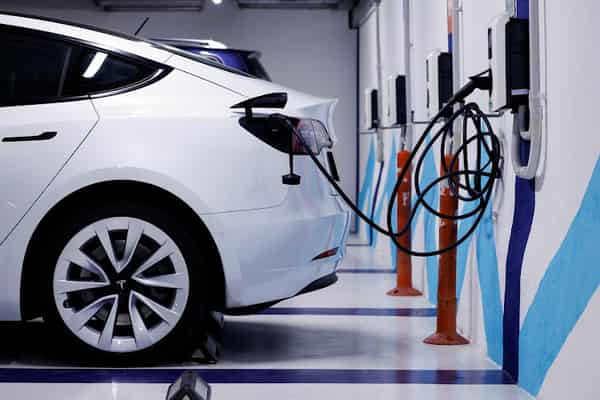
Minister of State for Industry, Trade, and Investment, John Uwan-Enoh, disclosed this yesterday at the unveiling of Africa’s largest locally assembled electric vehicle (EV) charging station and the launch of locally manufactured electric buses and taxis by an Abuja-based mobility startup, New Electric Vehicles (NEV) in Abuja.
He stated that the government’s plan, encapsulated in the National Automotive Industry Development Plan (NAIDP), aims to boost local content in vehicle manufacturing by 40 per cent, increase domestic vehicle production to one million units, and create 200,000 jobs in the sector.
His words: “I think that a lot of Nigerians look at electric vehicles as impossible. I mean, people are not able to accommodate that in their heads. So it’s significant for me that this is happening.
“And those who have the opportunity of being in this event are able to see this. I was looking at the National Automotive Industrial Development Plan and all of its milestones.
“These milestones, the first is to increase the local content of locally manufactured vehicles by about 40 per cent and also to see whether we’ll be able to produce at least one million vehicles locally and see how we can increase the number of jobs that are available in this sector to about 200,000.
“And most of all, to see how we can increase the local production of electric vehicles by 30 per cent”, the minister said.
Enoh noted that Nigeria cannot achieve economic growth and prosperity unless the country gets industrialization right, adding that the auto sector, with its vast value chains, provides the nation with a unique opportunity.
“Electric vehicles are the future, but that future must start today. We must promote it now and ensure that we achieve it. Perhaps, the sector has been waiting for electric vehicles, and today’s unveiling marks the beginning of that journey”, the minister added.
Executive Vice Chairman of the National Agency for Science and Engineering Infrastructure (NASENI), Halilu Khalil, observed that the shift to electric vehicles is more than just about cleaner transport but should be seen as a catalyst for revolutionizing Nigeria’s energy sector.
He observed that Nigeria has about 13 million vehicles, a figure he compared to the total population of some countries.
The NASENI boss explained that electric mobility cannot be powered by fossil fuels, as that would contradict the essence of sustainability.
He said for this transition to be effective, Nigeria must build the right infrastructure, ensuring that such transition is based on renewable energy.