As 2026 draws closer with various reforms outlined to enable the Federal Government to achieve its $1 trillion economy target, ADAKU ONYENUCHEYA reports that stakeholders expect a more efficient maritime sector even as 2025 witnessed measurable progress amid structural pressures.
The year is a transition and recalibration year, marked by policy articulation, institutional repositioning, improved international visibility, early-stage reforms and persistent macroeconomic and structural pressures.
It witnessed the operationalisation of the Ministry of Marine and Blue Economy, signalling political will to harness ocean resources as well as improved port reforms and automation, which enhanced cargo throughput and transparency.
It also marked Nigeria’s return to the International Maritime Organisation (IMO) Council, Category C, and leadership of global bodies such as the World Customs Organisation (WCO), the Port Management Association of West and Central Africa (PMAWCA), and the International Association of Ports and Harbours (IAPH).
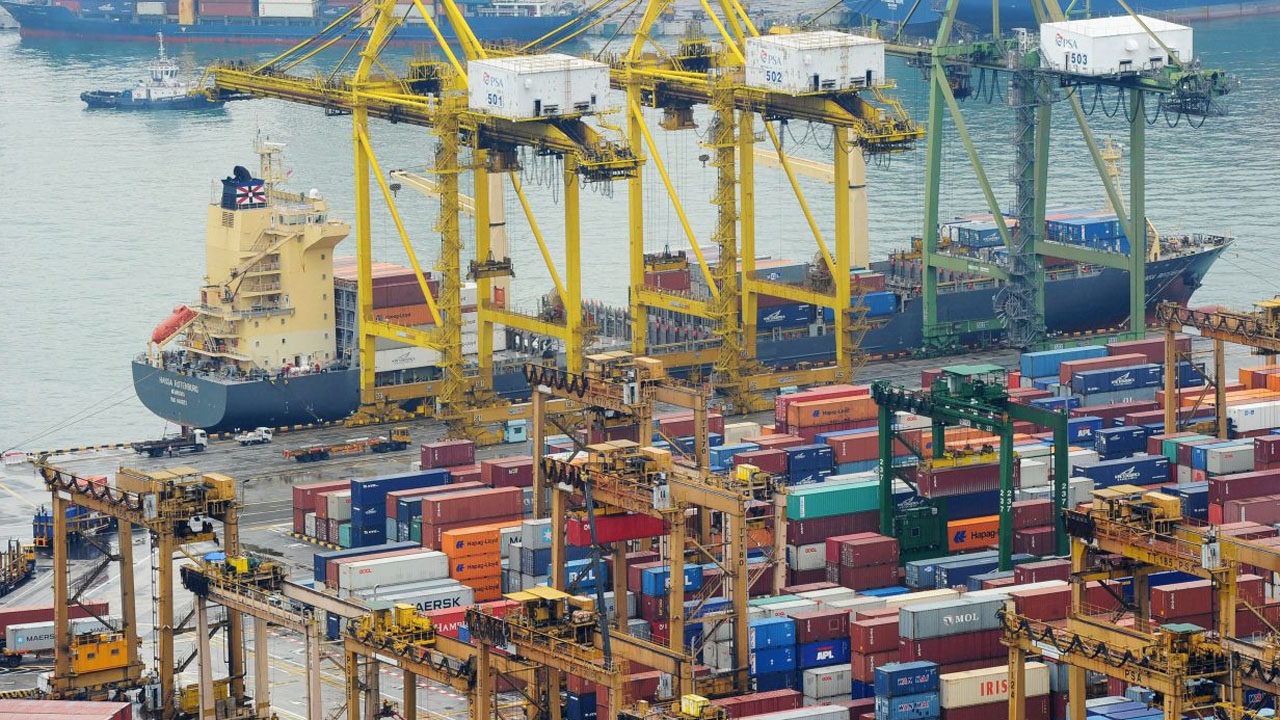
In terms of trade growth, Nigeria recorded a remarkable 1,085 per cent increase in export-laden container volumes in the third quarter of 2025, while total cargo throughput rose by 16.2 per cent.
According to data released by the Nigerian Ports Authority (NPA) in December, container operations were a major driver of the performance, with overall traffic increasing by 18.9 per cent to 546,931 twenty-foot equivalent units (TEUs).
Import-laden containers also grew by 33.1 per cent to 268,713 TEUs, while export-laden containers surged to 69,039 TEUs, up from 5,812 TEUs in the corresponding period of 2024.
The NPA data disclosed that the sharp rise in export containers contributed to a 21.5 per cent decline in empty container movement, indicating a better balance between imports and exports as well as stronger non-oil export performance.
Also, ship traffic recorded a notable improvement, with vessel calls increasing by 8.4 per cent to 1,074, while total gross registered tonnage (GRT) grew by 18 per cent to 42.64 million.
The country also faced significant challenges, including a lack of political will to strengthen local content, poor infrastructure development, inadequate human capacity building, and several pending bills needed to enhance regulatory efficiency and maritime security.
However, as the world welcomes 2026 with renewed optimism for improvements in the maritime industry, stakeholders remain hopeful and have outlined their expectations and outlook for the sector.
Building smart ports
Nigeria aims to achieve the maritime hub status in West and Central Africa; however, it is still far from achieving a smart port as it largely operates manually.These challenges reduced Nigeria’s cargo competitiveness, accelerated cargo diversion, and led to the loss of transhipment hub status to Lome Port in Togo.
Although there have been improvements in digital interventions and port modernisation, a lot still needs to be done when it comes to upgrading infrastructure and embracing automation.
For years, the Lagos port corridor has suffered from traffic gridlock, resulting in financial losses for businesses and the government, with industrial data estimating that N1 trillion has been lost yearly.
In 2021, the Nigerian Ports Authority (NPA), in partnership with Truck Transit Park Limited (TTP), introduced the electronic call-up system, also known as Eto, to address the crisis.
While the system has addressed the issue, there are still bottlenecks that need urgent attention to enable the logistics sector to contribute its quota to reaching the $1 trillion economy target by 2030.
General Secretary of the Association of Maritime Truck Owners of Nigeria (AMATO), Mohammed Sani, urged the government to prioritise the logistics sector and ensure that extortion, artificial checkpoints, bureaucracy, operational sabotage, and institutional bottlenecks no longer constitute obstacles to haulage operations.
He called for the effective implementation of the electronic-tag system to strengthen the e-call-up platform and ensure seamless truck movement, efficient cargo evacuation, reduced congestion and renewed trust in the maritime logistics value chain.
“I envision a maritime environment where every stakeholder — from port authorities to truck owners, terminal operators, freight forwarders and government agencies — works in harmony to promote ease of doing business and trade facilitation for the economic progress of Nigeria,” he said.
Head of Research at Sea Empowerment and Research Centre (SEREC), Dr Eugene Nweke, projected that 2026 will be a “decisive year” for the maritime industry, presenting a critical opportunity to deepen port automation initiatives and fully implement the National Single Window to enhance transparency, reduce delays and improve trade predictability.
Nweke stressed that foreign exchange stability remains fundamental to trade predictability, investment confidence and overall maritime business sustainability.
Nweke’s outlook further identified the reduction of port costs and elimination of arbitrary charges as key priorities, noting that high charges continue to undermine Nigeria’s competitiveness within the West and Central African maritime corridor. He also emphasised the need for functional intermodal transport integration to ease cargo evacuation and reduce congestion at gateway ports, as well as clear operationalisation of port economic regulation to ensure fairness, protect shippers’ interests and create a level playing field for investors.
Nweke also highlighted the importance of sustaining current gains in maritime security and deepening support for export growth, which recorded double-digit percentage increases in non-oil segments in 2025.
“The Nigerian maritime industry in 2025 laid important institutional and policy foundations, but competitiveness, predictability and cost efficiency must define the next phase. The year 2026 offers a critical opportunity to convert policy intent into measurable performance outcomes,” he stated.
Enhancing shipping dominance
Nigeria controls about 70 per cent of West and Central Africa’s cargo traffic. Yet, the country does not own international-going container vessels to carry the cargo, which costs the country an estimated $9 billion yearly in freight charges to foreign shipping lines, according to the Nigerian Ports Consultative Council (NPCC).
Also, SEREC, in its findings, said the country’s once-promising indigenous fleet had collapsed, as 24 active vessels in 2005 had declined to fewer than four by 2024, leaving foreign carriers to handle 95 per cent of the country’s cargoes.
The Cabotage Vessel Financing Fund (CVFF), which had become the hope of indigenous shipowners to participate in international trade, has been dashed by the government, with the 2025 disbursement hopes dashed.
Secretary-General of the Merchant Seafarers Association of Nigeria and the United States, Prof. Alfred Oniye, said the Federal Government should accelerate the disbursement of the Cabotage Vessel Financing Fund (CVFF) to empower indigenous shipowners. Oniye also called for investments in shipbuilding and repair yards to reduce capital flight.
Maritime Consultant/Managing Director, Harsecom Logistics Limited, Haruna Omolajomo, renewed calls for the re-establishment of a national shipping line through a Public-Private Partnership structure. He said the opportunity could tap into over $15 billion yearly ship charter value, generate massive employment and stimulate indigenous participation, provided the government develops clear, sincere and investor-friendly policies.
“I strongly believe that the maritime industry can further have a minimum of Gross Domestic Product (GDP) growth driven of over 5.2 per cent if all the regulatory agencies such as Nigeria Shippers Council (NSC), Nigeria Ports Authority NPA), Nigerian Maritime Administration and Safety Agency (NIMASA) and National Inland Waterways Authority (NIWA) live to their expectations by strengthening regulatory compliances and competitiveness.
“With their seriousness, proper control and monitoring by the Ministry of Marine and Blue Economy, these agencies can generate over N4.5 trillion yearly,” he stated.
A looming human capacity crisis
The global shipping industry is projected to face a looming maritime workforce crisis next year, with an estimated shortfall of 90,000 qualified seafarers from the 1.9 million currently moving, of over 90 per cent of the world trade carried by sea.
With approximately 30 approved maritime training institutions, the Nigerian Maritime Administration and Safety Agency (NIMASA) has the potential to leverage the global manpower deficit and increase its impact.
Sadly, despite the number of institutions, Nigeria’s Certificate of Competency (CoC) remains unrecognised globally due to a lack of seatime training, which remains a mandatory prerequisite under the Standards of Training, Certification and Watchkeeping for Seafarers (STCW) Convention for cadet certification.
Meanwhile, the Philippines has leveraged the scarcity to become a global maritime workforce leader with over 500,000 Filipino seafarers currently crewing 25 per cent of global vessels and remitting $6 billion yearly inflow.
Former National President of the Nigerian Merchant Navy Officers and Water Transport Senior Staff Association, Matthew Alalade, stressed that the government must prioritise human capacity development in 2026.
He emphasised the importance of developing the nation’s maritime manpower, stressing that both government-owned and private maritime institutions require stronger financial and policy support to produce globally competitive seafarers.
“Maritime institutions are capital-intensive, especially the technical aspects. Government should focus on sustaining them, either by funding or supporting them,” he said. Oniye also stressed that the government should expand maritime training and certification programmes, ensuring Nigerian seafarers remain globally competitive.
Bridging legal, institutional gaps
With the Federal Government pursuing the expansion of the marine and blue economy and increased maritime trade, stakeholders in the sector continue to push for improved legislation, infrastructure, and security frameworks to support growth in the sector.
However, there are pending bills awaiting President Bola Tinubu’s assent. The Nigerian Ports Economic Regulatory Agency (NPERA) Bill, which seeks to transform the Nigerian Shippers’ Council into an independent economic regulator for ports, is still facing delays in passing it as a law.
The Bill aims to repeal the existing Nigerian Shippers’ Council Act and establish a robust framework for tariff control, fair competition and investment protection in the post-concession port era.
Although, the Bill, passed by both chambers of the National Assembly in April 2025 and transmitted to the President, is waiting for assent. Stakeholders in the maritime industry warn that many of the foreign operators in the country go scot-free with their illegalities, as there are no laws to sanction them.
According to the stakeholders’ estimate, Nigeria is losing up to $250 billion yearly, due to unregulated port operations and inefficiencies, arbitrary charges by terminal operators and shipping lines, and declining investor confidence.
Also, the country recorded zero piracy in 2025, but there are still pending threats lurking with the ICC International Maritime Bureau (IMB) report for the first nine months showing a 25 per cent increase in reported incidents of maritime piracy and armed robbery in the Gulf of Guinea.
Oniye called for enhanced maritime security, particularly in the Gulf of Guinea, to protect lives, cargo and investments. He also urged the government to prioritise strengthening port infrastructure and digitalisation, reducing turnaround time and boosting trade efficiency.
Alalade urged the Federal Government to prioritise maritime security, calling for the urgent need for the establishment of a National Coast Guard, an independent entity in charge of securing the nation’s territorial waters.
He urged the President and the lawmakers to ensure speedy passage of the National Coast Guard Bill, noting that an independent coast guard structure was necessary to complement the Nigerian Navy and focus strictly on policing, surveillance and protection of the country’s maritime domain.
Alalade added that improved security architecture on Nigeria’s territorial waters is critical to strengthening national safety, enhancing trade confidence and positioning the country as a globally recognised maritime nation. He added that a standalone maritime security agency would strengthen national response against piracy and illegal activities at sea.
Blue economy is still a goldmine
While all focus is on port development, logistics, infrastructure and cargo growth, other areas of the blue economy have been neglected. Stakeholders stressed that for the government to meet the ambitious $1 trillion economy target by 2030, it must explore other aspects that remain underutilised.
Former President of the Nigerian Bar Association (NBA) and maritime law expert, Dr Olisa Agbakoba (SAN), had stated that urgent implementation of wide-ranging reforms could unlock up to N70 trillion in yearly revenue from the country’s marine and blue economy sector.
Agbakoba had described the maritime industry as Nigeria’s largest untapped economic frontier, with potential earnings that could rival or even surpass oil revenues if the government fully executes the reforms contained in the National Policy on Marine and Blue Economy (2025–2034).
However, Oniye called for the development of coastal tourism, aquaculture and marine biotechnology as new revenue streams as well as enforcement of environmental sustainability to protect marine ecosystems. He also charged the government to ensure full ratification and implementation of the IMO conventions, especially those related to safety, labour and pollution.