Nigeria’s higher education system is teetering on the brink of systemic collapse, not due to the familiar threat of industrial strikes, but the quiet, irreversible haemorrhaging of its most vital asset: its intellectual capital. Thousands of academics, from promising lecturers to seasoned professors, are abandoning their posts, opting for economic certainty abroad over the perpetual instability at home. This signals a looming collapse of the country’s ivory tower, IYABO LAWAL reports.
Over the past five years, nearly 1,800 of the University of Lagos’ (UNILAG) 3,000 academic staff – 60 per cent of the workforce – have fled abroad in search of better prospects, leaving just 1,200 lecturers to serve over 50,000 students across 250 programmes.
The Vice-Chancellor, Prof. Folasade Ogunsola, lamented: “Even at 3,000, we were not enough. Now, with adjuncts supplementing, the faculty-student ratio has ballooned to 1:60 against the global benchmark of 1:16.”
This is no isolated crisis. Across Nigeria’s 301 universities, comprising 74 federal, 68 state, and 159 private institutions, brain drain, retirements, and dismal pay have created a lecturer deficit, threatening accreditation, educational quality, and the country’s future workforce.
Institutions like the University of Ibadan (UI), Federal University Oye-Ekiti, Nigerian Army University, Biu, and the Federal University, Otukpo, advertised hundreds of vacancies each month, yet applications have plummeted by 70 per cent from pre-2023 levels. Young doctoral holders often opt for lucrative private-sector roles or relocate to the United Kingdom, Canada, and the U.S., where salaries are 5-10 times higher.
As of late 2025, Nigeria faces a perfect storm: mass emigration, stalled promotions, and chronic underfunding. The implications are dire, including accreditation losses, plummeting standards, and a “lost generation” of underqualified graduates amid 35 per cent youth unemployment.
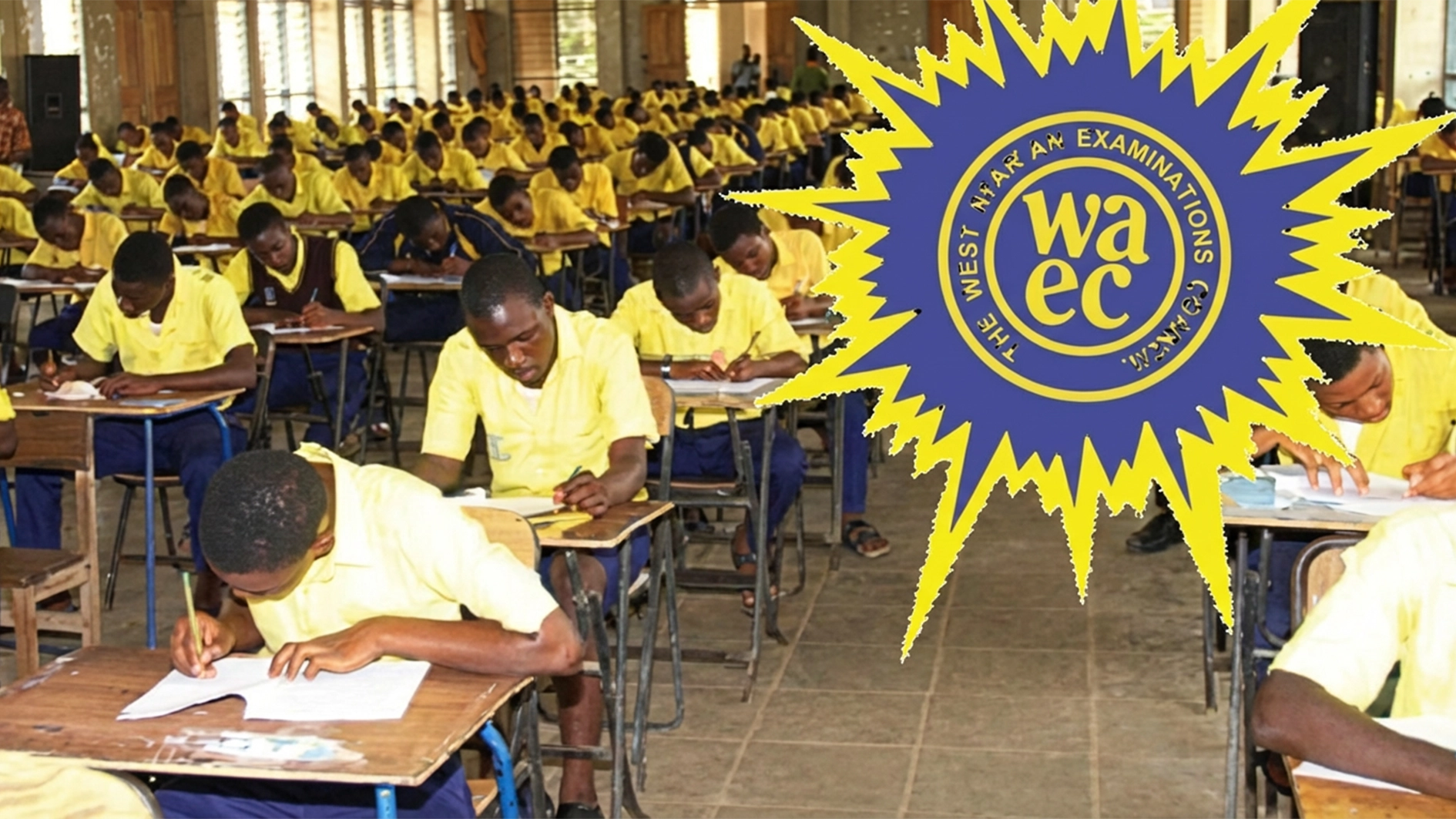
Nigeria’s tertiary sector enrols nearly two million undergraduates, yet staffing remains woefully inadequate.
A National Universities Commission (NUC) 2025 analysis reveals that federal universities, which handle 58.3 per cent of enrollment, employ 17,836 lecturers, while state universities, managing 38.5 per cent of students, operate with only 7,586 staff, and private universities, serving 3.1 per cent of the student population, make do with just 1,972 lecturers.
Optimal needs demand 34,712 staff nationwide for effective delivery, according to the United Nations Educational, Scientific and Cultural Organisation’s (UNESCO) ratios, but the shortfall exceeds 7,000 positions, worsened by 20 per cent annual retirements from the senior cadre without adequate replacements.
ASUU President, Chris Piwuna, highlighted that federal hiring freezes under the previous administration overworked lecturers and crippled teaching, leading to retirements, deaths, and resignations that left persistent vacancies.
Polytechnics and colleges of education face parallel challenges, as the Nigeria Union of Teachers (NUT) reported a 194,876 primary teacher deficit in 2024, which escalated to 278,000 by 2025, according to estimates from the Teachers Registration Council of Nigeria (TRCN) and the Universal Basic Education Commission (UBEC).
The University of Ibadan has advertised more than 200 roles, the Nigerian Army University Biu is seeking 150 positions, Federal University Oye-Ekiti needs dozens of staff, and the Federal University, Otukpo, has posted multiple vacancies, yet responses remain tepid amid 30 per cent-plus inflation that erodes professor salaries of N525,000 to N800,000 monthly – barely enough to afford basics like rice at N80,000 per bag.
The japa wave of mass emigration claims over 5,000 lecturers yearly, according to ASUU estimates, with more than 2,300 Nigerian academics relocating to the United Kingdom (UK) alone since 2021.
This academic emigration has created a twin crisis: universities are unable to replace retiring professors, and their widely advertised job vacancies go unanswered. The result is a looming catastrophe that threatens to invalidate entire academic programmes, severely diminish the quality of graduates, and ultimately extinguish the nation’s capacity for independent research and innovation.
In critical, high-demand fields such as medicine, engineering, computer science, and specialised sciences, some departments have lost nearly 30 per cent of their senior faculty over the past five years. When a professor emigrates, they take with them decades of research experience, institutional memory, and supervisory capacity, all of which are assets that are impossible to replace overnight.
UNILAG’s 60 per cent staff loss reflects national trends, particularly hitting medical, engineering, and IT faculties hardest, much like the parallel exodus of 15,000 doctors in 2024 and 2025.
Push factors include poor welfare, frequent strikes, 16 ASUU actions since 1999, including the October 2025 warning strike that delayed graduations of millions of undergraduates, and promotions that take over 10 years compared to five abroad. Pull factors are compelling, with institutions in the United States and the UK offering yearly equivalents of N10 to N20 million.
Retirees from the professor and reader cadres, representing 20 per cent of senior staff, exit without juniors to fill their shoes, as promotions freeze amid a N290 billion salary gap stemming from education’s meagre seven per cent budget allocation of N3.52 trillion in 2025, far below the UNESCO-recommended 15 to 20 per cent.
Lecturers increasingly “visa-shop” abroad or hop between institutions to meet NUC accreditation headcounts, further fragmenting expertise across the system.
The NUC mandates at least 70 per cent staffing for accreditation, and failures lead to programme delisting, as happened to 15 universities in 2024, with more at risk in 2026.
UNILAG resorted to full virtual learning for the 2024/2025 Semester due to these shortages, combined with campus renovations, severely undermining hands-on training in labs and clinics.
Quality inevitably craters as student-lecturer ratios reach 1:200 in some departments, far exceeding UNESCO’s ideal of 1:20, leading to rushed classes, a heavy reliance on adjuncts, and a 22 per cent dropout rate.
A 2025 study directly links these deficits to 35 per cent graduate unemployment, as skills become obsolete for high-paying tech and oil jobs that offer three times the compensation of academia.
Young PhD holders are increasingly viewing lecturing as a poverty trap, with Lecturer II positions paying between N250,000 and N350,000 monthly and workloads tripling after prolonged strikes.
ASUU’s Piwuna posed the stark question: “Who wants perpetual poverty?” when tech firms lure talent with remote work and oil companies pay substantial premiums.
Strikes routinely waste years, stretching four-year degrees to six or seven years, while promotions lag by a decade or more, compared to those who spend five years abroad, with no housing allowances, research grants, or retention bonds in place.
Desperation is evident in recent recruitment drives across key institutions. UNILAG continues hiring after its massive 1,800-staff loss, but faces low response rates and resorts to virtual pivots at a 1:60 ratio.
The University of Ibadan has advertised over 200 roles but has seen a 30 per cent drop in applications, prompting accreditation probes. The Nigerian Army University, Biu, struggles to attract 150 lecturers amid instability that deters civilian academics.
Newer universities, such as Federal University Oye-Ekiti, report near-zero applications for dozens of positions due to uncompetitive pay, while Federal University, Otukpo, among others, faces low interest due to its rural location and poor infrastructure.
Education Minister Tunji Alausa has highlighted inefficiencies, such as having 1,200 staff for 800 students in some universities, while approving just nine private institutions after reviewing 551 applications.
The Tertiary Education Trust Fund (TETFund) allocated N250 billion for revitalisation, but disbursements have proceeded slowly, and President Bola Tinubu’s approval of 67 new courses amid these gaps has drawn sharp criticism.
ASUU continues to demand the renegotiation of the 2009 agreement for improved welfare, while critics argue that hiring freezes imposed by the previous administration remain in effect.
Experts propose a multifaceted roadmap, starting with inflation-tied salary hikes and parity between professors earning N633,333 monthly and senators at N21 million.
They advocated fast-track promotions within five years, diaspora bonding schemes, and enhanced research grants to retain talent.
Retention could include visa restrictions for newly minted PhDs and partnerships with industry for adjunct roles.
Digital solutions, such as hybrid teaching models and stronger firm collaborations, such as the University of Ibadan’s town-gown fair, offer immediate relief.
Finally, committing 15 per cent of the national budget to education and surging teacher training programmes would address root causes.
Prof. Ikechukwu Onyishi of the University of Nigeria, Nsukka, has warned that an overstretched workforce signals a decline in quality and poses a risk to Nigeria’s future.
Piwuna echoes similar sentiments, stating that without welfare fixes, an accreditation cascade failure is inevitable.
These deficits impose massive economic costs, including brain drain remittances that flow abroad rather than being reinvested locally, and a staggering $28.65 billion spent on foreign education between 2010 and 2020.
With 1.9 million Unified Tertiary Matriculation Examination (UTME) applicants yearly and only 800,000 admission slots, the shortage exacerbates access inequality. Meanwhile, 35 per cent youth joblessness continues to fester, hindering national productivity.
On the global stage, Nigeria lags behind peer nations in university rankings, even as they invest heavily in academia.
An urgent fiscal injection is essential: doubling the education budget, enforcing incentives, and mandating industry ties could stem the tide.
Without such measures, accreditation implosions will shutter programmes, birthing a generation of undereducated masses ill-equipped for the knowledge economy.
The exodus of faculty is not merely a staffing problem; it is an existential threat to the quality and legitimacy of Nigerian higher education programmes.
The National Universities Commission (NUC), the regulatory body, maintains stringent quality control measures centred on the faculty-to-student ratio (FSR).
The NUC mandates specific FSRs for every discipline to ensure adequate teaching and supervision: medicine: 1:9, engineering: 1:12 and humanities/social sciences: 1:15 to 1:20.
When a department loses senior faculty and cannot fill the vacancies, it violates these FSR guidelines. Institutions that fail to maintain the mandatory FSR are immediately flagged by the NUC, with dire consequences, including denial or withdrawal of accreditation.
This threat forces institutions to adopt desperate, short-term measures, such as borrowing lecturers from sister institutions, a phenomenon known as “accreditation tourism.”
Lecturers move from one university to another simply to be physically present during NUC inspection periods, demonstrating the talent scarcity and the cynical measure required to maintain accreditation status without addressing the underlying deficit.
The crisis is not just about the lecturers leaving; it is about the entire future of intellectual leadership in Nigeria.
The current cohort of professors, the “Boomer” generation of Nigerian academia, is nearing retirement age. The crucial link in the talent pipeline is the young Lecturer I and the Assistant Lecturer, who are groomed to take over the mantle of professorship. With these entry-level vacancies left unfilled, the pipeline is severed.
This scenario guarantees a profound decline in educational quality, as the nation will be left with faculty staffed by underqualified, overworked junior staff, effectively rendering the degrees issued by these institutions increasingly meaningless in the global marketplace.
Prof Usman Aliyu of Bayero University, Kano (BUK), said universities must be given greater fiscal autonomy to generate their own revenue and use those funds to offer competitive salaries.
Besides, Aliyu noted that government funding must be dramatically increased from the current 7.07 per cent to at least the UNESCO-recommended 15-20 per cent, with specific targeting of academic wage enhancement.
On his part, Prof Segun Aremu of Ekiti State University (EKSU), stated that promotions must pivot to reward applied research, patents, and successful industry partnerships.
This, Aremu noted, would create a virtuous cycle where academics are paid better for generating solutions that, in turn, fund the university.
Similarly, education consultant, Dr Nkechi Anunebe, pointed out that special, accelerated mentorship and promotion programmes must be implemented for young, first-class graduates who choose to pursue academic careers.
Anunebe added that scholarships, research grants, and paid international exchange programmes should be used to make lecturing an attractive and prestigious career path again, reversing the perception of “perpetual poverty.”
Until the Nigerian state treats its academic staff as highly valued human capital, the brain drain will continue to intensify, leading to the ultimate risk: a generation of students educated in institutions whose academic quality, and thus their degrees, are formally invalidated by a collapsing faculty-to-student ratio.