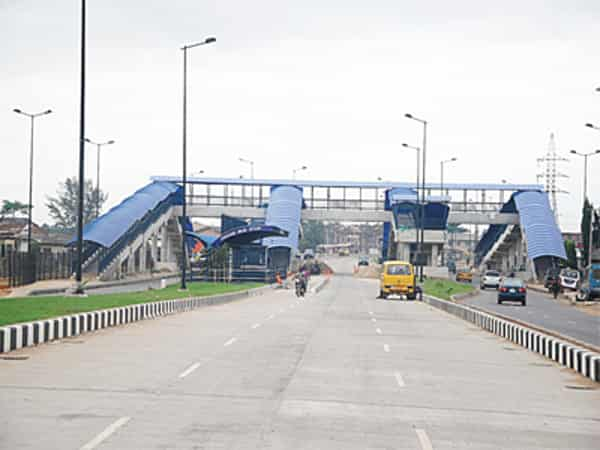
When the Lagos State government promised to bring more BRT buses to Ikorodu Road, residents were hopeful. The announcement came with assurances of shorter waiting hours, smoother boarding and a better commuting experience.
Many residents within Ikorodu and its environs rely on BRT to beat traffic, so the news sounded like relief was finally on the way. But months after the new buses and bus stops were introduced, commuters say the situation has not improved. They even said it has become worse.
Instead of shorter queues and faster movement, commuters now face disorderly terminals, frequent bus breakdowns and rising tension between passengers, drivers and coordinators.
The BRT system that was once praised as a model for public transport in Lagos has become a daily test of patience for many commuters along the Ikorodu corridor.
Temitope Kabiru is not a regular BRT user. She said she only uses the service occasionally because she does not really go out. But an experience she had at the Ikeja terminal was enough to leave a lasting impression. “I stood in the queue for good two hours that day. Buses were parked right there in the terminal, but they refused to pick up passengers,” she said.
According to her, the frustration at the terminal quickly escalated because passengers who had been waiting for hours could see buses available, yet none moved. When people questioned the delay, the situation escalated.
“The coordinator started shouting at passengers, and when people reacted, he vowed not to let some of them enter the bus,” Kabiru said. She added that when buses eventually moved forward, they were already almost full.
“Once in about one hour, they would bring a bus forward. But before it reached where people were standing on the queue, some persons who were never in the queue were already seated in the bus,” she said. “That escalated the tension and reaction from the commuters in the queue.”
What made the experience worse for her was the reaction of officials at the terminal. “Instead of calming the situation, the coordinator promised not to let one of the protesting passengers enter the bus,” she said. People she spoke to in the queue told her that this behaviour was normal at the Ikeja terminal. “They said that’s how it has always been,” she added.
For Sofiya Owolabi, the BRT still has its advantages. She chooses it because it is economical and moves on a dedicated lane, which helps her beat traffic during peak hours.
“BRT is convenient and faster, especially during rush hour. That’s why I still opt for it.” However, those benefits often disappear during festive periods or peak periods. “There have been times when we queued, and there was no BRT in sight. This mostly happens when I close from the office or during festive seasons.”
On such days, she said she has no choice but to abandon the queue and board other public buses. “I’ve had to take the red bus because time was slipping by,” she said.
Owolabi has also witnessed confrontations between drivers and passengers. “I’ve seen BRT drivers exchange words with passengers, and it was really extreme,” she said. Despite waiting for long hours, she said passengers are not always guaranteed a seat or even a place inside the bus.
“There are times when people who have been in the queue for hours are still unable to board the BRT,” she said. Still, she describes her overall experience as mixed. “It’s a bittersweet experience. It can be chaotic, but you also meet people, talk and connect. Sometimes that makes it a little memorable,” Owolabi said.
Babatunde Olamilekan, another BRT commuter, said the service has fallen short of its purpose. According to him, the BRT was designed to ease Lagos traffic, but corruption at many terminals has instead ruined the system.
“I choose BRT to beat traffic, but what is happening at the terminals these days is terrible,” he said. According to him, passengers who patiently queue are often cheated.
“You stand in the queue for hours, and when the bus finally arrives, they smuggle some people in. If you talk, they start fighting you.” Olamilekan alleged that BRT officials deliberately reserve seats or standing space for certain people.
“They will tell you not to sit there, even after you’ve stood for hours. They keep the space for people who are not even around yet.” He said passengers are often afraid to speak up. “You dare not talk, because if you do, they will fight you,” he added.
Beyond the terminal chaos, he raised concerns about the condition of the buses themselves. “The buses break down on the road every now and then. Imagine a Monday morning, going to work, and your BRT breaks down on the road.”
“You enter the bus after fighting and queuing for hours, then you get to Mile 12 overhead bridge, and the bus breaks down,” he said. According to him, Ikorodu Road commuters appear to bear the brunt of the problem. “Only God knows why it is we on Ikorodu Road that deserve these rickety buses. Even by looking at them, they look worn out.”
He observed that many of the BRT buses breaking down midway into the journey were usually the old BRT buses that were refurbished and painted in blue and white, especially old red buses.
Adebimpe Alarape is a regular BRT commuter. Cost is not Alarape’s main concern. “I choose BRT to save time,” she said. She believed the introduction of new BRT buses along Elepe and Odonguyan, meant to improve the commuting experience, has only made the situation worse.
“Since these new buses started, it has been very hard. The drivers behave like touts. They don’t behave in a civilised way at all.” One issue that bothers her is the preference for standing passengers. “They prioritise standing, and I don’t understand why,” she said. She recalled an incident while going from Elepe to TBS. “There was an empty bus right in front of us. But the coordinator told us that the bus was not going to TBS.”
Instead, passengers were instructed to enter an already filled bus. “She wasn’t calm about it. She was fighting passengers who refused to enter the filled bus to stand,” Alarape said.
Moments later, the situation changed. “They eventually packed the filled bus with people, and then the empty bus came and carried us,” she said. “It was the same bus they said was not going to TBS.”
Alarape described another incident that happened on December 17, 2025, which she said showed how bad things have become. The bus picked up passengers from Oshodi and was heading to Elepe. People were already standing.
“When we got to Maryland, the driver decided to carry more standing passengers,” she said. Both passengers inside the bus and those outside protested. “The people inside said there was no space, but those in the queue outside said they wanted to enter,” she said.
What followed was chaos. “The people outside started pouring sand into the bus, while those inside the bus retaliated by pouring water on them.” The situation quickly escalated. “They started throwing stones into the bus,” she said. Instead of driving off, she said the driver made things worse.
“He parked at the bus stop, came down from the bus and joined the fight against the passengers,” she said. According to her, that was not the first time she had experienced such an incident. “This is just one of many uncivilised things that happen on the Ikorodu BRT corridor. People there act like they are doing passengers a favour.”
Reacting, the Public Relations Officer of Lagos Metropolitan Area Transport Authority (LAMATA), Kola Ojelabi, said the agency is not aware of any formal complaints about misconduct or poor service along the Ikorodu Road corridor.
He said while LAMATA regulates and franchises BRT operations in Lagos, not all high-capacity buses using major routes are necessarily BRT buses under its direct control. According to him, some buses operating on Lagos roads are brought in by private investors and may run on mixed traffic, making it important to clearly distinguish between fully franchised BRT services and other bus operations.
He provided channels in which passengers can express their grievances, which are the LAMATA official channels. According to him, commuters can send emails or call its official phone numbers to lodge complaints or send messages, especially after official working hours. He also denied knowing of BRT buses plying Elepe to Oshodi or TBS; he said they will have to look into it.