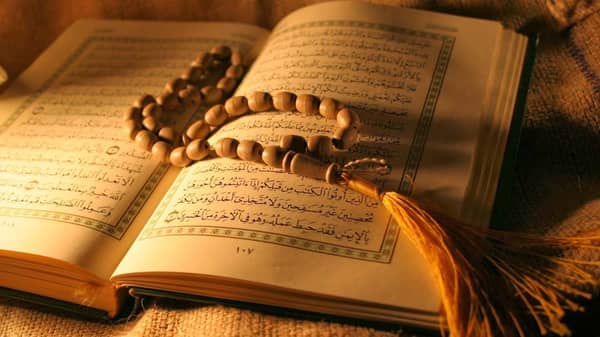
“There is indeed a lesson in these stories for men of common sense. It is not an invented tale, but a confirmation of previous scriptures – a detailed exposition of all things, and is a guidance and blessing for the people who believe.” (Q12: 109-111).
Consider this scenario brethren! A sister of yours arrived in Lagos the other day from the village. She collected her luggage from the driver of the bus, took some time to refocus her itinerary and then proceeded to the bus stop. She then realized she would need to cross the road to the other side in order to board another bus towards her destination.
Lo and behold! Immediately she got to the other side of the median, she was knocked down by the same bus which brought her successfully to the city! Qadar.
Brethren, the Prophet once asked the companions, and rhetorically too: “where are the real believers in the Almighty in this city”? The companions all chorused: “Here we are O! Prophet! We believe in Him”. Then he, the Prophet, asked them once again: “What is the evidence of your faith in him?” Then Muadh b. Jabal, that companion of exemplary character, responded saying: “The evidence of my faith in Him is that each time I take a step forward, I am aware that I may not be alive to take the next one!”
Yours sincerely once told someone in distress: “Brother, we are all like pawns in the chessboard of the Almighty; we constantly live with the illusion that we are the ones in the control of our affairs; we often forget the real control is with Him.”
Thus, the Muslim life cannot but be tempered by the desire to make use of the Qur’an as his compass in life and his secret weapon. A Muslim who knows what this world really is would want to know how our forebears, those who had been privileged to come this path, have succeeded in leaving behind such milestones and achievements as would forever remain indelible in the sands of time. He would approach the Qur’an to read the unread: the unread in the life and times of Prophet Adam, Nuh, Lut, Isa, Musa and Muhammad (Upon them be peace and blessings of the Almighty). He would want to learn about the wars the Prophet fought and won in order to know how to win the many battles of existence that he constantly engages in.
Such a Muslim would be interested in knowing why the Qur’an is full of references to sons and daughters of Israil and why the longest chapters of the Qur’an appear to have been dedicated exclusively to the ‘celebration’ of the divine patronage of the Jewish nation and the declamation of the Jewish recalcitrance and disobedience to the Almighty.
Brethren, is it not true that he who inherits a nation without war would find it easy to relinquish it given the slightest opportunity? Is it not true that we hardly value and cherish what comes our way without difficulties; it is that which we strive hard for that we cherish and adore the most.
Brethren, my sister who knows what the world is and is meant to be would approach the Qur’an in search of adornments for her soul. She would ‘sit’ with the Qur’an on a daily basis in order to know what pleases Him from what displeases Him. She would not reduce the Qur’an to a mere adornment for her office table, desk or vehicle.
Brethren, when we desire to know the meaning of our world, the Qur’an beckons on us to ponder our life and the life of creatures which are lesser in status than us. Please ponder the above verse of the Qur’an and the story below.
One Sunday morning, a wealthy man sat in his balcony enjoying sunshine and his coffee when a little ant caught his eye. The ant was going from one side of the balcony carrying a big leaf several times more its size. The man watched it for more than an hour. He saw that the ant faced many impediments during its journey, paused, took a diversion and then continued towards its destination.
At one point, the tiny creature came across a crack in the floor. It paused for a little while, ‘analyzed’ the situation and then laid the huge leaf over the crack, walked over the leaf, picked the leaf on the other side then continued its journey!
The man was captivated by the cleverness of the ant, one of the tiniest creatures in nature. The incident left the man in awe and forced him to contemplate the miracle of creation. Here the ant becomes a ‘teacher’. Here the ant becomes a signifier: the signified being the Almighty Allah. In front of his eyes, the man beholds a tiny creature of Allah, lacking in size yet equipped with a brain to analyze, contemplate, reason, explore, discover and overcome. But in addition to these wonderful endowments and capabilities, the man also noticed that this tiny creature also shared some human shortcomings: it is burdened by the worthlessness of existence and the pursuit of the worthless.
In other words, about an hour after its ‘long journey’, the creature eventually arrived its destination-a tiny hole in the floor which was the entrance to its underground dwelling. And it was at this point that the ant’s shortcoming that it shared with the man became evident. How could the ant carry into the hole the large leaf that it had managed to carefully bring to its destination? It simply could not.
Thus, the tiny creature, after all the hard work, after the stress, the pain and strain could not take the leaf inside its real dwelling. Eventually, it had to leave it behind and went home empty-handed!
Brethren, ponder this story and ask yourself about ‘the ant’ in you and me. Is it not true we equally have ‘big leafs” we are carrying all around the city? Is it not true that we are burdened by the demands of our family and our job? Is it not true that we are weighed down about the search for more money, bigger accommodation, newer cars and the clothes to wear? Is it not true that when eventually we reach our destination, our ‘holes-our graves- all these shall be left behind the same way the ant left the big leaf behind? Is it not true that all material acquisitions of this world are actually of no value; that what should count in our lives is the uncountable?