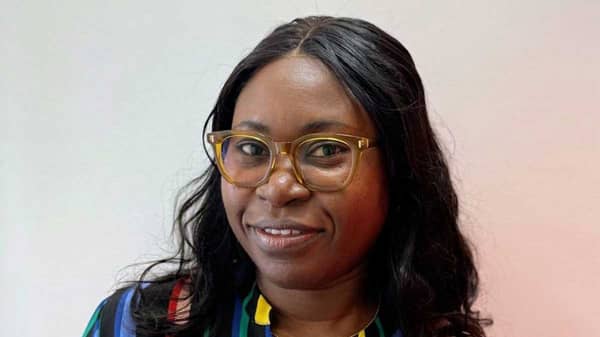
In the mounting global effort to reduce cancer mortality, technological innovation is emerging as one of the most promising avenues for intervention. Among the trailblazers advancing this mission is MariaTheresa Chinyeaka Kelvin-Agwu, an independent researcher based in Lagos, Nigeria, whose voice is increasingly shaping the discourse on how artificial intelligence (AI) can be ethically and effectively applied to medical diagnostics—especially in underserved regions.
Maria co-authored the recent peer-reviewed publication titled “Artificial Intelligence-Based Systems for Cancer Diagnosis: Trends and Future Prospects,” a comprehensive and forward-looking review that delves into the potential of AI-based systems to transform early detection, risk stratification, and clinical decision-making in oncology. The paper, which brings together contributors from both the United States and Nigeria, highlights a compelling truth: the future of medicine lies at the intersection of data science and compassionate healthcare delivery. And Maria is helping to shape that future.
The publication explores an array of machine learning and deep learning models—from Convolutional Neural Networks (CNNs) and transformer-based models to radiomics and multi-omics integrations—all of which are now pushing the boundaries of what’s possible in diagnostic accuracy. Maria’s involvement in this work was pivotal. She was not merely a contributor to the text; she was a leading voice in ensuring the focus remained on practical applicability, performance transparency, and population-wide fairness.
Her central argument was clear: artificial intelligence, if left unchecked, risks becoming another tool that serves only the privileged. Instead, Maria urges for an implementation strategy that addresses algorithmic bias, healthcare disparity, and infrastructural limitations in lower-income settings. “Technology without equity,” she noted during a recent forum discussion, “is innovation without conscience.”
This ethical stance is grounded in her multidisciplinary training and lived experience. Maria holds a robust background in health research and has long focused her academic pursuits on bridging the technological gap in healthcare delivery. Her work frequently intersects public health, informatics, and digital literacy, making her one of the few independent researchers who can translate the complexities of AI modeling into policy-relevant insights for both local and international stakeholders.
In the publication, Maria specifically championed a discussion on key evaluation metrics—such as accuracy, sensitivity, specificity, and the area under the receiver operating characteristic curve (AUC-ROC)—used to validate AI-based diagnostic tools. While these terms may seem like technical jargon to some, Maria explains their life-and-death importance with remarkable clarity. “When an AI model mislabels a cancerous lesion as benign, that isn’t a software bug—that’s a person who might die unnecessarily,” she says. For her, each percentage point in model accuracy represents a real human consequence.
The paper doesn’t stop at theoretical analysis. It underscores real-world use cases where artificial intelligence has outperformed traditional diagnostic methods in interpreting medical images—such as MRIs, CT scans, and histopathological slides. Maria was especially instrumental in compiling and evaluating these case studies. Her goal was not to marvel at technology, but to interrogate its utility: Is it reproducible across different clinical settings? Can it operate without expensive infrastructure? Will it benefit rural clinics as much as urban hospitals?
Answering these questions, Maria pushed for a greater emphasis on explainable artificial intelligence (XAI)—a subfield of AI that seeks to make algorithmic decisions transparent and understandable to clinicians. In her view, no diagnostic system, regardless of its statistical accuracy, should be deployed without accompanying interpretability frameworks. Physicians and patients alike must be able to ask, “Why did the system make this recommendation?” and receive an intelligible, justifiable response.
Her commitment to clarity, fairness, and inclusion sets her apart in a field that is often obsessed with abstraction and speed. “We have to slow down,” she asserts. “Not to halt innovation, but to ensure we are innovating in the right direction.”
Maria also played a key role in articulating the challenges of data quality—particularly in African health contexts. She has often warned that AI models trained on Western datasets may underperform or even fail when applied to populations in Sub-Saharan Africa due to differences in genetics, disease prevalence, and even image capture protocols. To mitigate this, she encourages international research bodies to invest in diverse training datasets, advocate for data-sharing consortia, and support federated learning models that allow for local model refinement without compromising patient privacy.
Beyond her academic and technical contributions, Maria is a powerful advocate for healthcare worker empowerment. She leads workshops and speaks regularly at women-in-science initiatives, encouraging young professionals to develop cross-cutting skills in data literacy, epidemiology, and ethics. For her, the ultimate goal of technology is not automation—it is amplification of human capacity.
“I want to see a world where a midwife in a remote village can access real-time diagnostic support powered by artificial intelligence, and where a cancer diagnosis doesn’t depend on a person’s zip code,” she says. This vision is what animates her research and advocacy.
Her story is emblematic of a new generation of African thinkers who are not content to merely participate in global dialogues—they are reshaping those dialogues with context-rich, solution-oriented perspectives. She does not approach cancer diagnostics as a problem to be solved in a vacuum, but as a multifaceted challenge that involves clinical nuance, cultural sensitivity, and systemic reform.
As artificial intelligence becomes increasingly embedded in global health systems—from pathology labs in New York to remote clinics in rural Africa—Maria Kelvin-Agwu’s work is proving to be foundational. Her ability to move between technical and ethical domains, to merge policy insight with scientific acumen, and to translate cutting-edge research into practical guidelines is precisely what makes her contributions so significant.
And as the paper concludes by mapping out future prospects—ranging from real-time biosensor integrations to wearable health devices and remote patient monitoring systems—Maria’s voice remains one of the most compelling. She warns against techno-utopianism while still insisting on the power of innovation to drive change.
“Innovation is not just about what we create,” she recently noted during a seminar. “It’s about who it serves, and whether it builds bridges—or walls.”
This ethos runs through all her work. Whether she is evaluating a CNN model’s performance or participating in multistakeholder policy roundtables, Maria remains grounded in a human-centered approach. Her focus on low-resource applicability, healthcare access equity, and open-source dissemination makes her a formidable voice not just in oncology, but in the broader field of digital global health.
Today, as national governments, healthcare regulators, and multilateral agencies debate how best to incorporate artificial intelligence into diagnostic workflows, Maria’s insights are more timely than ever. Her work reinforces the notion that ethical deployment is not a secondary concern—it is the very foundation upon which sustainable and scalable innovation must be built.
In a field where many still view Africa as a recipient rather than a generator of high-tech medical solutions, Maria defies the narrative. She does not see Lagos as being on the periphery of innovation but rather as an epicenter of bold, ethically grounded research that is tackling some of the world’s most pressing health challenges head-on.
Her contribution to the publication “Artificial Intelligence-Based Systems for Cancer Diagnosis: Trends and Future Prospects” is not simply a scholarly achievement—it is a manifesto for how we should think about technology, ethics, and the moral responsibility of innovation.
As the global cancer burden continues to rise—particularly in low- and middle-income countries—leaders like MariaTheresa Kelvin-Agwu offer a roadmap for how to navigate this challenge with clarity, equity, and precision. Her message is simple yet profound: the smartest technology is that which leaves no one behind.
And in this message lies both the power and the promise of her work. As artificial intelligence transforms from concept to cornerstone in modern healthcare, Maria ensures it carries with it the values that matter most—equity, transparency, and humanity