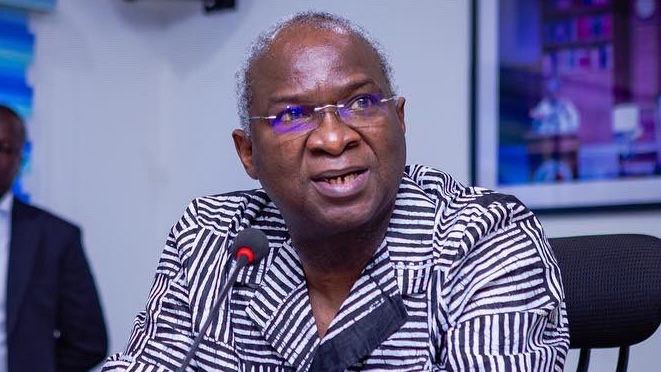
Michael Akintayo is Chief Growth Officer at Finxpire Digital Network. He speaks on his journey in transforming Africa’s marketing landscape, sharing insights on leadership, innovation, and his vision for global impact.
How did you begin your journey with Finxpire Digital Network?
I joined Finxpire in 2023 as Growth Marketing Manager and rose to Chief Growth Officer. Finxpire’s mission to revolutionise access to digital products and connect sellers to customers in Africa resonated with me. With my background in data-driven strategies, I saw an opportunity to build scalable solutions that could drive user growth and engagement across the continent.
You grew Finxpire’s user base significantly. What was your approach?
It was all about leveraging data to understand user behaviour. I led user acquisition campaigns that scaled our active user base from a small number to over 100,000 in just 18 months. While there are various ways we did it, what stood out is optimising email marketing and the customer journey; we reduced churn by 38% and boosted retention to over 80%. These efforts often drive over ₦1.52 billion (about $900,000) in monthly revenue, cementing Finxpire’s position as a leader in Africa’s digital marketing space.
Your work has been pivotal in driving Africa’s marketing revolution through digital technology. Can you start by telling us how you see AI and digital tools transforming marketing in Africa?
AI and digital technologies are game-changers for African marketing. The continent’s diverse markets and youthful population, over 60% under 25, create a unique opportunity for hyper-targeted, scalable campaigns. AI enables businesses to analyse consumer behaviour in real time, from social media engagement to transaction patterns, allowing for personalised strategies that resonate culturally and locally. For instance, AI-driven tools like predictive analytics help brands optimise ad spend, while chatbots enhance customer interactions, making them faster and more relevant. In Nigeria, where mobile penetration is high, these tools are helping businesses reach audiences in ways that traditional marketing never could.
You’ve been recognised for your innovative strategies in growth marketing. Can you share a specific example of how you’ve used AI to drive results in the African market?
Certainly. One project involved us looking to increase user acquisition in Nigeria and Kenya. We used AI-powered customer segmentation to analyse user data, demographics, spending habits, and even social media activity. This allowed us to craft tailored campaigns that spoke directly to different audience segments, like young professionals seeking investment tools versus small business owners needing loans. We also deployed AI-generated ad copy and optimised it using A/B testing algorithms, which boosted click-through rates by 25%. The campaign’s success showed how AI can bridge the gap between global tech and local needs, a key part of Africa’s marketing revolution.
You’ve also scaled to other African countries. What are the key strategies a Nigerian Startup should adopt to successfully scale into other African markets?
First, localise your value proposition. Africa’s 54 countries vary widely in digital maturity, regulations, and consumer behaviour. For example, South Africa has a mature banking system, ideal for advanced B2B services like liquidity solutions, while Kenya thrives on mobile money like M-Pesa. Fintechs must tailor their offerings, digital lending in Egypt or remittances in Ghana, to local needs. Second, build interoperable systems. Most African payment systems aren’t cross-border compatible, so investing in platforms that integrate with local mobile money or banking networks, like MFS Africa does with 400 million wallets, is critical. Finally, strategic partnerships are key. Collaborating with local banks, telecoms, or regulators, as Interswitch did with Quickteller Paypoint, helps navigate local complexities and boosts trust.
Impressive results! But with Africa’s unique challenges, like infrastructure gaps and limited AI expertise, how do you navigate these hurdles to implement such strategies?
The challenges are real. Poor infrastructure, like unreliable electricity and internet in some regions, can limit AI deployment. For example, over 30 African countries face power shortages, which affect high-performance computing needed for AI. Then there’s the skills gap; Africa needs more local AI talent to develop context-specific solutions. My approach is to start with accessible tools, like cloud-based platforms from Google or Adobe, which don’t require heavy local infrastructure. I also focus on training. Through workshops and mentorship, I’ve helped professionals across sectors learn to leverage AI tools effectively. Collaboration with global tech firms and local innovation hubs, like those in Lagos, is also critical to building capacity.
How did you streamline operations to support growth?
I focused on efficiency and communication. By refining our onboarding process, we cut onboarding time by 40%, making it easier for clients to adopt our platform. I also aligned marketing strategies with Finxpire’s broader business goals, ensuring every campaign delivered measurable impact. This approach not only attracted new users but also strengthened client loyalty.
Strategic partnerships were a big part of your success. Can you elaborate?
Partnerships were critical. I forged alliances with leading brands and affiliates, which expanded our market reach and enhanced our reputation. By anticipating industry trends and adapting our strategies, we stayed ahead of the curve. These collaborations helped position Finxpire as a trusted name in digital marketing across Africa.
You were named Staff of the Year in 2024. What did that recognition mean to you?
Being named Staff of the Year was a huge honour. It reflected my commitment to driving results while inspiring my team. I believe in leading by example, fostering creativity, and empowering colleagues. The award validated my approach to blending strategic vision with hands-on execution.
What challenges did you face in Africa’s digital marketing sector?Limited internet penetration, around 50% in Nigeria, per NITDA’s 2024 data, and digital literacy gaps posed challenges. We addressed these by designing user-friendly solutions and leveraging partnerships with local platforms to reach underserved audiences. Staying agile and data-driven helped us navigate these hurdles effectively.
What’s your vision for the future of digital marketing in Africa?
I see a future where data-driven marketing empowers businesses of all sizes across Africa. With the right infrastructure and education, we can close the digital divide. My goal is to continue building scalable, innovative solutions that drive engagement and growth, not just in Africa but globally.
What message do you have for aspiring tech entrepreneurs in Nigeria and across Africa?*
Dream big, but start small. Focus on solving observable problems irrespective of your niche, whether in health, payments, or education. Embrace failures as learning experiences; my early projects taught me resilience. Build networks with peers by joining relevant communities and seeking mentorship. Africa’s youth represent our greatest strength; code, create, and believe in your potential to compete with top global companies.