GDN SIDEBAR
Winning MBGN in 2007 brought Muna Abii into public view, but music has remained the thread through her work in rap, acting, filmmaking and DJing. She discusses hip-hop’s financial challenges, her love of house music and her search for new forms of creative expression.
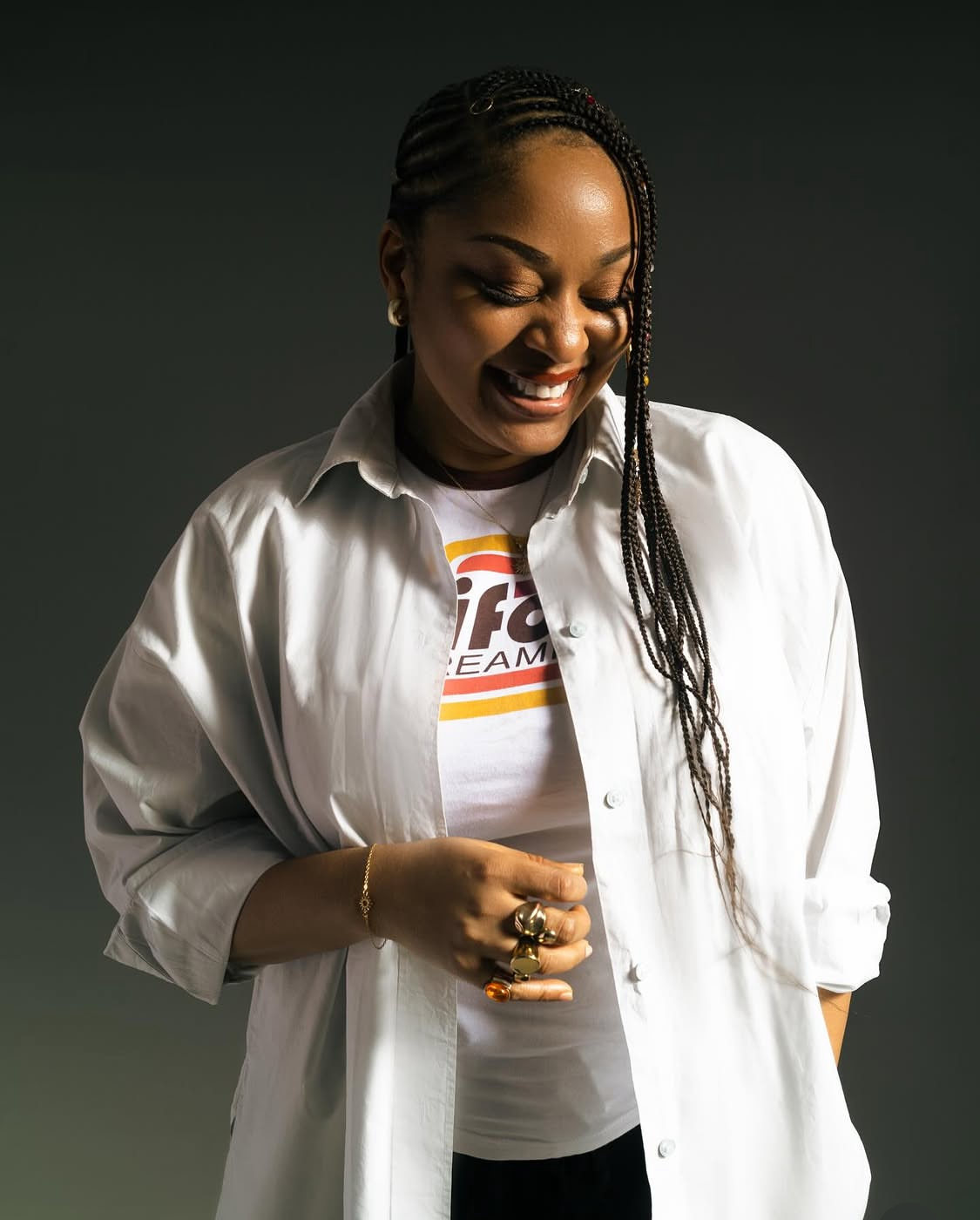
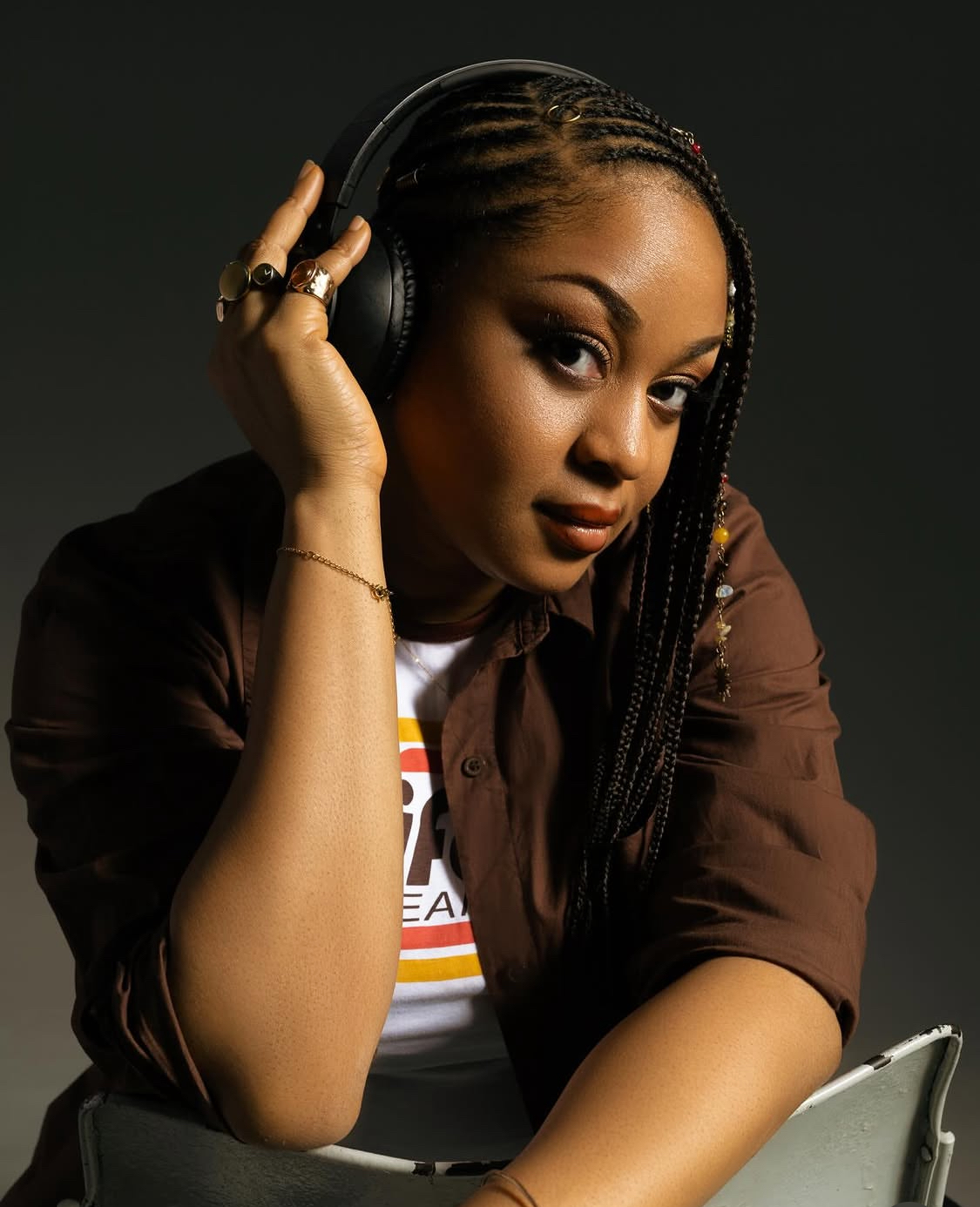 I watched with awe as DJ Sunrise, born Munachi Abii, spun some of her fiery selections of 3-step and Afro-house during the last edition of Group Collective’s bi-monthly marathon rave in Lagos. Interestingly, this was the same person who, 19 years ago, in 2007, first stepped into the celebrity spotlight after winning the Most Beautiful Girl in Nigeria (MBGN) pageant. She also represented Nigeria in China that year at the Miss World competition. All of this happened while she was studying International Relations at Benson Idahosa University in Benin, nonchalant about fame, but fully creatively restless.
It didn’t take quite long for Muna to realise her creative superpower, which is expression, especially in the context of being a multi-hyphenate. She’s confirmed being active as an emerging rapper even before MBGN under the moniker Babyrella in Port Harcourt’s underground hip-hop scene, where she often performed with a rap group called Specimen A. She also recorded with Afrobeats icon Terry Tha Rapman during this period.
After her MBGN fame and the successes that came from it, she ventured fully into rap, signing a management deal with Ayo Shonaiya’s RMG company. She would eventually record several singles, including “I Feel Real,” “Here to Stay,” “Down Down Low,” and “I Choose You,” featuring Lamboginny. She also collaborated with Waje on the inspirational record “So Inspired.” In 2011, she participated in the Black Entertainment Television (BET) Hip Hop Awards Cypher, stamping her prowess as one of the fiercest female lyricists in the game.
Somehow, just before the world went into a global lockdown, Muna Abii reappeared on our screens with a role in the 2019 Nollywood blockbuster Living in Bondage: Breaking Free. At this time, her rap career had already begun to simmer away from the spotlight, following the financial difficulties she encountered while pursuing hip-hop professionally.
Her performance in the movie opened an entirely new pathway for her in Nollywood, where she has continued to explore her talents as an actress and filmmaker. Her subsequent screen credits include Finding Hubby (2020) and Obsession (2022).
With all these hats on her head, 39-year-old DJ Sunrise is reinventing what it means to be a creative artist these days. She has morphed from being a model to a musician, an actress, a filmmaker and now a disc jockey, all in a bid to fully express her creativity, barring any limitations or situations. The closest example to her odyssey is American musician, actress, producer and TV host, Jada Pinkett Smith. As a DJ, Muna, aka DJ Sunrise, has quickly risen to become a familiar name in Nigeria’s electronic music scene, with her selections of house music, particularly Afro-house, becoming a signature part of her artistry. She has performed at numerous events across Nigeria and has continued to preserve that bubbly, experimental and expressive persona across all her exploits.
Catching up with Guardian Music, the woman of many talents opens up about her journey into modelling and winning MBGN, her life as a bohemian artist and restless creative, the hurdles she encountered with rap music, her transition into Nollywood, the allure of becoming a DJ, and her lifelong ambition to explore the many possibilities of artistic expression.
You were studying International Relations when you became the Most Beautiful Girl in Nigeria. How did you go from being a student to winning a national beauty pageant?
I guess I have to thank my friends for that. They kind of dared me to do it, and it worked out. I was in school in Benin, actually, so it was more or less Benin people. A lot of people, not just people from Benin. My friends were Yoruba, Edo, Igbo, all sorts.
How did life change for you creatively after winning the pageant?
Life didn’t change immediately. As a matter of fact, I assumed it would because everybody told me that it would, but it didn’t change immediately. I went back to school, and I finished, and I was just a regular girl.
I think I knew how to move in silence, if that makes any sense. But you can’t really hide because I can’t really hide. Those that know, know. For the most part, it would seem like people didn’t quite recognise me to start with because I would always wear a T-shirt and jeans. I wasn’t always wearing glamorous clothes all the time as they do now.
I’ve always been real with myself. I don’t like to pretend. I don’t like to do more than I can handle, and I don’t like to live to impress people. That’s how I’ve always lived my life. I live to express myself and to express my creativity, not necessarily to please people.
Is modelling a chapter you’ve completely closed, or is it still part of your creative life?
It’s my life, so I would always reference that. I don’t do runway, obviously, but do I model for products and things like that? I still do, every now and again. That doesn’t stop.
One of the most mind-blowing moments of your rap career, for me, was your appearance in the BET Hip Hop Cypher. How did that experience come together?
Someone actually posted it, and I reposted it today, which is so funny.
I wrote the bars maybe the day before the filming of the video, which was rather interesting because they had given me the beat a while ago. I think I was in the States, but I didn’t really get around to writing on it. It wasn’t necessarily my type of beat, which is weird, right? So it took me a while to actually get into it.
When I got back, Clarence Peters called me and said everybody was in the studio and I should come through. They were shooting the male cypher that day. I remember that.
Mode 9 was teasing me a lot. He’s always done that, though. But they had a lot of respect for me, which is something I don’t take for granted.
When I came in, everybody was like, “Yo, you’re going to do this, right?” And I was like, “Oh my God, guys, calm down.”
So I saw what they were doing, and I thought I had to represent. I wrote my bars and recorded them. Then the next day, because we were there till late and I obviously had to go and sleep, we came back in the morning and shot the female version, if my memory serves me correctly.
I wrote those bars on the spot. I had just touched down from Atlanta and LA.
You say rap was the most exciting expression of your creativity?
Absolutely not. I would say it was my most traumatic experience.
Rap is a beautiful form of expression, but there’s a thin line between being a subtle rapper, being a rapper with sex appeal, or being a conscious rapper.
I was in between all of them. I wasn’t sexual. I wasn’t too conscious, even though I was tilting more towards the conscious side. And I wasn’t necessarily very Nigerian in my rap. So there was a lot of, “Okay, she’s elite.” I never understood that for the life of me. What do you mean, elite? I’m not elite in any way. I’m just me, and I happen to like a certain type of vibe, and I tend to flow like that.
It’s unfortunate because people would have certain impressions about me. Just like you have the impression that I’m a nepo baby, which I’m not.
If I told you that I woke up in the morning and went to hustle and sell garri, you would find it hard to connect that with my physical representation. There was a whole lot of disconnect with that. That’s why it was very, very traumatic for me.
But you had a distinct identity as a rapper. At the time, there were other women like Weird MC who were comfortable occupying their own spaces within hip-hop. Why did you stop?
It wasn’t paying. I’ll be honest with you. It wasn’t paying.
I love rap, and I probably would still do rap. I got into it thinking that I could follow that line as a source of income. Of course, I didn’t know any better because I was young and I was learning.
I got into the game and had expectations of the industry. Obviously, you think people do this to make a living, and I would like to do this to make a living because it’s something that I love.
But it was very difficult. It’s still very difficult to make money with hip-hop.
Now it’s a bit different because there’s streaming. You can have your own community and all of that. But it’s still difficult because you have to invest money into it.
When you invest money into music, it’s not a short-term yield. It’s a long-term thing. Whoever is investing in you knows they’re not getting their money back immediately. It’s a long game.
But if you look at it, I never stopped. I just had to find other ways to come back into what I love.
And one of those ways was acting. How did your journey into Nollywood begin?
Again, it’s still part of the process of finding other ways to express my creativity.
As God and luck would have it, I had friends who were already in the film industry, and a couple of them thought I would make a good actor. So they gave me a shot, and it worked out.
In fact, I didn’t even think I could act when I started. I didn’t think I could act, but apparently, it didn’t seem like that much work to leave myself out of the way and become somebody else.
One of the reasons I went into film was because I wanted to learn how to become someone else when it comes to music. Every part of acting has been a learning curve for the game.
I’m very passionate about music and passionate about my music. If I have to make music, it doesn’t always have to be about me and my experience. I