GDN SIDEBAR
December is fast approaching, and if you’re anything like most people, you’re probably thinking about how to lose weight before the festivities begin. But beyond fitting into that dress or enjoying Christmas without worrying about how big your belly looks, maintaining a healthy weight has far more important implications for your health.
Every week, I see at least 10–12 patients with hypertension, another 8–10 with diabetes, a couple of women with PCOS, and several others presenting with different health complaints. And increasingly, one of the first things I find myself discussing with many of these patients is their diet and lifestyle.
The relationship between what we eat, how much we move, and our overall health is difficult to ignore. Excess body weight, particularly around the abdomen, is associated with insulin resistance, high blood pressure, type 2 diabetes, and several other metabolic complications.
I’ve also seen patients make meaningful improvements in their blood pressure and blood glucose readings by simply following changes to their diets and physical activity.
So, you see, weight loss isn’t simply about having a December to remember. Sometimes, it is about giving your body a better chance at functioning properly.
I know a lot of people are searching for quick fixes. And the internet is ever ready to help with that quest.
Eat once a day! Drink lemon and ginger water! Have you tried this slimming tea? You will purge and purge all your fat out. Cut out carbohydrates! Drink this agbo! Take this pill and lose 10kg in two weeks!
But I think we’ve all tested and seen that many of these approaches promise far more than they can deliver. The weight might come down initially, but maintaining that loss is another conversation entirely.
So, instead of waiting until one week to December 25, why not start now, following a regimen that actually works?
Let’s talk about what the science actually says about losing weight, and more importantly, keeping it off.
 It starts with understanding calories
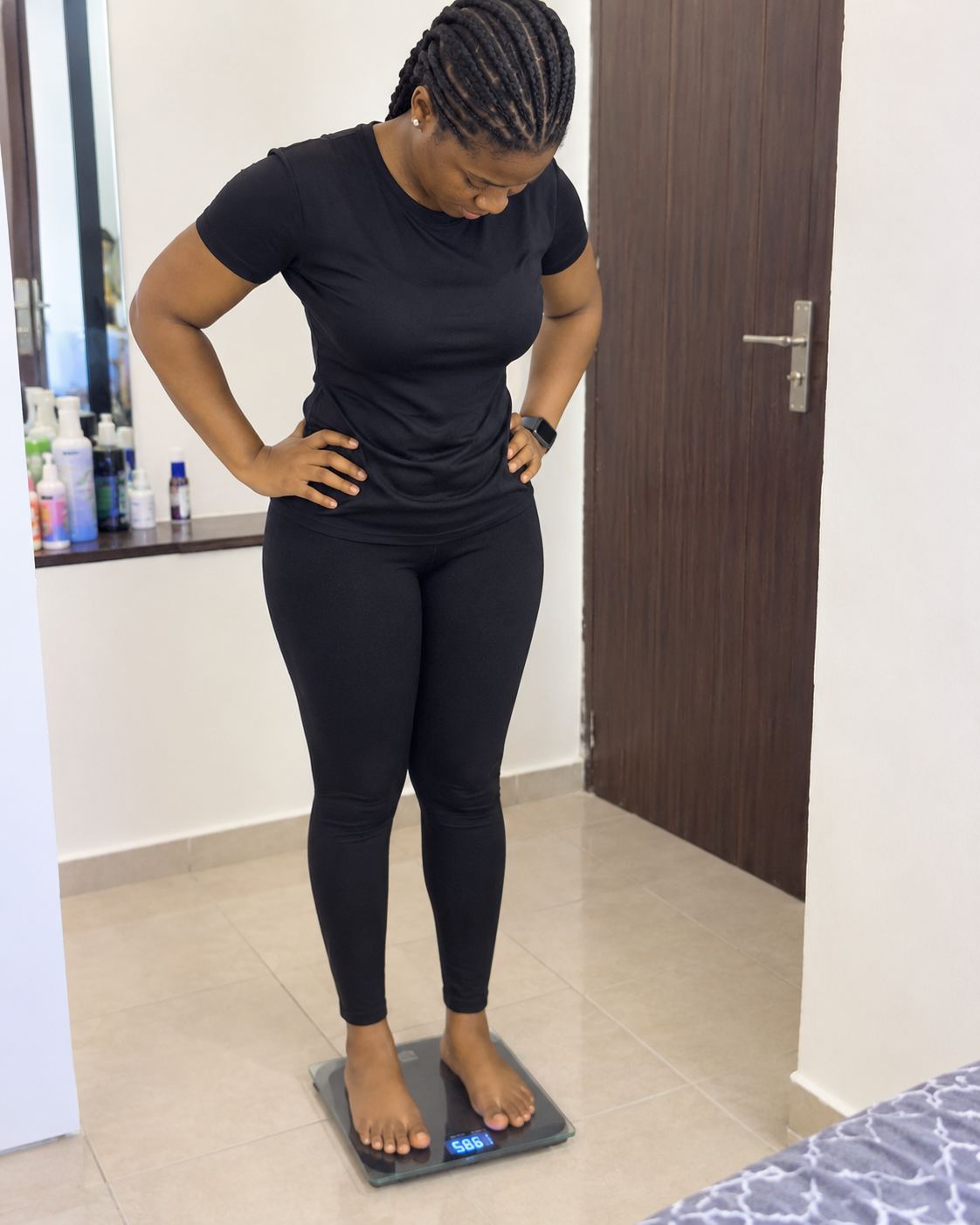
Before we start removing rice, bread, yam, and everything else from our kitchens, there is something important to understand. Weight loss happens when your body consistently uses more energy than it gets from what you eat and drink. This is called a calorie deficit.
Your body needs energy for everything, from breathing and maintaining your body temperature to walking, working, and exercising. Food supplies this energy in the form of calories. When you consistently consume way more energy than your body uses, the excess is stored, largely as body fat. When you consume less than what your body needs, your body begins to use stored energy to make up the difference.
This is the number one basic principle behind weight loss. However, creating a calorie deficit does not mean starving yourself, skipping meals, or surviving on cucumber and boiled eggs.
It means making adjustments to how much you eat, what you eat, and how frequently you consume foods that contribute a lot of calories without keeping you full for very long. And no, you do not have to completely eliminate carbohydrates to achieve this.

You don’t have to stop eating your favourite foods
One of the biggest mistakes people make when trying to lose weight is treating certain foods as though they are completely forbidden. Rice is bad. Bread is bad. Yam is bad. Plantain is bad.
Before you know it, you’re eating a very restrictive diet that you cannot maintain beyond two weeks. The truth is that no single food automatically makes you gain weight. What matters is your overall eating pattern, portion sizes, and how much energy you consume over time.
You can absolutely eat rice and still lose weight. For example, you could start by reducing the rice portion, choosing grilled or air-fried chicken more often, adding vegetables and replacing your sugary drink with water.
Small adjustments like these can make a huge difference when practised consistently.
It also helps to build your meals around foods that provide fibre and protein. Beans, eggs, fish, chicken, vegetables, fruits and whole grains can help make meals more satisfying and provide important nutrients.
The idea is not to eat as little as possible. It is to eat in a way that supports your nutritional needs without consistently exceeding your body’s energy requirements.
Protein and fibre are your friends
If there are two things I would pay particular attention to when planning meals for weight loss, they are protein and fibre. Let’s start with protein. Protein helps maintain muscle mass, particularly when you’re losing weight. It also contributes to satiety, which is simply how full and satisfied you feel after eating.
This matters because one of the biggest challenges with weight loss is dealing with hunger. When your meals contain very little protein, you may find yourself getting hungry shortly after eating and reaching for another snack.
Eggs, fish, chicken, lean meat, beans, milk, yoghurt and soy products are all useful sources of protein, and they’ll keep you fuller for longer. Fibre is equally important. It adds bulk to meals, supports bowel health and can help you feel fuller for longer.
Good sources include beans, vegetables, fruits, oats, whole grains and nuts. So, instead of having a breakfast that consists entirely of tea and bread, you could add boiled eggs. Instead of eating a plate of rice with very little else, include beans or vegetables and a source of protein.
You don’t need expensive protein powders or imported diet foods to make these changes. Your regular foods can do quite a lot of the work.
 Exercise is not optional
Now, let’s address another common misconception. Some people believe that because they are exercising, they can eat absolutely anything and still lose weight.
Unfortunately, it doesn’t quite work that way. Physical activity increases the amount of energy your body uses, but exercise alone may not compensate for consistently consuming more calories than you need.
That said, movement is an important part of successful weight management. The World Health Organisation recommends that adults aim for at least 150–300 minutes of moderate-intensity aerobic physical activity each week. This could include brisk walking, cycling, swimming, or dancing.
You don’t have to spend two hours in the gym every day. A 30-minute brisk walk, five days a week, already gives you 150 minutes. I would also encourage incorporating resistance exercises into your routine at least twice a week. These include exercises such as squats, lunges, push-ups, and weight training. Why does this matter?
Because when you lose weight, you don’t want to lose muscle unnecessarily along with body fat. Resistance training helps preserve muscle mass, while also supporting strength and overall physical function.
And please, don’t underestimate walking. You don’t need an expensive gym membership before you can start moving your body more.
 Sleep and stress matter too
This is the part many people overlook. You have adjusted your meals, started exercising, and are doing everything you believe you should be doing. Yet, your weight management journey still feels unnecessarily difficult.
It may be worth looking at your sleep and stress levels. Poor sleep can influence hormones involved in appetite regulation, including ghrelin and leptin. These hormones are involved in hunger and fullness signals. When you’re consistently sleep-deprived, you may find yourself feeling hungrier, experiencing more cravings, and making food choices that are less aligned with your goals.
Stress can also influence eating habits. Some people eat less when stressed, while others find themselves reaching for food more frequently, particularly foods high in sugar and fat. This doesn’t mean that sleeping for eight hours will automatically make you lose weight. Rather, adequate sleep and stress management are part of a healthy lifestyle that supports weight management.
How quickly should you expect to lose weight?
I know. This is the part everybody wants to know. How many kilograms can I lose in one month?
Everybody wants to lose 10kg in 2 weeks, but the generally recommended rate of gradual weight loss is about 0.5–1kg per week, although individual results vary considerably. The National Institute of Diabetes and Digestive and Kidney Diseases (NIDDK) recommends an initial weight-loss goal of 5–10 per cent of your starting body weight over six months.
For someone weighing 100kg, that is 5–10kg. And before you dismiss that as too little, understand that even modest weight loss can produce meaningful improvements in blood pressure, blood glucose and other metabolic health markers.
You also need to understand that weight loss is not always linear. You may lose 2kg in your first few weeks, then notice that the scale barely moves for another week or two. This doesn’t necessarily