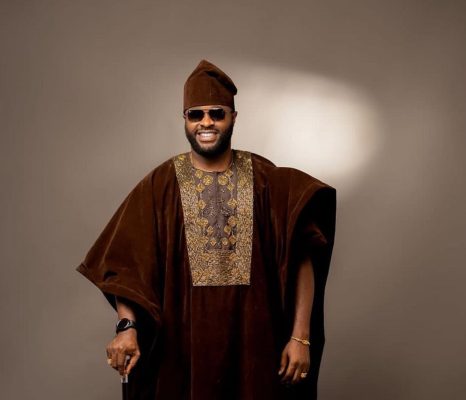
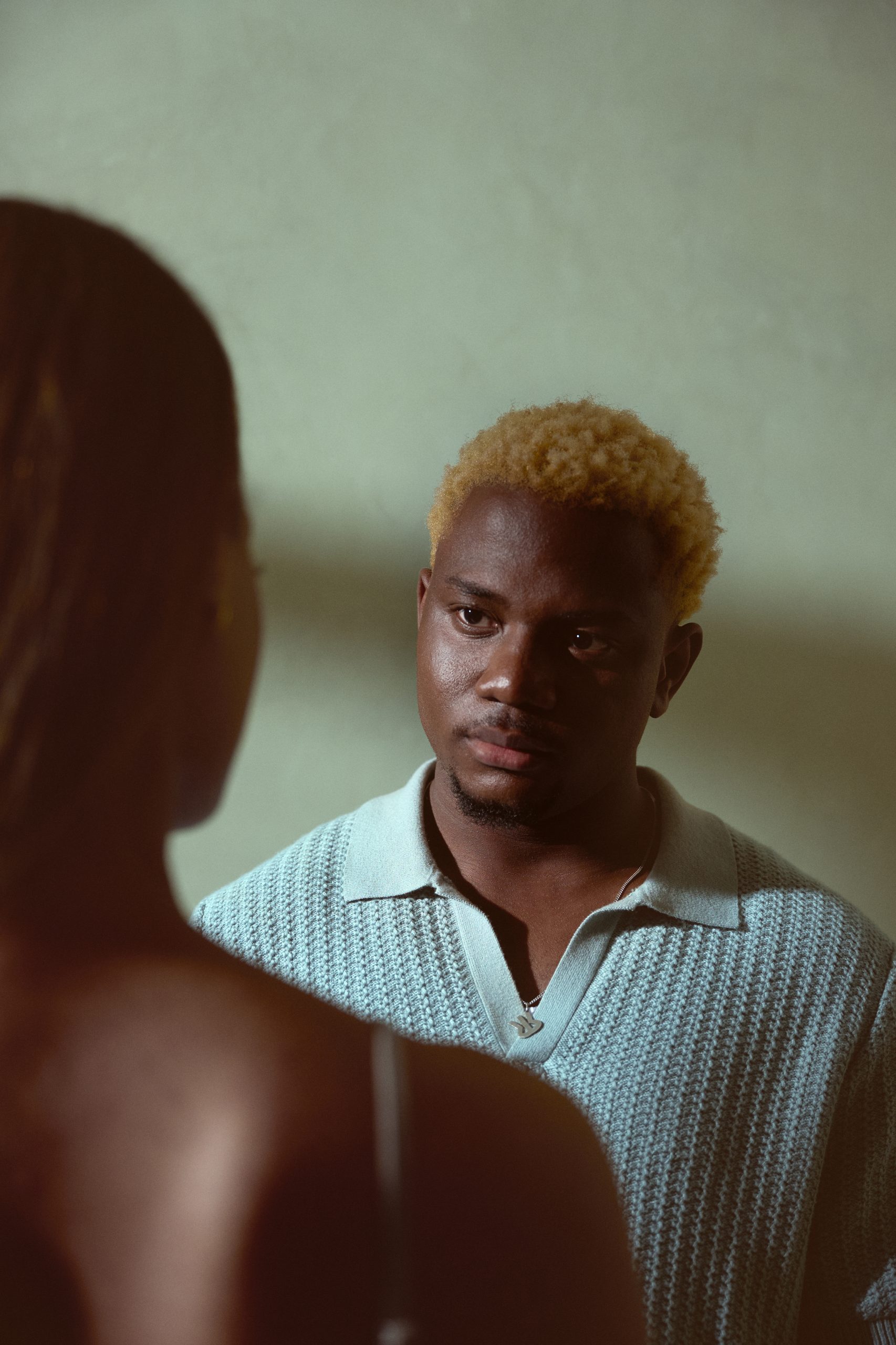
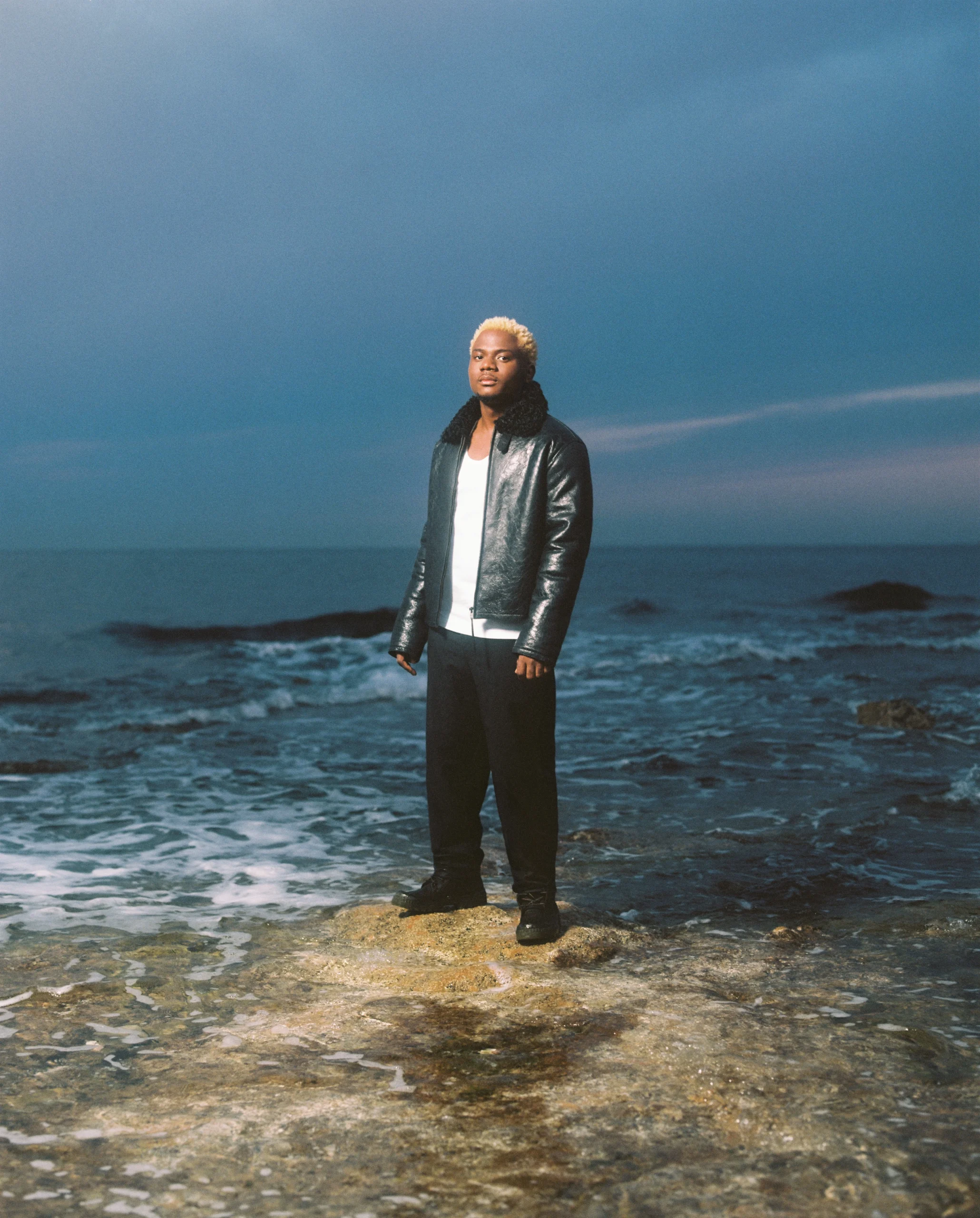
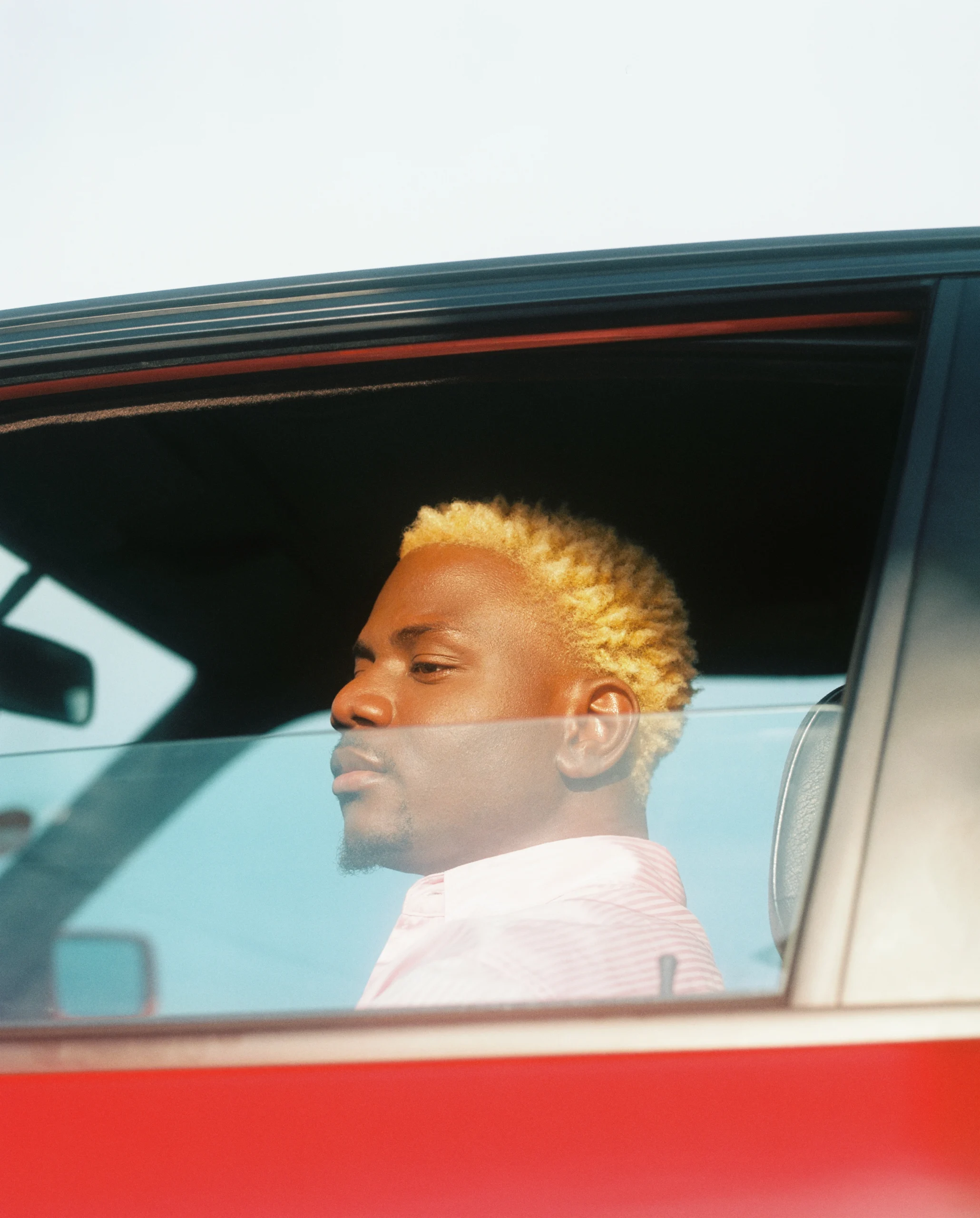
When Godwin broke out in the Nigerian music scene in 2024 with his debut EP, Road to Nirvana, the young singer, known for his deep R&B-Leaning ballads, soared due to his storytelling and textured vocals. He told stories of grief, having made the album as a memorial to his late mom.
In his recently released debut album, Atonement, the Kaduna-bred singer continues his emotionally charged artistry, kickstarting the album with a tribute track, ‘Atonement,’ to his late mother. He samples his local women’s choir in Kaduna, tuning the record with Hausa heritage. The rest of the album takes an airy shift, tweaking his ballads with a bubbly, harmonic mix of love and heartbreak stories, thanks to his collaboration with German producer KitschKrieg.
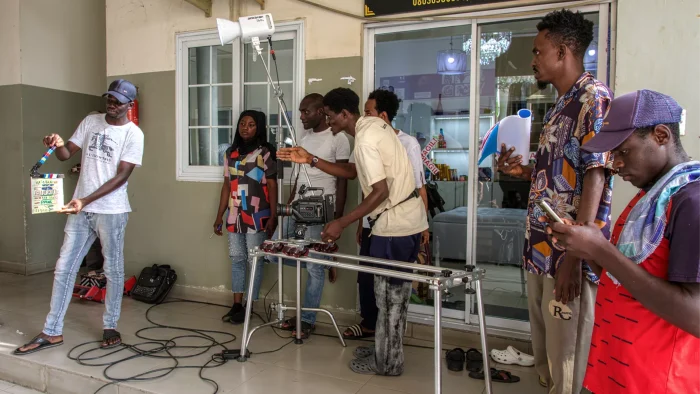
Before clinching the record deal with Sony Music, which has since put his career on a global spotlight, Godwin had built communal fame back in Kaduna with his Film Production company, The Critics. Founded alongside his brothers, the group created science fiction films of surprisingly great theatrical quality. They gained the attention of local and global filmmakers like Kemi Adetiba and Hollywood actor Morgan Freeman, and have worked on projects with them.
With his gaze presently set on his solo music stint, he’s carving a space in the music scene where his soulful melodies resonate among cosmopolitan audiences. Often teased as the African Jon Bellion, the young musician shines for his poetic songwriting and textured tenor. In Atonement, he sets himself apart even further, approaching Folk, RnB, and Afrobeats, with a distinct delivery and messaging.
In this week’s Guardian Music edition, we catch up with the RnB maestro, detailing his experiences navigating Northern Nigeria as a singer and filmmaker; his muse behind Atonement; his core music influences; creative process; touring with Tems; and his mission to keep creating relatable music.
How do you feel about this record?
I feel great. It’s a cliche response but I feel really great. I feel really awesome that it’s finally out. It’s been close to two years since I first mentioned the album, so I’m happy people can finally experience it and everything that comes with it.
From your last project, Road to Nirvana to this record, how would you describe the shift for you?
Road to Nirvana was deeply rooted in grief — especially the grief of losing my mom. That guided the writing and production. Atonement is inspired by love: exploring love, loving someone, the joy and the conflict. There’s still grief in the album — the first song addresses that — but it needed to happen there so the whole idea of love can be explored fully through the rest of the album.
Was this inspired by a particular relationship you had?
Yes, actually. So for the album, there are songs that talk about meeting someone for the first time. And others that talk about, like, getting to know them, hating them, feeling really self conscious about the relationship, the fear of it not working out, apologies. All of these are things that happen in normal relationships. So the album explores the happy and hard times of relationships.
Tell us a bit about the details, if you don’t mind.
For one of the first times in my life, I felt the good parts of love. And this was a time where the album was not even in the full picture yet. Curiously, I had started writing a lot of love songs, and that was such a shift for me from Road to Nirvana. So, while I was exploring all of these really good things, coincidentally, I had a friend who was going through a really terrible heartbreak. From his ordeal, I was able to write some of the sad love songs that you hear in the album. So, basically, they were inspired by real happenings. I tend to be able to write from the experiences of people and tell their stories.
Where did you make the album?
The actual creation happened in Berlin with producer KitschKrieg.
But the writing — the ideas, the early sketches — happened between Kaduna and Frankfurt. It was a long process of crafting the songs before finishing them in Berlin.
Your earlier work introduced you as a master of ballads. Tell us about the sonic shift in this album.
For Road to Nirvana I worked mainly with Uno Fini, who’s still a close friend and we still work together a lot. For Atonement, coming to Paris opened me up to new producers. Working with Bastian on “Fallen” and Lou Berry on “Third Wheel” showed me I could write on the spot, with different kinds of artists.
KitschKrieg then helped unify everything. Even though each song feels personal and distinct, the album still feels cohesive. That balance came from their sonic direction.
What was the most challenging record for you to create on this album?
There was really no challenge in a bad sense, because each record has its own story from production to creative direction. I would really say the two most interesting moments that happened while we were recording in Berlin was firstly for the song ‘Atonement’, which is the intro. The main idea was to work with Kitschkrieg for the first time and see if we had a production chemistry where we could make the album. I remember sharing the idea of what ‘Atonement’ meant to me, and in a few minutes we cooked up that song. It set the tone for the album’s approach. And it was such a beautiful experience. A second song would be ‘Self Conscious’; this was briefly after having a conversation with my friend about his heartbreak. I was so shocked about how oddly specific it was. So I really think those are two really great moments while making the album.
You featured a female Hausa choir in the song, ‘Atonement’. Tell us about them and the process.
Growing up in northern Nigeria, one of my first introductions to music was from the women choir in church. I grew up in a Baptist church, which had two tiers of its choir. There was the normal choir, with young people and there was the women choir made up of the mothers of the church. They wear the same wrappers every day. They play the local drums and other local instruments, and they sing choral hymns. At some point,their music was the main reason why I went to church; it gave me goosebumps, and it would always bring me to tears. Their choir was personal to my mom, because she always rehearsed on Saturdays. There was one song she kept practicing and that was the song I sampled, ‘Bamo Iko’, which roughly translates to, asking God for the grace to forgive people.
You mostly approached this album solo. Was that intentional?
I think the idea of, like it being a double album, I considered features, but it’s just something that never happened. I feel like everything that guided the album so far was whether a song felt right. We had one feature with 255, they are prodigies. They work a lot with Kitschkrieg. They produced the song ‘Call Me’, with DoroBecause I, I think it’s such an interesting album as well, because the only features you see are producers. We also had a feature, ‘Call Me’, with Doro Lee, who is a Parisian artist with a very, very beautiful voice.
You were signed in France. How has it been like connecting to both local and global audiences?
The approach of music for me is understanding Afrobeats itself as the basis of everything. You hear an Afrobeats song and it is not just one thing you are hearing. It urges you to dance. And that’s like the foundation of my music, to be honest. If you take away the instrumentals, that’s when you hear the ballads. But everything I do at the end of the day is not strange to me. There are no hindrances about who can make what kind of music anymore. If you come down to Berlin or France there is a large exploration of Afrobeats, just like reggae. Now, we can see that a boy from Kaduna, in West Africa, can make songs that people around the world can enjoy and understand to a particular extent. I think that’s a very positive thing to be associated with. You can tell from the album, every single song has a different feeling to it; people are going to have different favorites from the album, and that’s how I’ve just approached music. I tried to not see boundaries and just do what’s right for every song at a time.
Tell us some of the voices that inspired your sound.
Labi Siffre; I discovered him properly in France, but we’d been listening to him at home, because my dad had a lot of music records back home. Wizkid; no young Nigerian can deny his impact; he disrupted an older generation and continues to reinvent himself. Labyrinth; his genre-bending approach inspires me. I feel like he’s a black artist that sees no limitations to the kind of arts he wants to approach.
Off the top of my head, these are the key influences I can think of now.
You are also heavily involved in filmmaking. What’s going on within that scene for you?
Filmmaking has been my first introduction to the arts, and it’s still very much a very big part of what I do for the music. I recently directed two of the music videos that have been out for the album. I have been creating a lot of short teasers for each song on the album. The production company that I started with my brothers and still run but is based in Kaduna, Nigeria, is still very functional. We shot our first feature film last year. It’s currently in the works. We have a documentary in the works as well. So, everything in terms of film is happening, but I would be lying to say I have been directly involved as much as I would want to be. Music is something I want to explore, and I’ve given myself the permission to fully focus on it for the time being. And with film, it’s always circling back in everything I do — I make the accompanying visuals myself with my brothers.
What are your sentiments with stage craft so far?
Live performances are so far my favorite part of music. I really see it as such a reward for the music, the idea to sing your songs to a live crowd. Last time I was on a stage, I was opening for Tems on her first world tour. And that was such an interesting experience, because prior to that I have not performed for that many people, and the idea of doing it at such a big stage with such an A-list act, is something anyone in my position will wish for.
Ever deal with stage fright?
It happens maybe a day before the performance, but when the moment for the show finally comes I shockingly never get stage fright. It’s funny that I like singing to crowds more than singing to specific people. Somehow I’m able to put my eyes everywhere around the room and not have to look at anybody, and that way it is easier for me.
Finally, what’s the vision for your career moving forward?
I believe art should be accessible. Growing up, we pirated films just to feel connected to the world. I want to make art everyone can connect with and see a reason to connect, not detached from the human experience. I want to be an artist people can return to, listen to, watch, and feel understood. I don’t want to make art that is not representative of myself. If the art is human, everything else will follow. Everything else will happen after, but for now I want to do things people can relate to.