GDN SIDEBAR
There is a scene that plays out with quiet regularity in the Nigerian creative economy. A musician breaks through, their songs cross borders, their face appears on billboards, their voice travels to cities they have never visited. For a period, sometimes a long one, the rewards follow. And then, as often as not, they do not compound. The arc flattens. The business around the talent never quite materialises into something durable. The money that should have been building an enterprise has, by many accounts, simply left.
This is not a uniquely Nigerian story. Athletes and entertainers the world over have grappled with the same dynamic. But in Africa, and in Nigeria in particular, the structural gaps that cause this outcome are especially visible, and especially persistent. The continent has produced some of the most culturally influential creative work of the past two decades. It has not, in proportion to that influence, produced a generation of creatively rooted wealth. The question worth asking is why. And the more honest answer, which is finally beginning to attract serious attention, is that the problem has never been talent. It has been infrastructure.
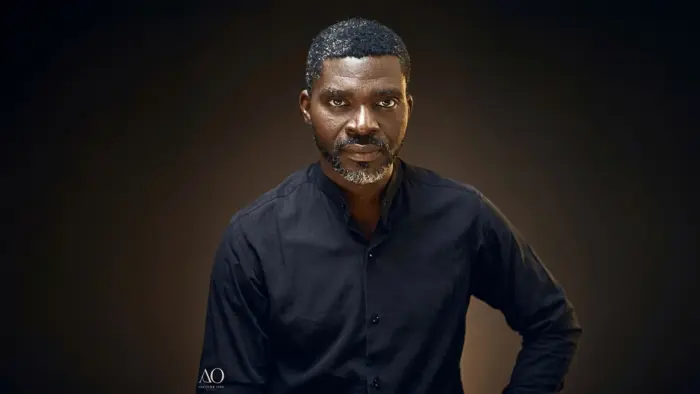
Alese Ayomide Salban, one of the co-founders of GAAGA World, offers a diagnosis that is as specific as it is striking. ‘Ten or fifteen years ago, Nigeria was producing more varied and ambitious creative content than we are today, and the internet was not even at its peak then,’ he says. ‘We had television productions, long-form content, storytelling that travelled. Now we have every tool available, global distribution, and the landscape has narrowed to mostly skits. That does not happen because talent has declined. It happens because the environment around talent has not been built.’
His co-founder, Damilare Adeyemi, is someone Salban has known since childhood — the two have been close for more than fifteen years, a friendship that long predates the company and gives their working partnership an unusual depth of trust. Adeyemi holds a Master’s in Data Science from the University of Salford and brings experience from the fintech sector. He draws the contrast with markets where creative infrastructure did get built: in the United Kingdom, content collectives like Sidemen have demonstrated that creators, given the right operational support, can grow beyond their content into brand owners, product businesses, and media companies. In the United States, operations like MrBeast have shown that a YouTube channel, underpinned by professional systems, can become a genuine enterprise. The common thread is not just talent or even audience. It is structure. ‘The creator is the face and the engine,’ Adeyemi says. ‘But they are not carrying the entire operation alone. That team, that system, is what most African creators have never had access to. Not because they could not use it. Because no one had built it for them.’
There is a related dimension to this wealth gap that Salban is equally direct about. A creator whose audience is predominantly local is priced locally by brands and platforms. The purchasing power of a Nigerian audience, however large, does not match the rates commanded when the audience extends into Europe, North America, or Asia. ‘It is not that global platforms undervalue African talent,’ he argues. ‘It is that most African creators are still primarily reaching African audiences. The moment the content travels, the economics travel with it. The question is what helps the content travel.’
Founded in 2025 and based in Lagos, GAAGA World describes itself as Africa’s first full-stack creative venture studio. The framing is deliberate. The company is not a management agency in the traditional sense. It does not take commission from what a creator earns and leave the rest to chance. It invests in what a creator builds, through revenue-share agreements and IP equity structures, and provides the production, brand, and strategic infrastructure that the market has historically withheld from African talent. The global creator economy is currently valued at approximately $500 billion according to Goldman Sachs, and Africa’s creative economy is projected to reach $2.6 trillion by 2030, per the African Development Bank. The vision, as both founders describe it, is an institution. ‘African creative value should compound in Africa,’ is how they put it. The previous generation of globally successful African creators sent much of their financial upside elsewhere. GAAGA World is built on the premise that the next generation does not have to.

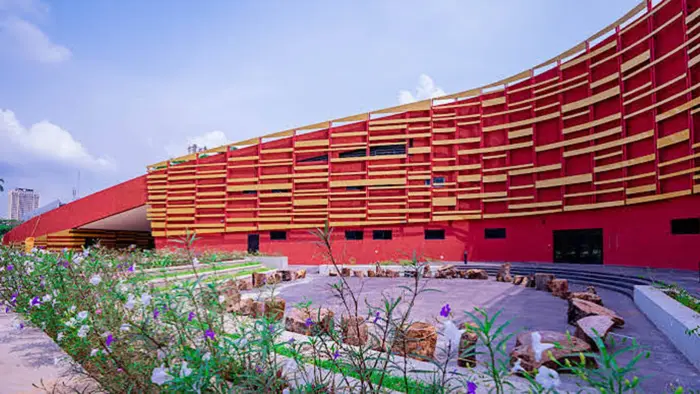
The company launched publicly this month, embedded throughout VVS Lagos ‘Afromodernism’ Week, which runs July 5 to 12 across venues across the city. VVS Lagos, now in its fifth edition, is one of the most substantive creative gatherings the city produces, operating across fashion, art, film, music, and technology. GAAGA World has a station at every event across the week — moving through the Opening Gala, the panel conversations at Alliance Française, the private collectors’ viewing at Blank Space Oniru, the trunk show at Mikano, the Future Labs exhibitions at Yenwa Gallery and British Council, the VVS Film Experience, and the closing runway show and after party on July 12. The choice of context is not incidental. A company arguing that African creative infrastructure must be built from within could hardly ask for a better stage than a week that has been proving exactly that point in culture for five years running.
Nigeria has talent agencies. It has management companies. It does not have, and has not had, a vertically integrated studio that combines investment capital, management, production infrastructure, and proprietary technology with creator ownership at the centre. That is the gap GAAGA World has stepped into. Whether the execution matches the ambition, the market will now begin to judge. But the ambition itself is the most serious response this industry has produced to a structural problem that has been visible for years.