GDN SIDEBAR
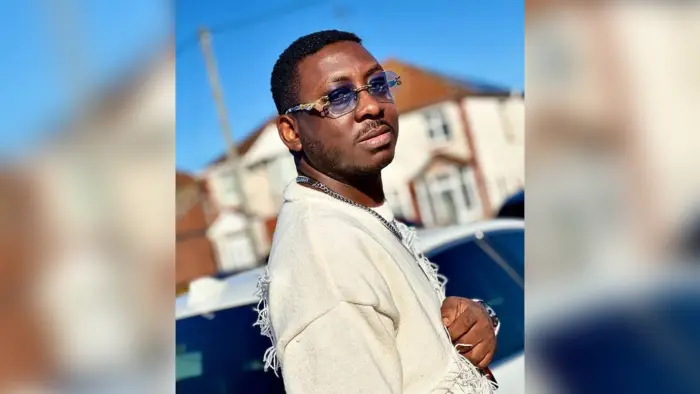
One thing we can all agree on is that Taves is one of the most distinct voices in contemporary Nigerian music today. Born Toluwanimi Aluko, the 23-year-old singer has spent the past few years carving out his own corner of Afro-pop, armed with a laid-back vocal cadence, emotive songwriting and a fusion palette steeped in R&B. His latest eight-track record, Popstar – Side A, reveals another layer of the Ibadan-bred musician, who has steadily morphed from a teenage R&B sensation into a more assured pop star.
Taves first caught wider attention with his 2023 single, “Eleyele.” By 2024, Taves had released Are You Listening?, scored fan favourites including “Folake” and “A Million Things,” and earned a spot on Apple Music’s Africa Rising programme. His collaborations with BNXN, Ladipoe, L.A.X and others have since stretched his presence across Nigeria’s new-school pop scene.
Catching up with Guardian Music, the young troubadour opens up about adjusting to celebrity life, returning to live shows and his desire to build a discography that stays with listeners long after the moment has passed.
How did you come up with the name Taves?
It’s not really a deep or extravagant story. It was pretty much just me and my brother trying to come up with something that sounded cool. One of the most important things to me when I first started was that I wanted people to think, “Okay, yeah, this name is cool. This guy has to be just as cool as the name.” But I was like 15 or 16 at the time. The first letter of my name starts with T, and then we just slapped the rest on the back of that, and we had Taves.
Where did you grow up?

I was born in Port Harcourt, and then I lived in Lagos until I was about eight years old. I moved to Ibadan, and I was there until I graduated from secondary school.
How much influence did Ibadan have on you as an artist?
I think it had a really huge influence. Recently, I was speaking to someone, and they told me that my music sounds like Ibadan. Compared to Lagos and a lot of other places, Ibadan is very chill. I think that feeling seeped into my music, the way that I deliver and the way that I write as well. I want people to feel relaxed when they’re listening to my music. I want them to feel everything they’re supposed to feel without any extra intensity. I’m not trying to shout at you. I’m just trying to have you sort of mix with it or merge with it, if that makes sense.
Who were your early influences?
When I was growing up, I listened to a lot of Asa’s music. I listened to a lot of Ed Sheeran, Khalid and Passenger. I was a fan of One Direction when I was much younger. Just stuff like that.
Why Popstar, and why now?
I think now, more than ever, I’m sure of myself and the music that I make. I know that it has a really important part to play in Afrobeats and music in general, in the world.
Coming up with the whole concept for this era, it just felt very appropriate to call it my pop star era because that’s just what I am. It’s me, and I’m it. I just wanted people to be clear on that, so when the music comes, it really matches the vibe of everything else that I’m giving.
And why ‘Side A’?
Because there’s a Side B coming. With Side A, the idea was to bring people into this universe and show them all the different parts of myself. I have fun, and I recognise myself to such a level that I’m accountable for every single decision that I make.
Side A is me trying to show everybody listening to all the different parts of myself before we get into Side B. Side B is where you see an accurate representation of exactly what I’m like right now and who I am right now.
That makes me wonder how much of your songwriting is fictional. A lot of it seems autobiographical.
Nah, it’s all very, very real to me. If we want to talk about what’s fiction, I would say maybe “Take Me Away,” because I made that after I watched 500 Days of Summer. It was pretty much me trying to capture the main character’s feeling of despair, the same way that I understood it. I’m pretty happy with how it turned out. So, if we want to say something is fiction in a sense, I would say maybe that song.
There are no features on Popstar – Side A. Was that intentional?
Yeah, it was intentional. As I said, it’s an introduction to all the different parts of me, and I didn’t feel like I needed anybody else to tell that story or tell these stories. But on Side B, you’ll definitely see some other people playing a part in there.
Which songs were the most challenging to create?
I would say “Isn’t It Beautiful” was a little challenging, mainly because of the second verse. It took me about two months to write that because I just wasn’t satisfied with what I had. I had to keep working at it until I got it done.
“Take Me Away” as well. I re-recorded that song. I had the initial version and, after sending it to the producer, Anup, he had some reservations about the music itself and the way things sounded on the song. We had to go back and get it right. I did that over the course of maybe five or six sessions.
Do you have a typical creative process?
I don’t think there’s anything specific that I can say I do every single time because I write a lot of my songs in the most random places. I come up with lines and ideas for music in the most random places.
There was a time I went to my friend’s place and, as I was leaving, I got to the door of the car and had to pull out my phone to record this melody that was stuck in my head before I even got into the car. I sent it to my producer Ari, and he made something from that.
BNXN has been a major part of your journey. How did that relationship begin, and what has it changed about you as an artist?
My relationship with him began because of music, and I think that was a very important way for it to start. I did a cover of one of his songs, he saw it and liked it so much that he was just like, “Okay, let’s do this thing.” We ended up doing the thing, and we’re here today.
Even creatively, there are things he has taught me indirectly and directly about delivery and especially songwriting, because he’s such an amazing songwriter.
Outside of music, one important lesson I learned from him that I still carry with me today is just about being kind. I feel like that’s very rare nowadays because of the state of things. Being kind is a really strong characteristic to have in any situation.
“Uche Jumbo” feels like a very specific title. What’s the story behind that song?
“Uche Jumbo” is pretty much a song that I packed full of nostalgia from my past, from when I was younger. There are things in that song like name-dropping Uche Jumbo or Manuel Ibekwe, or using “Don’t Dull” as a sample. All those things are very nostalgic to me. That’s why I love the song so much. Don’t get it twisted, but it’s personal to me in that way.
When Taves isn’t making music, what is he usually doing?
I hang out with my friends a lot. I really take the relationships I have with my friends personally because I feel like they play a huge part in every single aspect of my life, even the music. If I’m not doing that, I’m probably inside watching a movie or a show. I love watching movies and shows. You can name a movie, and I’ve probably seen it, or a show. Aside from that, I go out to the club once in a while, or to dinner, just to see a different environment.
Side B is coming, but what else should we expect from you this year?
This year could potentially be Side B. Apart from that, I’m back to doing a lot of shows, so I’m definitely going to be outside. I have a show at UniLive on Friday, a show at UniPort on August 13, and then a couple of shows in some other countries as well. I’m just going to be everywhere. Everybody is going to see a lot more of me and hear a lot more from me as well.
Lastly, what is the long-term vision for Taves? What do you want people to experience through your music?
One thing that I always want people to take away from my music is such a profound and deep feeling or connection to it that it stays with them forever. There are songs I used to listen to when I was 11, 12 or 15, and if you played those songs right now, I’d still remember them. Sometimes I’m just chilling, and I remember, “Oh yeah, I really love this. Let me go and listen to that.” I just want the music to be long-lasting. I feel like that is the point of music: to have such an impact during a period of someone’s life that they can’t help but be attached to it forever. A lot of people might not understand the importance of building your discography and being intentional about the music you put out. It should have a soul in it that people can feel, so it sticks with them and lasts so long.