The Federal Government revealed that between January and September 2025, about 10,326 gender-based violence cases were reported, with 2,444 survivors receiving care in recovery centres and 511 survivors supported with livelihoods and empowerment interventions.
It noted that although there was a decline in the 2024 National Demographic and Health Survey, one in three women experienced Gender Based Violence (GBV) during the same period.
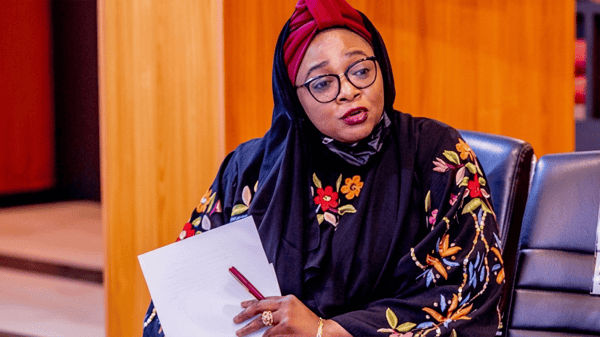
The Minister of Women Affairs and Social Development, Imaan Suleiman-Ibrahim, revealed this during a National Multi-stakeholder dialogue on Gender Based Violence, organised by ActionAid and other development partners.
She regretted that across the country, violence against women, children, and vulnerable groups remains a painful reality.
The minister, represented by the Senior Special Assistant to the President on Women’s Health, Dr. Adanna Steinacker, also lamented that technology-facilitated gender-based violence has remained unreported due to its complex nature.
She highlighted that TFGBV, including sex torture, non-consensual sharing of intimate images, online blackmail, and manipulation of digital platforms, has caused severe trauma and, in some cases, fatalities.
To tackle the challenge, she said the federal government has concluded arrangements to relaunch the National Electronic Dashboard on Gender-Based Violence, vital for tracking trends, patterns, and improving case management and coordination nationwide.
She also disclosed that the ministry is urgently prioritising the establishment of an Emergency GPV Response Fund, a ring-fenced mechanism to bridge funding gaps and ensure operational stability for shelters, SARCs, hotlines, emergency response, and survival rehabilitation. She urged all partners to actively participate in growing this fund.
ActionAid Nigeria’s representative, Niri Goyit, in a presentation on the Trend of Technology Facilitated Gender Based Violence in Nigeria, revealed that in Nigeria, 45 per cent of women have experienced cyberstalking, especially women in public roles, and 10.6percent have faced doxing.
She noted that although internet adoption has grown faster than the safeguards needed to protect users, local data shows that many women have experienced cyberstalking or doxxing, while platforms removed thousands of sextortion linked accounts.
Goyit highlighted drivers of TFGBV to include patriarchal norms, low digital literacy, weak enforcement of online harassment laws, platform moderation gaps, and rapid spread of smartphones/apps.
While emphasising that no single institution can manage TFGBV alone, she stressed that government agencies must establish clear reporting and investigation channels, adding that law enforcement needs support from digital experts and that SARCs must liaise with cybercrime units.
She emphasised that civil society must continue to provide survivor-centred approaches, while technology companies need to improve takedowns and cooperation, stating that when all actors collaborate, survivors are better protected.
The representative of the United Kingdom Foreign, Commonwealth Development Office, Mrs. Cynthia Rowe, emphasised the need for a national online gender safety policy to coordinate agencies and enforce content moderation standards. She added that social media platforms must act swiftly by removing harmful content within 48 hours, deploy culturally aware moderation teams, and publish transparency reports.
She also emphasised the need to establish digital abuse courts and digital protection orders that will serve as one-stop reporting portals, with integrated police, legal aid, and psychosocial support. She also called for mandatory gender-sensitive cybercrime training for law enforcement.