Germany and Nigeria have taken further steps to strengthen their strategic energy partnership, as the Third German-Nigerian Hydrogen Symposium marked a significant milestone in efforts to accelerate the global push towards a sustainable and inclusive hydrogen economy.
The two-day symposium, co-hosted by the German Federal Foreign Office, Nigeria’s Federal Ministry of Budget and Economic Planning, and the Ministry of Petroleum Resources, and implemented through the German-Nigerian Hydrogen Office under GIZ, convened senior policymakers, industry leaders, researchers, development partners and international stakeholders.
The gathering focused on deepening cooperation between Germany, Nigeria and the wider ECOWAS region on hydrogen technology deployment, policy frameworks and market development.
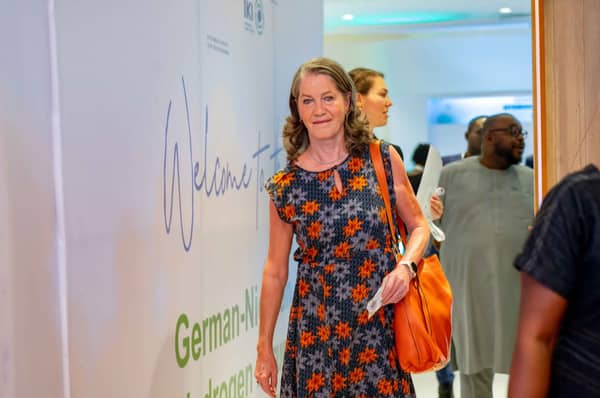
In her opening remarks, the German Ambassador to Nigeria, Annett Günther, stressed the strategic relevance of the partnership in shaping a sustainable global energy future.
“This gathering has become a vital platform where policy meets practice and vision transforms into action,” Ambassador Günther stated.
The National Hydrogen Policy Draft sets out a roadmap for deploying green and low-carbon hydrogen to stimulate industrial growth, strengthen energy security, create jobs and enhance climate resilience. According to the Hydrogen Policy Technical Working Group, comprising officials from the Federal Ministry of Budget and Economic Planning and the Ministry of Petroleum Resources (Gas), the policy positions Nigeria as a regional and global hydrogen leader while accelerating energy transition and industrial development.
Reflecting on over five decades of bilateral cooperation in the energy sector, the Country Director of GIZ Nigeria and ECOWAS, Dr Markus Wagner, described the German-Nigerian Hydrogen Office as a strategic platform for accelerating the global energy transition while positioning Nigeria competitively within emerging energy markets.
Offering an academic perspective, Prof Emeka Oguzie of the Federal University of Technology, Owerri, said, “Africa’s energy access challenge is a technology challenge at its core. Policy may enable, but true transition will be engineered through indigenous innovation, not legislated.”