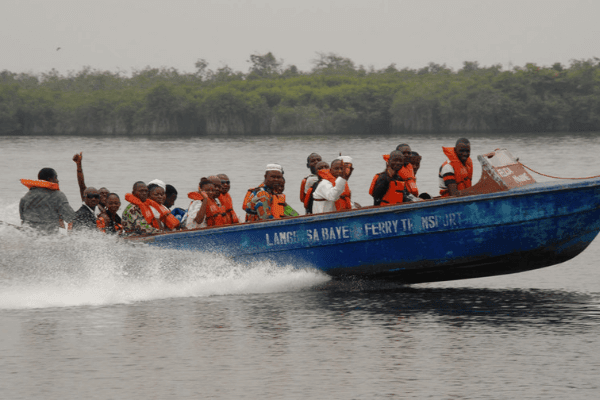
The Managing Director of Lagferry, Abdoulbaq Ladi Balogun, has hailed a geometrical rise in passenger numbers since commercial operations began in 2019.
Addressing journalists at the third yearly ‘Ignite Lagos’ event themed, ‘Light the Waterways’, Balogun lauded an improved cultural tide in Nigeria’s economic hub, which he termed the ‘Watermania lifestyle’.
“Lagosians are beginning to drop their cars at the jetties and terminals. They are coming on board boats to reach every part of the state. With one-third of Lagos covered by water, 16 out of our 20 local governments can be connected by these routes,” he said.
The MD confirmed that Lagos would introduce electric boats into its fleet this year.
“The transition to electric propulsion is expected to be a game-changer for the average Lagosian. The lower overheads of electric vessels will allow the agency to drastically bring down the cost of fares for daily passengers. This move toward sustainability is being framed not just as an environmental choice, but as an economic necessity for a city grappling with urban congestion,” he said.
Balogun noted that the agency reported a record-breaking festive period, noting that Detty December saw a tenfold increase in trips compared to previous years.
However, the Federal Ministry of Marine and Blue Economy has urged state governments to urgently ban the use of wooden boats for commercial water transportation and invest in safer, modern fibre and aluminium boats.
Minister of Marine and Blue Economy, Adegboyega Oyetola, made the call against the backdrop of recent tragic boat accidents, which claimed several lives and left many families in mourning.
In a statement yesterday by his Special Adviser, Dr Bolaji Akinola, the minister said the continued reliance on rickety boats in many riverine states and non-adherence to safety standards remain major contributors to accidents on the nation’s inland waterways.
He noted that many of these boats are poorly constructed, inadequately maintained and prone to structural failure, especially when overloaded or exposed to harsh weather conditions.
“Wooden boats deteriorate quickly due to constant exposure to water, leading to cracks, leakages and eventual collapse. They lack stability, are easily capsized and often have no safety features. In many cases, they are operated without proper regulation or adherence to safety standards, putting passengers’ lives at serious risk,” he said.
Oyetola stressed that phasing out wooden boats in favour of fibre-reinforced plastic and aluminium ones would significantly improve safety on the waterways.
He highlighted that fibre and aluminium boats are more durable, stable and resistant to corrosion, making them better suited for commercial operations.
The minister said these recurring tragedies are painful and unacceptable, and underscore the urgent need to address the root causes of waterway accidents in the country.
Reaffirming the Federal Government’s commitment to waterway safety, Oyetola disclosed that the ministry has continued to roll out interventions aimed at reducing accidents.
He cited the distribution of 35,000 life jackets by the ministry to riverine states in 2025 as part of efforts to enhance safety consciousness and preparedness.