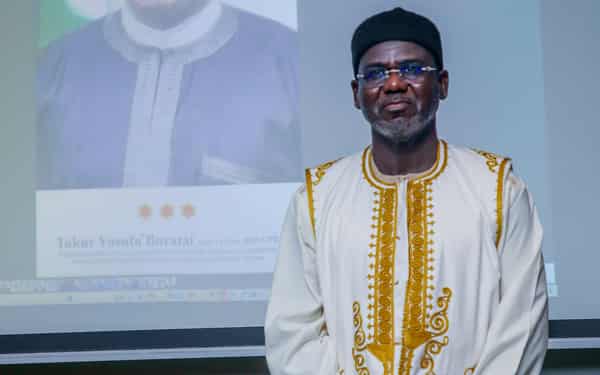
Deputy Spokesperson of the House of Representatives, Philip Agbese, has criticised recent attempts to associate former Chief of Army Staff and former Nigerian ambassador to Benin Republic, Lieutenant-General Tukur Yusuf Buratai (rtd), with terrorism financing, describing such claims as unfounded and inconsistent with the former Army chief’s record in public service.
Addressing journalists in Abuja, Agbese said the allegations circulating online should be treated with caution. He noted that Buratai played a prominent role in Nigeria’s counter-insurgency efforts at a time when Boko Haram controlled large stretches of territory in the North-East and had carried out major attacks on high-profile locations across Abuja and surrounding states.
According to Agbese, the former Army chief oversaw operations that led to the recovery of many communities previously under insurgent control, as well as a reduction in mass-casualty attacks in the Federal Capital Territory. He argued that attempts to link Buratai to the activities of groups he fought against were “incompatible with the security history of that period” and risked unfairly mischaracterising his service.
His comments came as online reports resurfaced details of a 2021 counter-terrorism investigation known as Operation Service Wide (OSW). The operation, authorised during the Buhari administration and led by retired Major-General Danjuma Ali-Keffi, was designed to work with the Nigerian Financial Intelligence Unit (NFIU) to trace financial networks connected to terrorism.
In interviews published by Sahara Reporters, Ali-Keffi alleged that the operation identified several suspects with links to individuals in public and private sectors, based on financial intelligence gathered at the time. He also claimed that the investigation encountered resistance and that he was detained and later compulsorily retired without being formally charged. According to him, he has since sought redress through official channels and the courts.
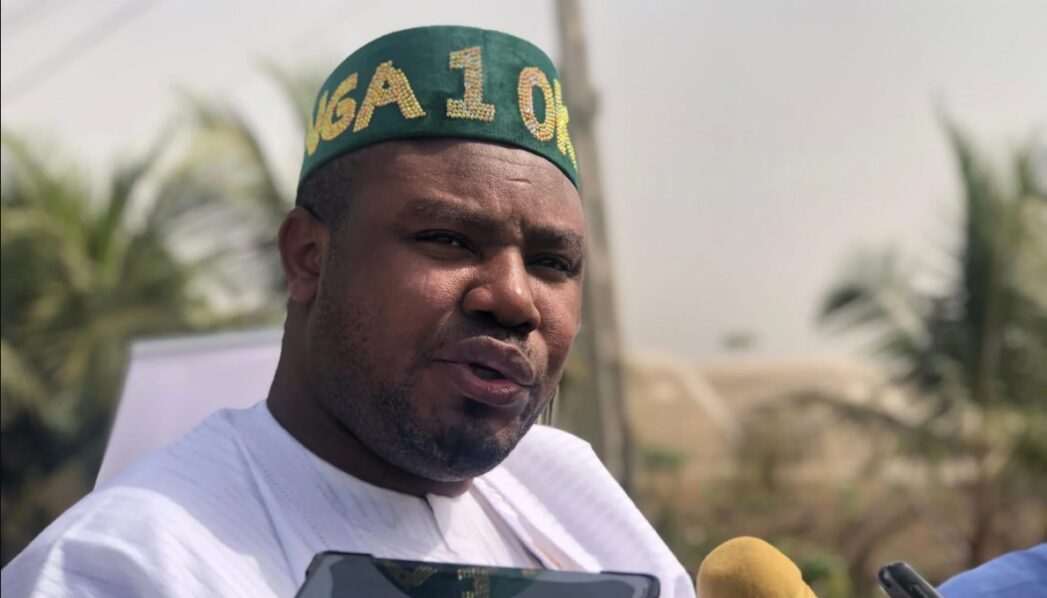
Ali-Keffi stressed, however, that no evidence directly implicated Buratai or other former senior officials in terrorism financing. He said the links identified were based on business or professional interactions with suspects, many of whom were involved in legitimate sectors such as bureau de change operations. He noted that OSW did not establish that Buratai or any of the named individuals were aware of, or participated in, any illicit activities.
The renewed attention surrounding OSW has prompted calls from analysts for clarity on the status of investigations carried out during that period. Some have argued that full transparency would help maintain public confidence in counter-terrorism frameworks, while others warn against drawing conclusions without access to official reports or judicial findings.
Agbese urged the public to remain cautious when interpreting online claims, particularly those with significant implications for national security leaders. He warned that misinformation targeting past or serving officers could weaken morale and inadvertently strengthen the narratives of violent groups seeking to undermine the state.
He maintained that debates concerning national security must be grounded in verified facts and due process, emphasising that Nigeria’s fight against insurgency requires both institutional stability and public trust.