As Nigeria joins the global community to mark the UN Anti-Corruption Day, the Civil Society Legislative Advocacy Centre (CISLAC), the local chapter of Transparency International (TI), has warned that the country’s security crisis will deepen unless authorities confront entrenched corruption driving terrorism, banditry, and violent crime.
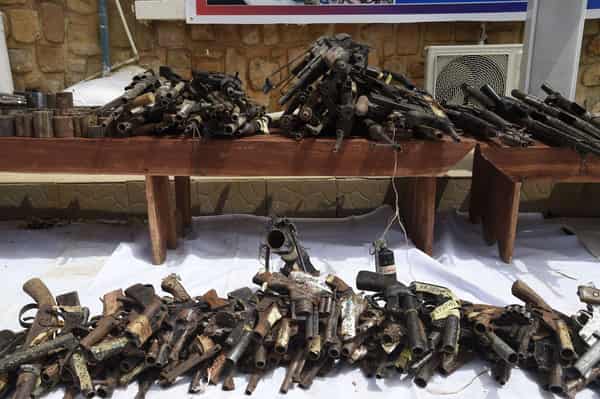
Citing data indicating that about 70 per cent of illicit small arms circulating in West Africa are in Nigeria, the organisation said the proliferation of weapons, combined with widespread corruption in the defence and security sector, has created a dangerous environment in which criminal groups thrive.
CISLAC executive director, Auwal Musa Rafsanjani, in a statement, said decades of investment in defence have failed to translate into improved safety because corruption consistently undermines procurement, operations, personnel welfare, and intelligence coordination.
He alleged that inflated contracts, diversion of security funds, and questionable procurement processes continue to deprive frontline personnel of essential equipment, while families of officers killed in action are often denied statutory benefits.
The group added that recruitment fraud has pushed unqualified persons into sensitive positions, sidelining capable officers and contributing to operational failures.
He also faulted the misuse of security privileges, where politically connected individuals enjoy heavy protection while citizens remain exposed to daily violence.
While lamenting the weak legislative oversight and the failure of institutions to enforce accountability, Rafsanjani observed that the lack of effective collaboration among security agencies, coupled with illegal payments at roadblocks and entrenched impunity, has further entrenched criminality.
The organisation noted that Nigeria’s position as the 8th most terrorism-impacted country in the 2024 Global Terrorism Index reflects not only the scale of the threat but also the governance failures enabling the financing and operation of terror networks.
Rafsanjani also criticised the disregard for the presidential directive withdrawing police personnel from VIPs, and warned that insecurity has become a lucrative enterprise for some actors who profit from ransom payments and back-channel negotiations with terrorists.
Calling for sweeping reforms, Rafsanjani urged the Federal Government, National Assembly, and security agencies to prioritise transparency in the management of defence budgets, introduce independent procurement audits, and enforce strict sanctions for officers involved in bribery, collusion, or operational compromise.
He also demanded improved welfare and insurance for security personnel, enhanced intelligence sharing among agencies, and protection for whistle-blowers within the system.
The group stressed that Nigeria cannot overcome insecurity without first dismantling the corruption network that weakens the security architecture, insisting that “no volume of military spending or sophisticated weaponry will work if impunity remains unchecked.”
It reaffirmed its commitment to work with the government and citizens to push for reforms that will strengthen national security and rebuild public trust.