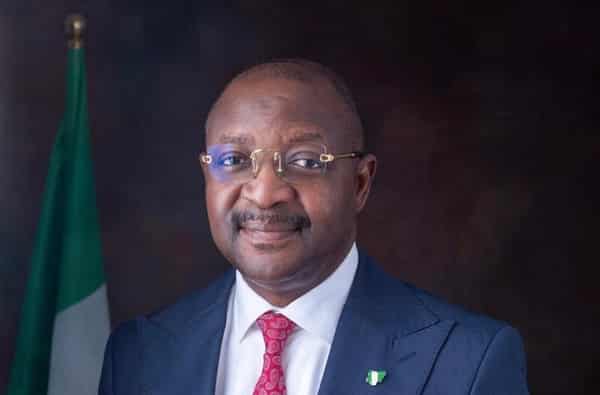
Nigeria’s long-standing relationship with the United States (U.S.) remains “treasured, warm and robust,” and must be further strengthened in the interest of both nations, Presidential Spokesman, Sunday Dare, has said.
Dare, Special Adviser to President Bola Tinubu on Media and Public Communications, told Newsmax TV in Washington, DC, that renewed U.S. engagement is essential, especially at a time when global and regional security threats are evolving.
He said that a stronger American media and diplomatic presence in Nigeria would help Washington gain a clearer, more accurate understanding of development within the country.
The presidential media aide noted that reopening the Voice of America office in Abuja would be particularly useful because real-time reporting from Nigeria would offer comprehensive analysis and diverse viewpoints that shape informed policy decisions in the United States.
Dare also emphasised that Nigeria remains a committed partner to the U.S., led by a President who deeply understands American institutions and values, pointing out that President Tinubu studied in Chicago, worked in one of America’s leading accounting firms and has long been familiar with American policy approaches to development, peace and security across global regions.
Dare, while addressing Nigeria’s ongoing security challenges, rejected the narrative that the country is experiencing a religious war or a state-sanctioned targeting of Christian communities, describing such claims as a misrepresentation of the realities on the ground.
He stressed that Nigerians of all faiths suffer from the violence perpetrated by extremist groups, and that there is no deliberate state policy against any religious group.
Besides, he said that the conflict had evolved over the past 15 years, with Boko Haram splintering into factions, such as ISWAP and other groups involved in banditry and kidnapping, all driven largely by transnational forces rather than religious motives.
He highlighted the instability in the Sahel region, the collapse of Libya, the influx of arms across porous borders and the presence of ungoverned spaces exploited by internationally financed terror networks. These, he said, are the factors fuelling violence across Nigeria and the wider West African sub-region.
Dare, who spoke on the durability of Nigeria–U.S. relations, said the partnership had remained strong through successive governments, including during the administration of former President Donald Trump.
He recalled significant American support during Nigeria’s ECOMOG interventions in Liberia and Sierra Leone and noted that since the country’s return to democracy 27 years ago, the diplomatic relationship had remained warm, cordial and mutually beneficial.
Dare added that Nigeria’s adoption of the American presidential system further deepens the connection, alongside strong bilateral trade, energy cooperation and the significant contributions of Nigerian professionals in the United States, noting that in areas such as trade, education and cultural exchange, the partnership between both countries continues to thrive.
He concluded that as global instability increases, Nigeria and the United States must reinvigorate their engagement, maintain open communication channels and sustain a relationship built on decades of shared values, cooperation and strategic interests.