W’Bank projects 4.4% economic growth, cites reforms, export gains
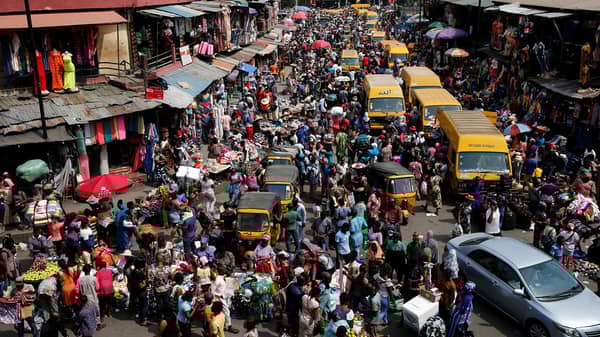
Over the next 25 years alone, an additional 140.3 million people, a figure more than double the current urban population, are expected to live in Nigerian cities, with the urban population projected to reach around 264 million by 2050.
However, the economy is expected to grow by 4.4 per cent in 2026 and maintain that pace in 2027, according to the World Bank’s 2026 Global Economic Prospects report released yesterday.
Nigeria is expected to be the third most populous country in the world, after China and India, according to a report by the World Bank. Entitled ‘Multi-sector analytical review and pathway to transformation’, the report highlighted that Nigeria’s urban population has grown exponentially over the last 65 years – from just under seven million in 1960 to over 128 million in 2024, with nearly half the urban population living in slums.
It is projected that 70 per cent of the population will live in urban areas by 2050, with cities at the centre of the country’s economic future.
However, while rapid urbanisation brings vast opportunities, the study warned that it also presents significant challenges that could undermine growth, if left unaddressed.
In its findings from a comprehensive, multi-sector analysis—including rapid diagnostics of 11 major cities, in-depth assessments of Lagos, Kano, Ibadan, Abuja, and Maiduguri, and consultations with key stakeholders —the report proposes a strategic roadmap for transforming Nigerian cities into more livable, inclusive, and resilient urban centres.
The World Bank study identified five core challenges that constrain livability and limit the economic potential of Nigerian cities. These include unplanned growth and service gaps as rapid population increase, and unchecked spatial sprawl have outpaced planning and service delivery, leading to widespread infrastructure deficits.
THE World Bank projection, which builds on an estimated 4.2 per cent expansion in 2025, positions Africa’s largest economy among the fastest-growing countries in Sub-Saharan Africa at a time global growth is forecast to slow to 2.6 per cent.
The global lender attributes Nigeria’s improved outlook to sustained macroeconomic reforms, a robust services sector, and the country’s transition into a net exporter of refined petroleum products.
According to the report, the services sector, particularly finance and Information and Communication Technology (ICT) alongside modest gains in agricultural productivity, is driving the recovery. The bank also highlighted Nigeria’s emergence as a net exporter of refined petroleum as a pivotal shift that is expected to strengthen external balances and ease pressure on foreign exchange reserves.
The multilateral institution noted that recent policy measures, including fuel subsidy removal, exchange rate unification and tighter monetary policy helped stabilise the macroeconomic environment after years of imbalances.
While headline inflation remains elevated, the report projects a gradual decline as the delayed effects of the Central Bank of Nigeria’s monetary tightening take hold. Global disinflation and declining energy prices could offer additional relief through reduced import costs and improved capital inflows.
However, the World Bank cautioned that Nigeria remains exposed to downside risks from the global commodity cycle. Crude oil prices are projected to decline from an average of $69 per barrel in 2025 to $60 per barrel in 2026, before a mild recovery in 2027. For an economy where oil revenues remain critical to fiscal and external balances, sustained price weakness could constrain government finances.