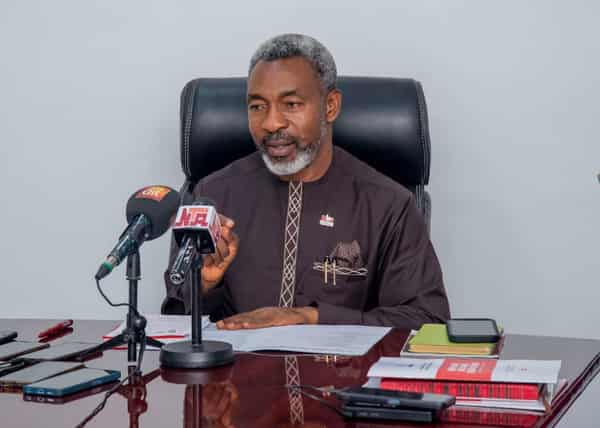
The Nigerian Institute of Public Relations (NIPR) has criticised the Federal Government’s recent engagement with the United States Congress over allegations of killings of Christians in Nigeria, faulting the exclusion of communication professionals, including the Minister of Information, from the delegation.
President and Chairman of Council of the institute, Dr Ike Neliaku, who raised the concern on Saturday in Abuja at the induction of 448 new members of the NIPR, warned that Nigeria risked losing control of its international narrative due to a poor communication strategy.
In November, a Nigerian delegation led by Ribadu met with U.S. Congressman Riley Moore in Washington over allegations of escalating killings of Christians and terrorism threats.
Moore later described the meeting as frank and productive.
The delegation included the Minister of State for Foreign Affairs, Bianca Ojukwu; Attorney-General of the Federation, Lateef Fagbemi; Chief of Defence Staff, Gen. Olufemi Oluyede; Chief of Defence Intelligence, Lt. Gen. E. Undiendeye; and senior officials from the Office of the NSA and the Nigerian Embassy in Washington.
Neliaku questioned the composition of the delegation which also included the Inspector-General of Police, Kayode Egbetokun, but lacked any communication experts.
He said, “I don’t think the government sometimes understands what the issues are. How can you raise a team to engage with U.S. authorities without a communication person in the mix? You only selected security people.”
According to him, while the issues raised by U.S. lawmakers were framed around insecurity, the real battle was one of reputation, perception, and narrative management.
“Yes, what triggered it is security, but you must understand that this is about narrative, reputation, and communication. You might be the best in security, but you must also know how to communicate security and insecurity in a manner that those who are listening will understand,” he added.
The NIPR president specifically faulted the absence of the Minister of Information from the delegation, describing it as a major gap in Nigeria’s engagement with foreign stakeholders.
“Where is the Minister of Information? Idris Mohammed is supposed to be Nigeria’s spokesperson on matters like this. He was not there,” Neliaku said.
He argued that the failure to include communication professionals meant that Nigerians ended up relying on the American version of events.
“So you discover that even when our people were in the U.S., Nigerians were hearing what was happening through the American perspective. It is their own view, not our own,” he said.
Neliaku urged the Federal Government to prioritise communication experts in future international engagements, stressing that policy marketing must be treated as a strategic national responsibility.
“When we talk about policy marketing, the government must take this very seriously. Communication professionals should be put first because they are trained to do this properly,” he said.
He also insisted that allegations of genocide or religious persecution must be addressed with verifiable data rather than denial or spin.
“We must engage diplomatically and persuasively with facts and data. We should not manoeuvre our way around issues. We must face them head-on and be honest about the challenges and what we are doing to address them,” he said.
Neliaku noted that the proliferation of smartphones and social media had made information control nearly impossible, adding that citizens now generate and disseminate evidence in real time.
He said Nigeria cannot achieve sustainable development without rebuilding trust, strengthening ethical communication, and closing the widening gap between government and citizens.
Neliaku cautioned that the country is at a defining moment where silence, misinformation, and fragmented national narratives could undermine cohesion and derail reforms.
He told the inductees that their admission into the Institute was not just an induction ceremony but a calling and a covenant to serve the nation through responsible communication.
Neliaku insisted that public relations remains central to national development, adding that countries succeed not only through strong economies or armies, but through the credibility of their stories and the confidence they inspire at home and abroad.
He warned against reducing PR practice to propaganda, stressing that ethical influence and strategic communication are needed to manage public expectations and rally citizens behind national goals.