The Nigerian National Petroleum Company Limited (NNPCL) has disclosed that the oil and gas sector recorded notable growth in 2025, with crude oil production rising above 1.7 million barrels per day and gas output exceeding seven billion standard cubic feet per day.
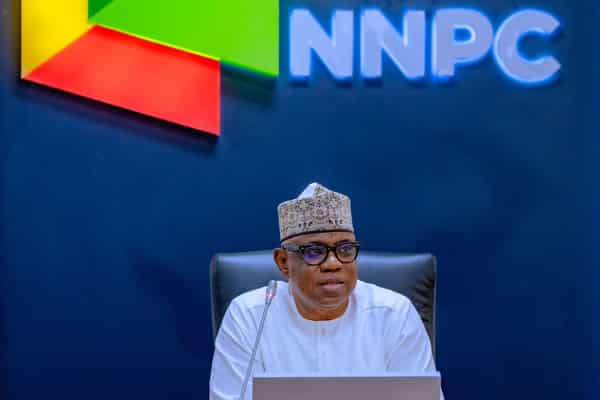
The Group Chief Executive Officer, Bayo Ojulari, attributed the performance to internal structural reforms and sustained government backing, highlighting the impact of strategic transformation under the Petroleum Industry Act (PIA).
The update was presented to President Bola Tinubu as part of an end-of-year performance review and a briefing on the company’s strategic priorities for 2026.
The management emphasised that the gains were significant, considering the large-scale institutional restructuring that had characterised the company’s transition.
According to him, crude oil production rose from approximately 1.5 million barrels per day in 2024 to over 1.7 million barrels per day in 2025, while gas production also increased from around 6.5 billion standard cubic feet per day to over seven billion standard cubic feet per day, underpinned by governance, operational, and structural reforms within the organisation.
The organisation also reported progress on the long-delayed Ajaokuta–Kaduna–Kano (AKK) gas pipeline, a critical infrastructure designed to expand gas supply to the northern corridor and drive industrial growth.
It confirmed the successful completion of the main pipeline welding, including the crossing of the River Niger, a milestone that had been pending for years.
Looking ahead to 2026, NNPCL disclosed plans to further raise oil and gas production by attracting fresh investments across its upstream portfolio. The company aims to achieve at least 1.8 million barrels per day of crude oil production next year while scaling up gas output and securing new final investment decisions.
Ojulari said President Tinubu commended the management and board for what he described as a strong start.
He added that the President charged the company to meet ambitious long-term targets, including attracting over $30 billion in additional investment by 2030, and raising oil production to two million barrels per day by 2027.