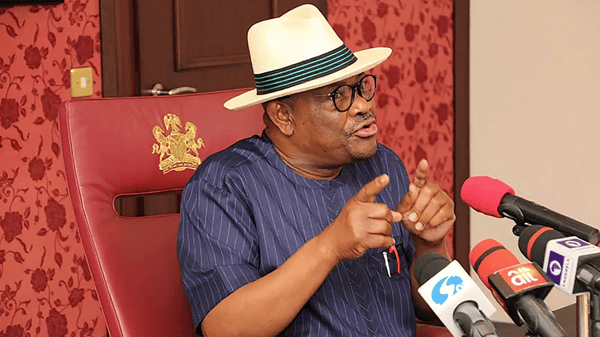
The Socio-Economic Rights and Accountability Project (SERAP) has initiated legal proceedings against Nigeria’s 36 governors and the Minister of the Federal Capital Territory (FCT), Nyesom Wike, alleging failure to provide transparency on the use of ₦14 trillion in fuel subsidy savings. The case, filed at the Federal High Court in Lagos, seeks to compel disclosure of how the allocations from the Federation Account Allocation Committee (FAAC) have been spent since the removal of petrol subsidy in May 2023.
In suit number FHC/L/MSC/1424/2025, SERAP is asking the court to direct the governors and the FCT minister to publish details of projects funded with the increased allocations and to provide completion reports. The organisation argues that Nigerians have a constitutional right to know how public funds are managed. “Nigerians ought to know in what manner public funds, including fuel subsidy savings, are spent by the governors and FCT minister,” SERAP stated in its filing.
The group contends that the principle of democracy requires openness and accountability. “Citizens’ right to know promotes openness, transparency, and accountability that is in turn crucial for the country’s democratic order,” it said. SERAP warned that secrecy in the use of the savings risks undermining public trust and worsening poverty.
“Opacity in the spending of the increased FAAC allocations from fuel subsidy savings collected by the governors and Mr Wike would continue to have negative impacts on the fundamental interests of the citizens.”
According to SERAP, the subsidy savings were intended to benefit poor and vulnerable Nigerians who have borne the brunt of subsidy removal. “The savings from the removal of fuel subsidy ought to be spent solely for the benefit of the poor and vulnerable Nigerians,” the organisation argued, adding that transparency would prevent what it described as “a morally repugnant result of double jeopardy.”
The suit, filed by lawyers Oluwakemi Agunbiade and Valentina Adegoke, highlights concerns about mismanagement and diversion of funds. “There is a significant risk of mismanagement or diversion of funds linked to the increased FAAC allocations collected by the states and FCT,” the lawyers wrote. They noted that despite trillions of naira distributed, millions of Nigerians have not seen improvements in access to healthcare, education or basic services. “Millions of poor and vulnerable Nigerians have not benefited from the trillions of naira collected by the governors and FCT minister as a result of the subsidy savings. Nigerians continue to face a worsening poverty crisis.”
SERAP cited reports that some states have used public funds for luxury spending, including exotic cars and overseas travel, while many still struggle to pay salaries and pensions. “Several states are also reportedly spending public funds, which may include fuel subsidy savings, to fund unnecessary travels, buy exotic and bulletproof cars and generally fund the lavish lifestyles of politicians,” the suit stated.
The organisation pointed to constitutional provisions requiring public institutions to abolish corrupt practices and distribute resources for the common good. It also referenced Nigeria’s obligations under the UN Convention against Corruption and a Supreme Court ruling affirming that the Freedom of Information Act applies to all public records, including those held by state governments. “With the landmark judgment, the Supreme Court has made clear that state governors can no longer hide under their unfounded claim that the Freedom of Information Act does not apply to them,” SERAP said.
The case underscores growing pressure on state governments to account for the substantial increase in allocations following subsidy removal. FAAC reportedly distributed ₦28.78 trillion in 2024, a 79 per cent rise from the previous year, with state allocations rising by 45.5 per cent to ₦5.22 trillion. Monthly distributions in 2025 have exceeded ₦1.6 trillion. Despite this, SERAP argues that poverty and underdevelopment remain widespread. “Combating the corruption epidemic in the spending of the money collected would alleviate poverty, improve access of Nigerians to basic public services, and enhance the ability of states and FCT to effectively and efficiently discharge their responsibilities,” the group said.
No date has yet been fixed for the hearing of the suit.