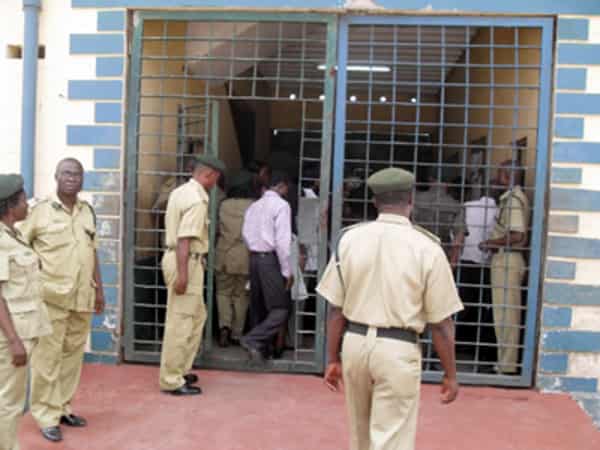
Stakeholders have advocated for increased community service as a solution to decongesting correctional centres, rehabilitating minor offenders, and promoting the restorative justice system.
Led by the Lagos State Ministry of Justice Community Service officers, the team made sensitisation visits to communities in Ikeja and Lagos Island, among others.
In a statement yesterday, Lagos State Justice Commissioner, Mr , SAN, emphasised the importance of community participation and offender rehabilitation, stating that restorative justice is not just a legal principle but a fundamental human right.
According to him, justice must extend beyond punishment to encompass dignity, restoration, accountability, and victim empowerment.
This year’s Restorative Justice Week was attended by stakeholders from the judiciary and non-governmental organisations, and funded by the European Union.
The sensitisation drive would offer education on the purpose and value of community service as a corrective and developmental tool in modern justice administration, and reinforce the message that justice is not only punitive but also restorative.
The International Institute for Democracy and Electoral Assistance, a Sweden-based organisation that supports democracy in Africa through electoral management training and risk assessments, regretted that public awareness and understanding of community service remained relatively low, especially at the grassroots level.
“Many residents, traditional leaders, and local authorities still perceive imprisonment as the only valid form of punishment. This misconception often results in stigmatisation of offenders, resistance to placements, and weak community collaboration with the justice system,” it stated.
According to statistics, in 2024, the Community Service Unit of Lagos Ministry of Justice supervised 3,765 (3,600 males and 65 female) offenders that had been sentenced to do community service, a figure considered relatively low.
State Coordinator of Rule of Law and Anti-Corruption Programme (RoLAC), Mrs Ajibola Ijimakinwa, said that though over 300 cases have been referred to the Restorative Justice Unit, “the numbers are still low, and we look forward to increased referrals from magistrates courts and the police.”
She said: “Before now, justice was mostly about punishment and incarceration. Now, victims and offenders can come together, discuss what happened, the impact of the crime, and reach agreements that ensure the victim is taken care of. We are here to sensitise the public that the Restorative Justice Unit exists in the Ministry of Justice.
“We urge judicial officers to continue reporting minor offences to the unit, ensuring people don’t go to prison unnecessarily. Awareness must increase so that, in one year, we can see more referrals. Even for cases already in the system, custodial centres can create awareness and request restorative justice when the offender appears before the court.”
The Director of Lagos State Ministry of Justice Community Service Unit, Mrs Tomi Bodude, highlighted the three major objectives of community service as rehabilitation, restoration and decongestion.
She said: “Community Service is a non-custodial sentencing for minor offenders, where offenders are required to perform unpaid work for the benefit of the community instead of being sent to prison. Offenders are monitored.
“Community Service…helps correct behaviour, allows offenders to give back to society, and reduces overcrowding in our correctional facilities by keeping minor offenders out of custody. It also saves public resources and prevents the exposure of first-time offenders to hardened criminals.”
The Executive Vice Chairman of Lagos Island East LCDA, Monsurat Oluwatosin Balogun, said the community sensitisation programme provided an important avenue to educate residents on the purpose and value of community service as a corrective and developmental tool in modern justice administration.
“It reinforced the message that justice is not only punitive but also restorative — aimed at building better citizens and strengthening community bonds,” she said.
The event also witnessed medical outreach offering free health checks, consultations, and treatments.