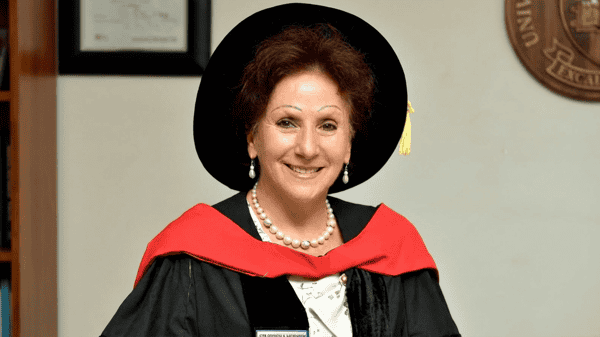
The Vice Chancellor of the Afe Babalola University Ado Ekiti (ABUAD), Professor Smaranda Olarinde and a Professor of Health Inequalities and Director of the Centre of Excellence Health Inequalities (BNU), Buckinghamshire University, UK, Professor Adetoro Adegoke, have canvassed for inclusion of more women in the leadership of higher educational institutions.
They spoke yesterday at a 3-day workshop on Empower: Leadership Training for Women in Higher Education, with the theme: “Leading Authentically in Higher Education: Life Experience and Leadership,” held in ABUAD campus, Ado Ekiti.
In her keynote address, Prof Olarinde said Higher education today demands leaders who are visionary yet compassionate, strategic yet flexible, firm yet fair.
She noted that though women possessed these dual strengths naturally, however, they must rise above self-doubt, intimidation, societal expectations, systemic biases, and the subtle pressures to “fit in.”
“Authentic leadership means releasing ourselves to take up space confidently and unapologetically.
“I am reminded that authentic leadership is not a theoretical construct but is a lived experience. My own leadership journey has been shaped by resilience, service, consistent values, and a firm belief that change begins with courage.
“Authenticity, for me, has meant remaining grounded in my convictions, even in moments of discomfort; discouragement; adversity; holding firmly to integrity when circumstances tested it; and using every challenge as an opportunity to strengthen my capacity to serve.
“Leadership in higher education is demanding, requires sacrifices and constant service. It becomes purposeful when we lead from the depths of who we are,” she said.
In her address, Prof Adegoke said that the training is targeting gender equality in higher education for women in leadership, because a lot of women who are lecturers, mid level academics, senior lecturers could not aspire to leadership position of their institutions.
“As you talk about people that are more senior in academia, maybe readers, associate professors, professors, we have fewer women. So the aim of the project with funds from the British Council is to support aspiring women leaders so that we can be able to reach that level of leadership and to ensure gender balance when it comes to representation.
“So, we have been very fortunate to have received funding support from the British Council to support gender equality at leadership level in higher education institutions.”
She noted that the experience in the UK is not much different in terms of gender inequality in higher institutions, saying that “we have a lot of women who occupy those levels as well, lecturer, senior lecturer.
“But because of a lot of barriers, issues around, you know, mindset, issues around imposter syndrome. So it’s really difficult for women to ascend to the level of leadership, even within the UK.
“It’s very, very difficult. And like I was mentioning, I happen to be number 61 black female professor in the UK, so we are also targeting women from black and ethnic minorities in the UK.”