Hello there, friend. I’m genuinely excited to share this piece with you because it represents the culmination of months researching Nigerian childhood and years of experiencing how children across our diverse nation grow, learn, and thrive despite enormous challenges. How do children live in Nigeria? Nigerian children live in vastly different circumstances depending on their region, family wealth, and urban or rural location, with some attending quality schools and receiving proper healthcare whilst others face child labour, malnutrition, educational deprivation, and preventable diseases that shape profoundly different childhood experiences within the same country.
I’ll never forget meeting seven-year-old Aisha in Kano, selling sachet water under the scorching afternoon sun whilst other children her age sat in air-conditioned classrooms learning mathematics. That encounter crystallised something I’d long suspected: childhood in Nigeria isn’t a single experience but rather a spectrum of realities shaped by geography, economics, and circumstance.
This article draws from extensive research into child welfare data, conversations with families across Nigeria’s six geopolitical zones, and my own observations working with communities from Lagos to Maiduguri. We’ll explore the conditions Nigerian children face, what childhood looks like across different regions, surprising facts about young Nigerians, and how family structures shape these formative years.
What Conditions Do Children in Nigeria Live In?
The conditions Nigerian children experience vary so dramatically that describing a “typical” Nigerian childhood proves nearly impossible.
UNICEF reports that 54 per cent of Nigerian children face multidimensional poverty, meaning they lack either water, sanitation, healthcare, education, or adequate nutrition. Over 100 Nigerian children die every hour from preventable causes such as malnutrition and lack of basic healthcare access, according to data from the Voice of Nigeria. These aren’t just statistics. They’re children with names, dreams, and families who love them but lack resources to protect them adequately.
Urban children generally fare better than their rural counterparts. In Lagos or Abuja, middle-class children attend private schools with computer laboratories, participate in extracurricular activities like chess and debate clubs, and receive regular medical check-ups at well-equipped clinics. These children grow up speaking fluent English alongside their indigenous languages, navigate smartphone applications with ease, and harbour ambitions of studying abroad.
Contrast this with rural children in Zamfara or Yobe. Many wake before dawn to fetch water from wells located kilometres from their homes, help with farm work before attending underfunded schools with collapsed roofs and overwhelmed teachers, and face genuine uncertainty about whether they’ll eat that evening. The gap between these childhoods stretches wider than the 923 kilometres separating Lagos from Maiduguri.
Northern children face particularly harsh conditions. Gender disparities remain stark, with almost 60 per cent of girls in core Northern regions out of school, deprived of education that would equip them for optimal socioeconomic performance. Cultural barriers, insecurity, and poverty combine to deny millions of children their fundamental rights to education and development.
I spent time in a rural community in Benue where children walked barefoot to school, shared textbooks amongst five students, and studied under trees when classroom space proved insufficient. The teacher told me, rather matter-of-factly, that hunger was the biggest barrier to learning. How can a child concentrate on fractions when their stomach growls?
Child labour remains pervasive. About 70 per cent of Nigerian children engage in street hawking, 23 per cent in domestic work, and 15 per cent in street begging, according to research highlighted in Guardian Nigeria. These children sacrifice their education, health, and safety to contribute to family income, perpetuating cycles of poverty across generations.
Healthcare access determines survival. Malnutrition affects 32 per cent of children under five, whilst vaccination coverage remains dangerously inadequate, with 31 per cent of children aged 12 to 23 months remaining completely unvaccinated according to recent data from the Federal Ministry of Health. Children in wealthy homes receive immunisations, nutritious meals, and prompt medical attention for illnesses. Poor children might never see a doctor, relying instead on patent medicine vendors and traditional remedies that sometimes work and sometimes prove fatal.
The psychological conditions matter too. Children growing up amidst Boko Haram violence in the North-East carry trauma that shapes their development. Displaced children in IDP camps experience disrupted educations, separation from extended families, and exposure to violence that no child should witness. Meanwhile, children in relatively stable regions develop different psychological frameworks, though economic anxiety touches nearly every Nigerian family regardless of location.
What is Childhood Like in Nigeria?
Nigerian childhood blends joy and hardship in proportions that vary wildly across socioeconomic divides.
For children in affluent families, childhood resembles global middle-class experiences. They attend birthday parties at entertainment centres with bouncing castles and face painting, take summer lessons in swimming or coding, watch Netflix on tablets, and complain about homework loads. Their parents pay between ₦500,000 and ₦2,000,000 annually for quality private schooling, invest in educational toys, and plan university education abroad from primary school onwards.
Middle-class Nigerian children experience a more precarious but still relatively comfortable childhood. They attend decent schools where teachers actually show up, eat regular meals even if variety proves limited, and possess basic necessities like school uniforms, shoes, and bags. These children help with household chores, understand that money requires careful management, and develop resilience navigating Nigeria’s infrastructure challenges like power cuts, water shortages, and traffic gridlock.
But for millions of Nigerian children, childhood means adult responsibilities arriving far too early.
I met twelve-year-old Ibrahim in Sokoto, who manages his family’s small kiosk whilst his parents farm during planting season. He calculates change for customers, negotiates with wholesalers, and makes business decisions that adults in other contexts handle. He’s never attended school. When I asked about his dreams, he looked confused. Dreams, he explained, were luxuries for people who could afford them.
Play happens differently across class divides. Wealthy children have video games, organised sports leagues, and structured activities. Middle-class children improvise with footballs made from plastic bags, invent games with bottle caps and stones, and create entertainment from available materials. They’re remarkably creative. I’ve watched children in Warri transform a stick and tyres into an elaborate racing game that kept them occupied for hours.
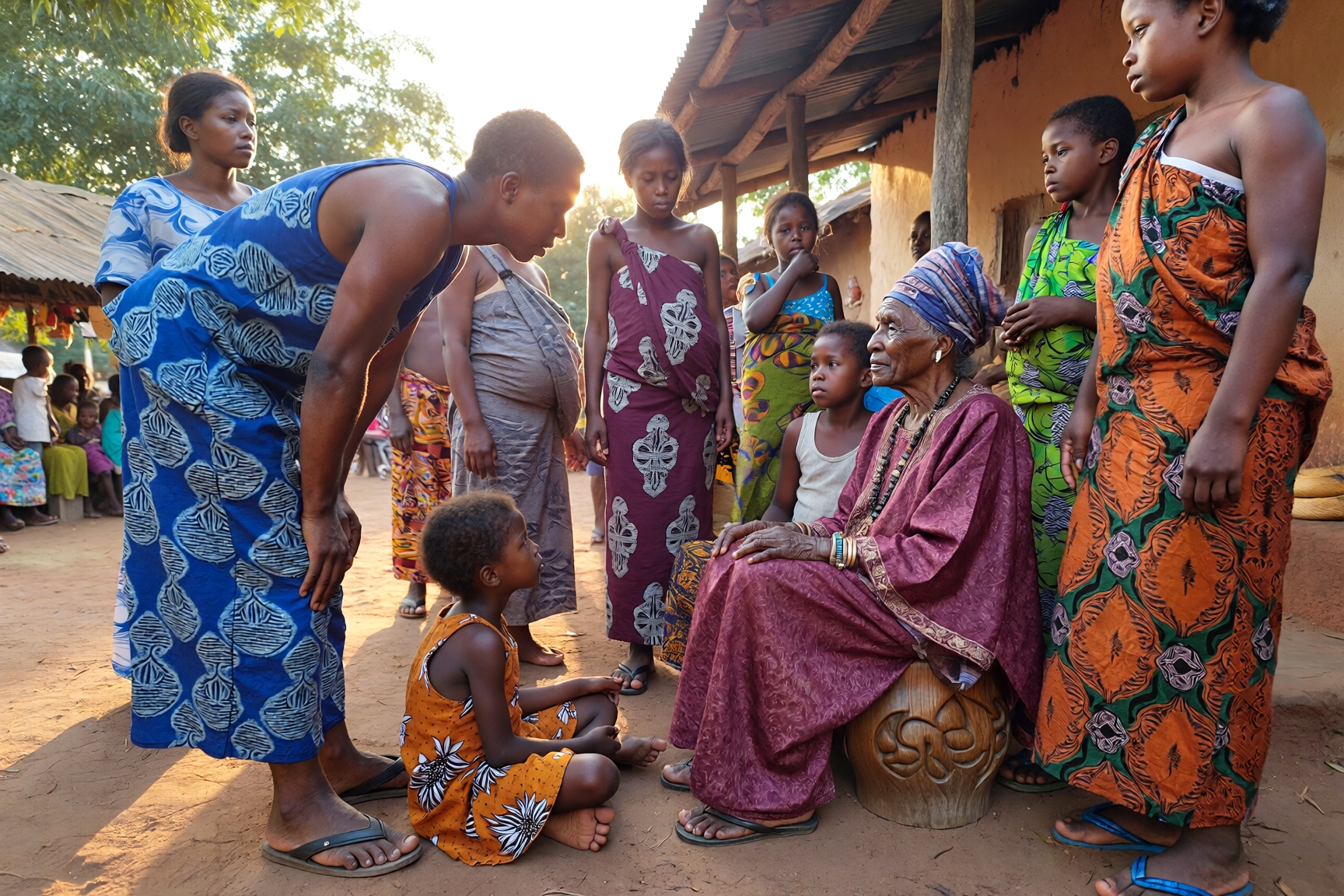
Community remains central to Nigerian childhood regardless of economic status. Children grow up knowing multiple “aunties” and “uncles” who aren’t blood relatives but function as extended family. Neighbours correct misbehaviour, feed hungry children, and maintain collective oversight that provides security even when parents work long hours. This communal approach to child-rearing means Nigerian children rarely experience the isolation common in Western individualistic societies.
Religious participation shapes childhood experiences profoundly. Muslim children in the North attend Quranic schools, memorise verses, and integrate Islamic teachings into daily routines. Christian children in the South attend church services lasting three to four hours, join children’s departments, and participate in religious festivals. These religious frameworks provide moral guidance, community belonging, and social networks that support children beyond their immediate families.
Food experiences vary dramatically. Wealthy children eat balanced diets with proteins, fruits, and vegetables. Middle-class children eat mostly carbohydrates like rice, yam, and garri, with occasional fish or chicken. Poor children survive on whatever proves available, sometimes skipping meals entirely. Malnutrition stunts growth and development, creating physical manifestations of inequality visible in children’s bodies.
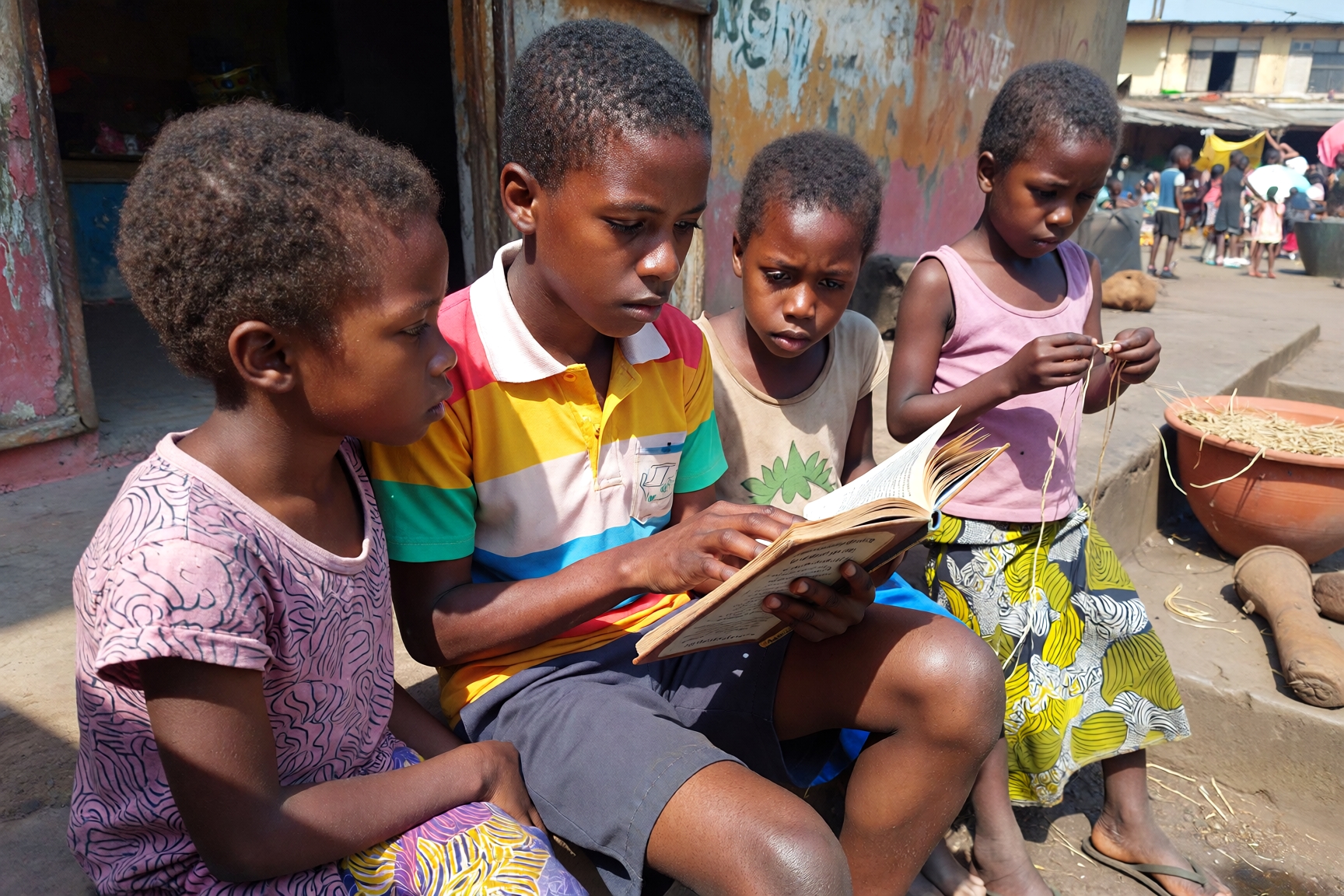
7 Steps to Understanding How Nigerian Children Live
Understanding childhood in Nigeria requires moving beyond stereotypes to appreciate the complexity and diversity of young Nigerians’ experiences:
- Recognise Regional Differences. A child in Lagos experiences fundamentally different circumstances than a child in rural Zamfara. Northern children face higher rates of poverty, educational deprivation, and insecurity, whilst Southern children generally access better services and opportunities. Western education penetration, religious composition, and economic development patterns create distinct regional childhood experiences.
- Understand Economic Stratification. Class matters more than almost any other factor in determining childhood quality. Wealthy children access healthcare, education, nutrition, and security that poor children can only imagine. The child of a Lagos banker and the child of a Kano street hawker live in essentially different countries despite sharing Nigerian nationality.
- Appreciate Cultural Context. Nigerian cultures value children differently than Western societies. Children represent family continuity, support systems for aging parents, and sources of pride. This creates different expectations around child contributions to household labour, respect for elders, and educational priorities. What outsiders might label child labour Nigerians often view as children learning responsibility and contributing to family welfare.
- Acknowledge Gender Disparities. Girl children face additional barriers unknown to boys. Northern cultural practices limit girls’ educational access, with families prioritising boys for school fees when resources prove scarce. Early marriage remains common in some regions, ending childhood abruptly when girls as young as twelve or thirteen become wives and mothers.
- Recognise Infrastructure Challenges. Nigerian children grow up adapting to unreliable electricity, unsafe water supplies, poor road networks, and inadequate healthcare facilities. These infrastructure deficits shape childhood fundamentally, forcing creative adaptation and resilience development but also limiting potential when basic necessities prove inconsistent.
- Understand Educational Crisis. With 14.8 million out-of-school children according to recent Ministry of Education data, educational access remains Nigeria’s most pressing child welfare challenge. Children who should spend childhood learning instead work streets, farms, or homes, sacrificing their developmental potential to immediate survival needs.
- Appreciate Resilience and Joy. Despite enormous challenges, Nigerian children demonstrate remarkable resilience, creativity, and capacity for happiness. They laugh, play, dream, and persist through circumstances that would overwhelm many adults. Understanding Nigerian childhood means recognising both the hardships children face and the strength they develop overcoming them.
Regional Childhood Conditions Across Nigeria
| Region | Primary Language Environment | School Attendance Rate | Common Child Labour Forms | Malnutrition Prevalence | Cultural Practices Affecting Children |
|---|---|---|---|---|---|
| South-West (Lagos, Oyo, Ogun) | Yoruba, English | 75-80% primary | Street hawking, apprenticeships | Low-Moderate (15-20%) | Early exposure to commerce, emphasis on education |
| South-East (Anambra, Enugu, Imo) | Igbo, English | 70-75% primary | Trading, domestic work | Low-Moderate (15-22%) | Entrepreneurial training, town unions provide support |
| South-South (Rivers, Delta, Akwa Ibom) | Multiple languages, English | 65-70% primary | Fishing, farming, street trading | Moderate (20-25%) | Early work in family businesses, mixed urban-rural experiences |
| North-Central (FCT, Niger, Plateau) | Multiple languages, English | 60-65% primary | Farming, street begging, hawking | Moderate-High (25-30%) | Transitional zone with varied practices |
| North-West (Kano, Kaduna, Katsina) | Hausa, limited English | 45-50% primary | Almajiri system, farming, herding | High (35-40%) | Quranic education emphasis, early marriage for girls |
| North-East (Borno, Yobe, Adamawa) | Kanuri, Hausa, limited English | 40-45% primary | Displacement-related labour, farming | Very High (40-45%) | Conflict disruption, IDP camp conditions |
This table represents approximate conditions across regions. Individual circumstances vary significantly based on urban versus rural locations, family wealth, and local security situations.
The data shows stark regional disparities in childhood experiences. Northern regions face significantly higher rates of educational deprivation and malnutrition, whilst Southern regions provide better access to services despite their own challenges. Understanding these patterns helps contextualise why Nigerian childhood cannot be discussed as a monolithic experience.
What are Three Facts About Nigeria for Kids?
When explaining Nigeria to young people, these facts capture our nation’s complexity and potential:
Fact One: Nigeria is Africa’s Most Populous Country and Home to Extraordinary Diversity. Nigeria contains over 220 million people from more than 370 ethnic groups speaking over 520 indigenous languages. This means a Nigerian child might grow up speaking Yoruba in Lagos, Igbo in Enugu, Hausa in Kano, Tiv in Benue, or Ijaw in Bayelsa, whilst also learning English for official communication and education. This linguistic and cultural diversity creates rich childhood experiences where festivals, foods, clothing, music, and traditions vary dramatically across relatively short distances.
I remember explaining to my nephew that travelling from Lagos to Kano meant encountering people whose first languages, traditional foods, clothing styles, religious practices, and social customs differed completely from ours. He was fascinated that all these different peoples were still Nigerian, united by nationality despite cultural differences. This diversity means Nigerian children develop cultural adaptability and appreciation for differences early, understanding that “Nigerian” encompasses countless ways of living.
Fact Two: Nigeria’s Economy is Africa’s Largest, Yet Millions of Children Live in Poverty. Nigeria’s GDP exceeds $500 billion, powered by oil exports, telecommunications, agriculture, and entertainment industries that make Nigerian music and films globally recognised. Yet this wealth distributes so unevenly that whilst some Nigerian children attend schools costing millions of Naira annually and holiday abroad, other children in the same cities work streets selling goods for ₦200 daily.
This paradox shapes Nigerian childhood profoundly. Children grow up witnessing extreme wealth and extreme poverty coexisting. They see convoys of expensive SUVs passing through neighbourhoods where families struggle affording one meal daily. This exposure to inequality creates various responses. Some children develop empathy and social consciousness. Others internalise that life is unfair and success requires luck or connections rather than merit. Understanding this economic reality helps explain why Nigerian children often seem older than their years, aware of adult concerns about money, security, and opportunity.
Fact Three: Nigerian Children Face Serious Challenges But Demonstrate Remarkable Resilience. Over 14.8 million Nigerian children between ages 6 and 18 are out of school according to recent government data published by the Federal Ministry of Information. Child mortality remains tragically high, with Nigeria accounting for one in six child deaths globally. Malnutrition, preventable diseases, child labour, and educational deprivation threaten millions of young Nigerians’ futures.
Yet Nigerian children display extraordinary resilience adapting to these challenges. They create games from scraps, maintain optimism despite hardships, support family survival whilst still finding moments for play and laughter. They develop problem-solving abilities navigating complex urban environments, learn multiple languages simultaneously, and absorb cultural knowledge from community elders. This resilience doesn’t justify the challenges they face but demonstrates human adaptability and the indomitable spirit of young people determined to survive and thrive regardless of circumstances.
What is the Family Structure Like in Nigeria?
Nigerian family structures differ significantly from nuclear Western models, operating instead through extended networks that profoundly shape childhood experiences.
The extended family system remains central to Nigerian life. Children grow up in households containing parents, grandparents, aunts, uncles, cousins, and sometimes unrelated dependants living together or in close proximity. This arrangement provides built-in childcare, with multiple adults sharing responsibility for children’s wellbeing, discipline, and education. When parents work, grandmothers mind children. When families face financial challenges, uncles and aunts contribute school fees. This collective approach creates safety nets that nuclear families lack.
I grew up with seven people in our household at various times. My paternal grandmother lived with us for years, my cousin stayed whilst attending university, and a family friend’s child joined us when his parents faced temporary difficulties. This fluidity was normal, not exceptional. Nigerian children learn early that family extends beyond parents and siblings to encompass wider networks of obligation and support.
Patriarchal structures dominate most Nigerian families regardless of region or religion. Fathers serve as household heads and primary decision-makers, though mothers often wield significant influence over domestic matters and children’s daily routines. Children learn hierarchical respect early, addressing elders with titles, kneeling or prostrating to greet them (depending on cultural practice), and accepting that adult authority is rarely questioned directly.
This hierarchical approach shapes childhood fundamentally. Nigerian children develop acute awareness of social positioning, appropriate behaviour around different age groups, and communication styles that show respect and deference. They learn that challenging adults publicly brings shame and consequences. This creates well-mannered children by traditional standards but can also suppress independent thinking and questioning that fosters critical reasoning.
Birth order matters significantly. Firstborn children, especially sons, carry particular expectations and responsibilities. They’re expected to set examples for younger siblings, contribute to family support as they mature, and sometimes sacrifice personal ambitions for family needs. Younger children enjoy more freedom but also less authority and sometimes fewer resources when family finances prove tight.
Gender roles remain strongly enforced in most Nigerian families. Girls learn domestic skills like cooking and housekeeping early, whilst boys receive different training preparing them for provider roles. These gendered expectations vary by region and family education levels, but traditional patterns persist even in supposedly modern households. I’ve watched families send boys to expensive schools whilst girls attend cheaper alternatives, justifying this by arguing that girls will eventually marry and become their husbands’ responsibility.
Single-parent households, whilst increasing, still face social stigma. Children from “broken homes” sometimes encounter prejudice, with community members attributing behavioural issues to incomplete family structures. This pressure creates additional burdens for single mothers especially, who must navigate economic hardship, social judgement, and child-rearing simultaneously.
Polygamous families remain common, particularly in Northern Muslim communities and some Southern traditional settings. Children in polygamous households navigate complex sibling relationships, competing for parental attention and resources amongst multiple mothers’ children. This arrangement can provide large support networks but also creates jealousies and inequalities when fathers favour certain wives and their children over others.
Child fosterage practices see Nigerian families sending children to live with better-resourced relatives in urban areas. These arrangements theoretically provide educational opportunities unavailable in children’s home communities. However, they sometimes result in exploitation, with fostered children becoming unpaid domestic servants in host households rather than receiving promised education and care.
The communal parenting philosophy means that any adult in a community feels empowered to correct misbehaving children. If a child acts inappropriately, neighbours, shopkeepers, or random adults intervene, discipline them, and report behaviour to parents. This collective oversight provides safety but also creates environments where children receive inconsistent messages and sometimes harsh discipline from multiple sources.
Economic pressures strain traditional family structures. Parents working multiple jobs to survive spend limited time with children, weakening bonds and oversight. Children increasingly raise themselves or rely on older siblings for supervision, creating situations where young people shoulder adult responsibilities without adequate maturity or support.
Understanding Nigerian Childhood Today: Challenges and Hope
Nigerian children live in a nation of contradictions where immense wealth and grinding poverty, world-class institutions and crumbling infrastructure, technological sophistication and basic survival struggles coexist within the same cities and communities.
The challenges facing Nigerian children are severe and well-documented. Educational access remains inadequate, healthcare proves inconsistent at best, nutrition is insufficient for millions, and child protection systems operate weakly when they function at all. Regional disparities mean that place of birth dramatically determines life outcomes before children can possibly influence their circumstances.
Yet focusing solely on challenges misses the remarkable adaptability, intelligence, and potential of young Nigerians. These children navigate complex multilingual environments, develop entrepreneurial skills from early ages, maintain optimism despite hardships, and demonstrate resilience that would impress observers anywhere globally. They represent Nigeria’s greatest resource and most compelling reason for hope about our national future.
Improving childhood conditions in Nigeria requires acknowledging uncomfortable truths about inequality, corruption, and policy failures whilst also recognising the strength of Nigerian families, communities, and cultural practices that support children despite systemic failures. Solutions must combine government commitment to universal healthcare and education, economic reforms creating opportunities for parents to support families adequately, and cultural shifts around issues like girl-child education and child labour.
The future Nigeria builds depends fundamentally on choices we make about childhood today. Will we invest in education, healthcare, and protection for all children regardless of their parents’ wealth or geographic location? Will we enforce laws protecting children from exploitation and abuse? Will we create economic systems allowing parents to support families without sacrificing children’s developmental needs?
These questions demand urgent attention because Nigerian children cannot wait for slow reforms. Every day of delayed action means more children dying from preventable diseases, more minds lost to educational deprivation, more potential squandered through malnutrition and neglect. Our children deserve better, and providing better remains within our capacity if we muster political will and societal commitment.
Key Takeaways
- Nigerian children experience vastly different childhoods based on geographic location, family wealth, and access to services, with Southern urban children generally faring better than Northern rural children.
- Over 54 per cent of Nigerian children face multidimensional poverty whilst 14.8 million remain out of school, representing a crisis of educational access and child welfare requiring urgent intervention.
- Extended family structures provide support networks for many Nigerian children, though economic pressures, gender inequalities, and regional disparities create significant challenges that vary dramatically across communities.
Related Insights on Nigerian Life
Understanding how children live in Nigeria connects closely to broader patterns of Nigerian society and culture across our diverse ethnic groups. The challenges children face also reflect the current living conditions that shape experiences for all Nigerians navigating our complex socioeconomic landscape.
FAQ: How Do Children Live in Nigeria?
What percentage of Nigerian children attend school regularly?
Approximately 61 per cent of children aged 6 to 11 regularly attend primary school in Nigeria according to UNICEF data, meaning that roughly 4 in 10 Nigerian children of primary school age are either out of school entirely or attend irregularly. Regional disparities are stark, with Northern states showing female primary attendance rates as low as 47 per cent whilst Southern states achieve rates of 70 to 80 per cent.
How many Nigerian children face malnutrition?
About 32 per cent of Nigerian children under age five suffer from malnutrition according to recent UNICEF assessments, with rates varying significantly by region and socioeconomic status. Northern regions experience the highest malnutrition rates, exceeding 40 per cent in some areas, whilst Southern regions maintain lower but still concerning rates of 15 to 25 per cent depending on specific location and family economic circumstances.
What is the biggest threat to child survival in Nigeria?
Preventable diseases including malaria, pneumonia, diarrhoea, and complications from malnutrition represent the leading threats to Nigerian child survival, collectively causing more childhood deaths than any other factor. Nigeria accounts for one in six child deaths globally, with over 800,000 children under five dying annually from conditions that proper healthcare, nutrition, and sanitation could prevent.
Do Nigerian children work instead of attending school?
Yes, millions of Nigerian children engage in child labour rather than or in addition to attending school, with approximately 70 per cent involved in street hawking, 23 per cent in domestic work, and 15 per cent in street begging according to research data. These children sacrifice education, health, and normal childhood development to contribute to family income, perpetuating poverty cycles across generations whilst exposing themselves to exploitation, abuse, and dangerous working conditions.
How does childhood differ between Northern and Southern Nigeria?
Northern Nigerian children face significantly higher rates of poverty, educational deprivation, malnutrition, and insecurity compared to Southern children, with girls particularly disadvantaged in Northern regions where cultural barriers limit educational access. Southern children generally attend school at higher rates, experience better healthcare access, face lower malnutrition risks, and grow up in more economically developed environments, though poverty and child welfare challenges exist across all Nigerian regions.
What is the almajiri system affecting Northern children?
The almajiri system involves Northern Muslim children living with Quranic teachers in traditional Islamic boarding schools where they memorise the Quran whilst often supporting themselves through begging and street hawking. This centuries-old educational tradition increasingly fails to provide adequate care, nutrition, or modern education, leaving millions of almajiri children vulnerable to exploitation, malnutrition, and educational deprivation whilst their families believe they receive religious instruction.
How does wealth affect childhood experiences in Nigeria?
Wealth determines almost every aspect of Nigerian childhood, from school quality and healthcare access to nutrition, housing, safety, and developmental opportunities. Children from wealthy families attend expensive private schools, receive regular medical care, eat nutritious diets, live in secure homes with reliable utilities, and access extracurricular enrichment, whilst poor children struggle with hunger, study in underfunded schools if they attend at all, rarely see doctors, and shoulder adult responsibilities helping families survive economically.
What role do extended families play in raising Nigerian children?
Extended families provide crucial support networks for Nigerian children, with grandparents, aunts, uncles, and cousins sharing childcare responsibilities, contributing to school fees during financial hardship, offering accommodation when needed, and providing multiple adults who guide, discipline, and protect children. This communal approach to child-rearing creates safety nets that nuclear families lack but can also lead to inconsistent parenting approaches, exploitation of fostered children, and complex family dynamics when resources prove insufficient for all dependants.
Are Nigerian children vaccinated against diseases?
Vaccination coverage in Nigeria remains dangerously inadequate, with 31 per cent of children aged 12 to 23 months remaining completely unvaccinated according to 2024 health survey data. Only 39 per cent of Nigerian children receive full basic vaccinations against diseases like measles, polio, and tuberculosis, exposing millions to preventable illnesses that cause death or permanent disability, with Northern states showing significantly lower vaccination rates than Southern states due to access, awareness, and cultural factors.
How does insecurity affect children in Northern Nigeria?
Insecurity from Boko Haram insurgency, bandit attacks, and communal conflicts has displaced millions of Northern children, disrupted education across entire regions, exposed young people to violence and trauma, and created dangerous environments where kidnapping, forced recruitment, and sexual violence threaten child safety. Children in IDP camps face malnutrition, disease, limited education, and psychological trauma from witnessing violence and losing family members, whilst those in conflict zones live with constant fear that prevents normal childhood development.
What percentage of Nigerian children live in poverty?
Approximately 54 per cent of Nigerian children experience multidimensional poverty, meaning they lack access to basic necessities like clean water, adequate sanitation, healthcare, education, or proper nutrition according to recent UNICEF assessments. Child poverty rates vary dramatically by region, with Northern states showing rates exceeding 70 per cent whilst Southern states maintain lower but still concerning rates, and wealth inequality means that impoverished children and wealthy children often live in close geographic proximity whilst experiencing radically different childhood realities.
How do Nigerian children spend their free time?
Nigerian children’s leisure activities vary dramatically by socioeconomic status, with wealthy children accessing organised sports, video games, entertainment centres, and structured activities whilst poor children create improvised games from available materials, help with household chores, work to contribute family income, or simply rest when exhaustion from labour or hunger makes play impossible. Across all classes, Nigerian children display remarkable creativity adapting available resources for entertainment, inventing games, participating in community activities, and maintaining capacity for joy despite often challenging circumstances.