To put this in sharper focus, Genocide Watch (GW) reported that on Friday July 13, 2025, over “200 Christian villagers were slaughtered by heavily armed Fulani jihadists in Yelwata, a farming community in Guma County, Benue State. This mass killing is part of a disturbing wave of targeted violence that has swept across central Nigeria in recent weeks.”
GW further highlighted that the massacre was consistent with coordinated attacks in Benue State (Middle Belt) traversing Aondoana, Gwer-West County on May25 2025; Edikwu-Ankpali, Apa County, on June 1 2025; and Akundu-Tyough, Makurdi on June12, 2025.
In May 2025, Reuters reported that the sit-at-home order by the proscribed Indigenous People of Biafra (IPOB), which is campaigning against the perceived marginalisation of Ndigbo people in South Eastern Nigeria and the release of their leader, Nnamdi Kanu, has led to the deaths of more than 700 people over the past four years.
IPOB aims to secede from Nigeria on what it claims to be ethnic marginalisation, extra-judicial killings, political alienation, sub-optimal resource allocation, and injustice, targeted against Ndigbo people by the Nigerian Government; in the enduring aftermath of the Nigerian versus Biafra Civil War (1967-1970), which, according to Encyclopaedia Britannica, killed an estimated 500,000 to 3, 000, 000 people. The International Committee of the Red Cross estimated 8,000 to 10,000 deaths daily in September 1968 as a consequence of the Nigerian government’s blockade which resulted in famine!
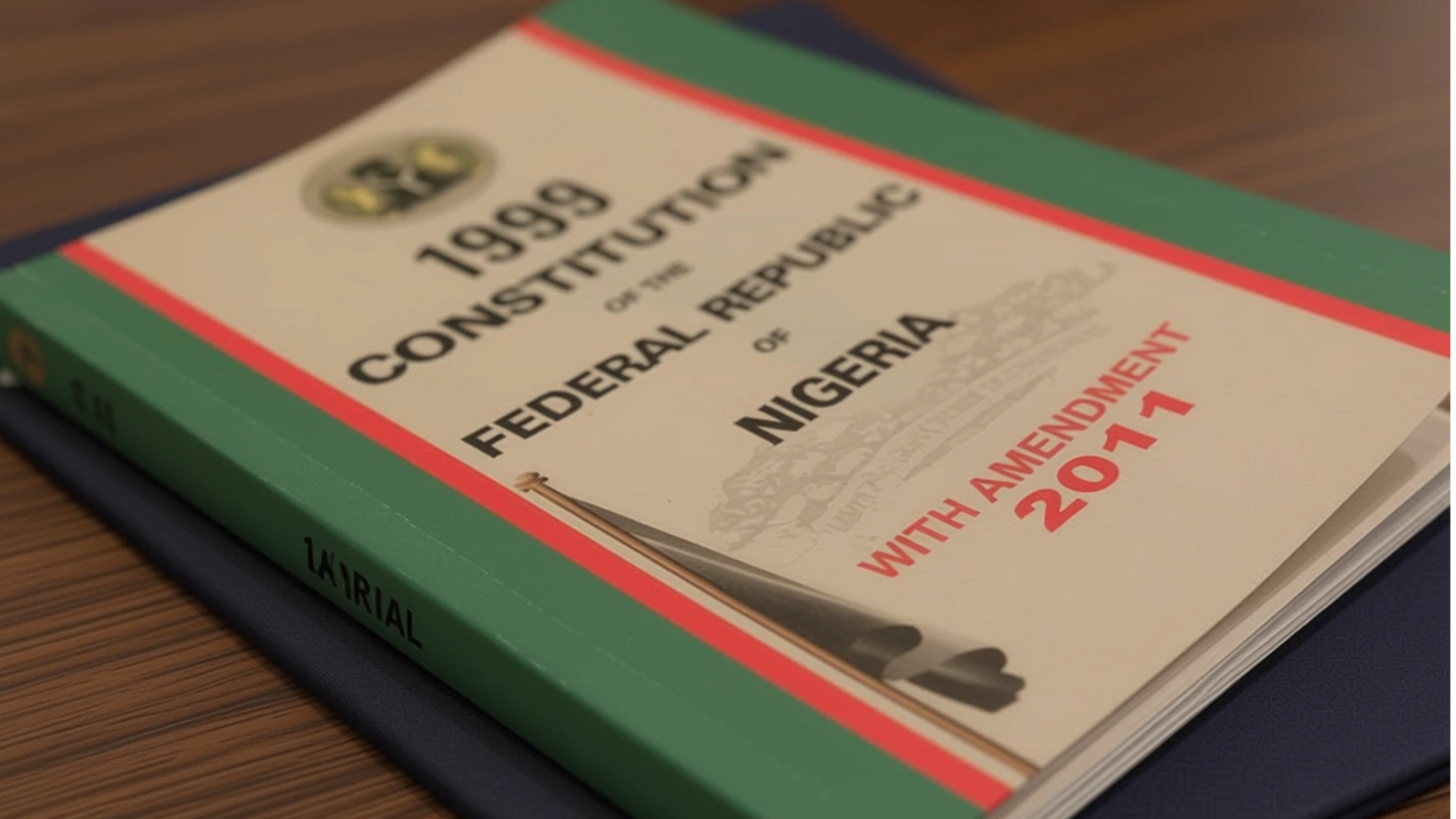
Jurisprudentially therefore, does IPOB truly fall within the characterisation of terrorism cornucopia or is it simply a political separatist entity seeking legitimate rights for indigenous people?! Some direction is established by the provisions of section 2 (1) and Section 3 (1) of Nigeria’s 1999 Constitution (as amended). It provides that “Nigeria is one indivisible and indissoluble sovereign state…”; comprising “thirty-six states” including all the South-Eastern states – Abia, Anambra, Ebonyi, Enugu, Imo.
Plus, section 8 thereof, which deals with arrangements on state creation and boundary adjustments; and section 14, part 1 of the Second Schedule of the Constitution concerning exclusive matters within the legislative competence of the federal government which also deals with state creation; when read holistically, are incompatible with the aspirations of IPOB. In other words, constitutionally, there is no accommodation for separatism.
In January 2025, not less than 20 Nigerian soldiers were reportedly killed in a suspected attack by fighters from the ISIL affiliate in West Africa Province (ISWAP). The attackers targeted an army base in the remote Malam-Fatori town in the North-Eastern Borno state. Reuters news agency reported that a commanding officer, Lt. Colonel T.E. Alari, was one of the fatalities in that terrorist attack on the Nigerian Army’s 149th Infantry Battalion in Malam-Fatori, close to the notorious “Timbuktu Triangle” around the country’s frontier with Niger Republic. Nigeria’s Defence Headquarters reported that on January 4, 2025, the country’s forces killed more than 34 Boko Haram and ISWAP terrorists, losing six gallant soldiers in a vicious encounter in Sabon Gari, Danboa local government area, also in Borno state.
On Pentecost Sunday, June 5, 2022, St. Francis Xavier’s Catholic Church, Owo, Ondo State, South Western Nigeria, was attacked by terrorists. The ghastly attack left over 50 persons, including young children, dead and several more with varying degrees of injury!
Also in 2022, ISWAP attacked the Kuje Prison in the Federal Capital Territory in which an unknown number of prisoners escaped; as well as asserting responsibility for attacks on police in Niger State, barely 30 kilometres from the Federal Capital Territory.
In June 2019, Mrs Funke Olakunri, a Nigerian Barrister, and Mr Matthew Ogunbiyi were murdered along Benin-Ore-Sagamu Highway; by suspected Fulani terrorist herdsmen, according to The Vanguard of July 13, 2019. Muhammed Usman, Mazaje Lawal, and Adamu Adamu were arrested, prosecuted, founding guilty of murder, kidnapping and sentenced to death by hanging!
These heinous crimes, and the manifestly obvious inability of the established security services, catalysed the establishment of the South Western Nigerian security force, “Amotekun”; under the instigation of the immediate past Governor of Ondo State, late Arakunrin Oluwarotimi Odunayo Akeredolu, and other progressive governors; paradoxically, against vehement opposition of the Buhari-led Administration, notwithstanding the fact that the dramatis personae were members of the incumbent political party, All Progressives Congress (APC)!
A decade ago, Boko Haram’s 2015 attack on Baga, directly led to the deaths of approximately 2,000 people. And between April 14 -15, 2014, 276 majority Christian female students and also Muslim students aged between 16 and 18 were kidnapped by Boko Haram (BH) from Government Secondary School, Chibok, Borno State. Whilst some of the girls were released following extensive negotiations in exchange for ransom payments and the release of BH terrorists, others were been forcibly married to terrorists, many presumed dead, and over 80 of these girls are still missing.
The U.S. Office of the Director of National Intelligence confirmed that BH terrorists launched the country’s first vehicle-borne improvised explosive device (VBIED) on 16 June 2011 killing 6 people at the Police HQ, Abuja; as well as attacking the United Nations headquarters in Abuja, barely two months later on August 26, 2011 resulting in the deaths of 23 people and injuring over 80 persons. Boko Haram not claimed responsibility, but promised an ongoing terrorist campaign against US and Nigerian interests.
On November 5, 2011, BH coordinated multiple attacks in Damaturu and environs claiming over 150 lives; on January 20, 2012, BH attacks killed over 185 persons in Kano; on May 7, 2014, BH attacks killed over 150 villagers in Gamboru, Ngala Village.
Notwithstanding the foregoing, the very fact that Nigeria, warts and all, has remained a functional sovereign entity, with a relatively stable, albeit fallible, democratic government over the last 26 years, is testament, in part, to the extraordinary leadership and gallantry of those patriotic elements of the country’s armed forces who risk their lives daily to keep the country safe.
According to Nigeria’s Defence Minister, Mohammed Abubakar Badaru, in concert with the MNJTF through 2023 and 2025 alone, patriotic elements of the Nigerian armed forces and security personnel neutralised 13,543 terrorists and criminals; rescued approximately 10,000 hostages; accepted the surrender of 124,408 Boko Haram and ISWAP terrorists; and recovered 11,118 weapons and 252,596 assorted ammunitions recovered. They also killed over 180 terrorists, apprehended 204 suspects, and rescued 234 kidnapped victims in December 2023.
Furthermore, patriotic troops destroyed terrorist enclaves in several states, including Niger, Benue, Plateau, and Taraba. In the 24 months through June 2023 and June 2025, Nigerian troops killed 1,246 terrorists, arrested 2,467 others, and rescued 1,920 civilians. In December 2023, 91 terrorists, including adult males, and females, surrendered to Nigerian troops, thereby heralding a potential pivotal shift in the country’s existentialist war against terror.
Indeed, many gallant and patriotic Nigerian troops have made the ultimate sacrifice whilst countless others have suffered permanent life-changing injuries. Deservedly, the country owes them and their dependants greatly for their heroic contributions.
Conclusion and recommendations
Whilst highlighting the gallantry and pivotal contributions of the patriotic men and women of the armed forces and security services, this analysis has demonstrated the cascading complexities and volatilities of tackling domestic and international terrorism, separatist agitations, the seemingly endless anarchy emanating from terrorism cornucopia, loss of lives, human displacements and suffering.
And yes, there is no magic wand to command the disappearance of these extreme challenges, nevertheless, the submission is for the Federal Executive Council, service chiefs, federal and state parliamentarians to give serious consideration to these actionable and timebound cross-cutting policy recommendations; with a view to mitigating, in some way, what has proven to be intractably complicated over the past three decades:
The right, most competent, and patriotic leadership at all political, strategic, and operational levels; with sanctions for non-performance and underperformance;
Reinforcement of kinetic operations with state-of-the art equipment, robust intelligence gathering, sophisticated technology deployments across all aerial, land, maritime, and spatial domains, bolstering Operation Hadin Kai, Operation Hadarin Daji et al;
Develop a robust political and socio-economic integration and renaissance strategy because kinetic and non-kinetic operations must advance concurrently. In this context therefore, political discussions with separatist groups could offer a mechanism for progressive discussions on potential constitutional recalibration on mutually beneficial terms for all sides;
Targeted personnel changes and troop rotation to mitigate war weariness and demotivation; troops must be properly incentivised and motivated;
Immediate moratorium on nomadic herding, because this has implicated in terrorist actions nationwide; and counterbalancing this with immediate state subsidised ranching equally benefitting ranchers and farmers;
Criminalise land encroachments with tougher penalties, prosecutions, and enforcement;
Expedite legislative action on state police forthwith. The current inertia evidences the absence of political dynamism, foresight, and decisiveness. Patently, no citizen deserves to die because of persistent political inaction;
The fragmentation of ECOWAS does not supplant the fact that terrorism is clearly a regional and an international problem. Accordingly, the argumentation for more effective strategic coordination between the Multinational Joint Task Force, and the Alliance of Sahelian States comprising the trinity of ECOWAS divorcees, Burkina Faso, Mali, and Niger; to track and disrupt terrorist financing, training; weapons procurement, logistics, and operations, is compelling.
That same logic applies to strategic coordination, interoperability, intelligence-sharing with Interpol and other international counter-terrorism organisations without sacrificing national security and sovereign autonomy.
Concluded.
Ojumu is the Principal Partner at Balliol Myers LP, a firm of legal practitioners and strategy consultants in Lagos, Nigeria, author of The Dynamic Intersections of Economics, Foreign Relations, Jurisprudence and National Development (2023).