The Senate’s decision to summon the Minister of Finance Wale Edun and others in President Bola Ahmed Tinubu’s cabinet over the collapse of Nigeria’s $30 million Safe School Initiative funding framework is as overdue as it is necessary. Since April 14, 2014, Chibok attack in Borno State, schools nationwide have become soft targets for terrorists, bandits and kidnappers. This is unacceptable. A country’s future is jeopardised as long as classrooms remain unsafe. The legislators’ inquiry must therefore follow through with recoveries, indictments and reforms. Anything less would amount to another round of absurd theatrics.
According to figures cited by the Senate’s ad hoc committee, chaired by Senator Orji Uzor Kalu, more than 1,680 schoolchildren have been kidnapped, with over 180 educational facilities attacked since 2014. These are worrying statistics that point to wasted childhoods, traumatised families and communities, and a generation of Nigerians increasingly doubtful about the value of schooling in relation to the safety of lives. The committee’s investigation of the use of funds since 2014, including the N144 billion reportedly allocated under successive funding windows, is an appropriate response to public anger over the persistent attacks.
The Safe School Initiative came to light, following one of the darkest moments in Nigeria’s recent history: the abduction of 276 girls from the Government Secondary School in Chibok. That incident exposed the depth of Boko Haram’s depravity; it also revealed the Federal Government’s embarrassing inability to protect its most vulnerable citizens. In response, the Goodluck Jonathan administration, with the backing of international partners and the private sector, announced a multi-million-dollar programme aimed at hardening schools, providing security, establishing early-warning systems and reassuring parents that classrooms would once again be safe spaces for learning.
Sadly, the 11 years that followed witnessed more abduction of students in Zamfara, Yobe, Niger, Kaduna and many other states, culminating in the recent abduction of at least 25 female students in Kebbi State and hundreds of pupils in Niger State. Although the government has succeeded in bringing back the latest abductees to their families, the incidents prove that the assailants, rather than the schools, have become more hardened. Each incident has led to visits by top government officials, condemnations, prayers, and wishes; however, the underlying vulnerabilities have persisted. The Senate’s inquiry must therefore yield redemptive ideas because the nation sits on the grim possibility that it could yet be plunged into another episode of the same tragedy.
The structural deficiencies in schools are troubling. More than 42,000 primary and secondary institutions across northern Nigeria reportedly lack perimeter fencing, leaving them exposed to security breaches. Data shows that some 4,270 secondary schools in 21 northern states and the Federal Capital Territory are unfenced, with Bauchi leading with 574, followed by Benue with 447 and Kano with 500. Fencing school premises is basic infrastructure that should have been on the first line of priority. That this elementary protection remains elusive says much about the seriousness with which authorities have approached the Safe School Initiative.
Even more troubling is the revelation that 30 of the country’s 36 states have yet to implement the proposal. This means: only six states have bothered to key into a programme designed to protect school children from terrorists and kidnappers, among other ills. This indefensible abandonment of responsibility by state governments indicates the widespread dereliction of duty prevalent among the nation’s leadership.
The Orji Uzor Kalu committee should save Nigerians the pain of enduring another ritual summons and political optics. “We will track every naira and every dollar allocated to the Safe School Initiative,” the chairman affirmed. These words must stand as a solemn vow to the Nigerian public and the international community that the demands for accountability will be fully met. How were the funds spent? Have any ghost schools benefited from infrastructure upgrades? Where have security personnel been deployed, and with what training and mandate? What early-warning and emergency-response systems were put in place, and why did they fail to prevent or swiftly respond to attacks? Ultimately, the committee must not only be willing to point an unprejudiced finger at individuals responsible for gaps between expenditure and outcomes, but it should also develop concrete plans to ensure safe schools.
The four-week timeframe the Senate set for its investigation is tight, given its attempt to audit 11 years of financial flows, security deployments, infrastructure projects, and inter-agency coordination within such a short time. The urgency, nevertheless, is understandable: with every passing day, millions of apprehensive Nigerian parents send their children to school, unsure where or when the next attack will occur. Still, the committee must strike a balance between thoroughness and timeliness, ensuring its findings are both comprehensive and actionable.
From the outset, the Safe School Initiative appeared destined to falter. Committing the lives of schoolchildren to a fragmented operation spanning multiple ministries and agencies indicates a lack of planning. Lines of responsibility are always at risk of blurring. The summoning of the Ministers of Finance, Education and Defence, alongside the Commandant-General of the Nigeria Security and Civil Defence Corps and representatives of school proprietors says it all. The initiative should operate with a centralised framework if it hopes to address the problems of overlap and lack of coordination.
The National Safe Schools Response Coordination Centre operates under the Nigeria Security and Civil Defence Corps, yet the Nigeria Police Force retains constitutional authority over internal security. State governments oversee school infrastructure but lack the security apparatus to protect it effectively. The military intervenes during crises, while communities are expected to provide intelligence. This cacophony of overlapping responsibilities has not produced coordination but chaos. Real-time reporting is virtually non-existent. Consequently, deployments are slow, while attacks unfold over hours without interception.
To make Nigeria’s schools safer, the Senate’s committee must clarify institutional responsibility. It must assign a single agency an unambiguous authority over security: one that can be held accountable for failures. The committee must suggest refining real-time monitoring systems to ensure they effectively connect schools, security agencies, and emergency responders. State governments must be compelled to implement the initiative, while community-based security mechanisms must be strengthened to provide first-line protection as regular security forces respond.
Above all, schools can hardly be safe when the country or states that house them are unsafe. Governments at all levels should fulfil their primary constitutional responsibility to secure the lives and property of Nigerians and provide for their welfare. The false ideology that education is a scam is already swirling dangerously among Nigerian youths. The last thing the education sector needs is the perception that schooling is synonymous with getting kidnapped or killed. The Nigerian public waits with huge expectations for how students can be protected. The Senate committee has an opportunity to answer these questions honestly.
That Senate’s probe to end decade of unsafe schools
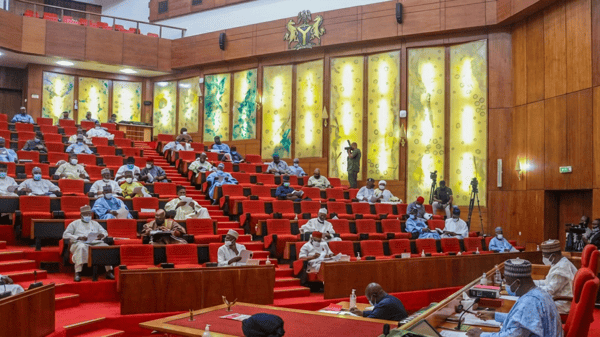
Senates in session
Senates in session