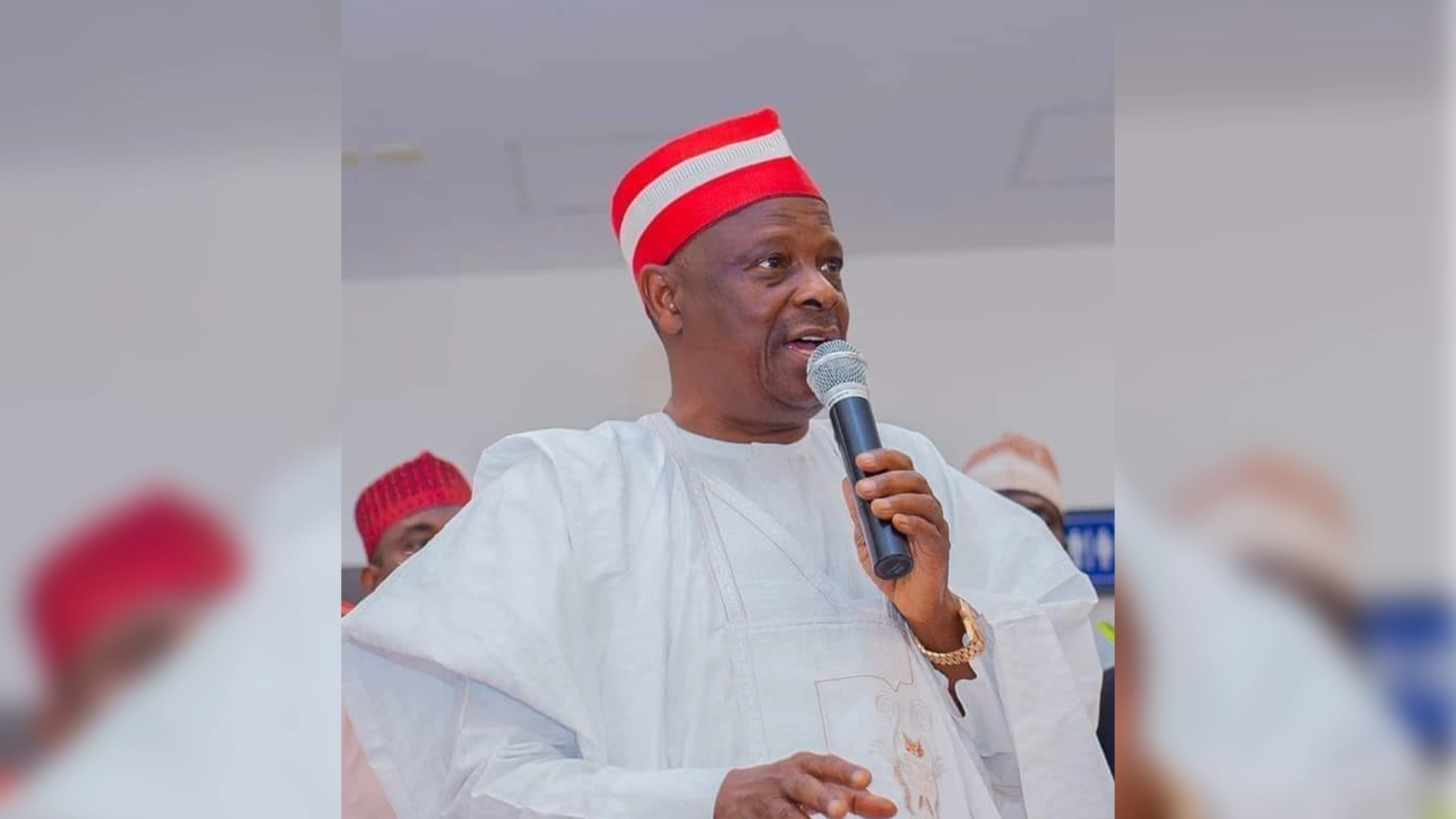
The defection of Governor Sheriff Oborevwori from the Peoples Democratic Party (PDP) to the ruling All Progressives Congress (APC) has altered the political dynamics of the Big Heart State, but far from uhuru for the ruling APC, MONDAY OSAYANDE reports.
Volatile! That is one word that could describe the current political climate in Delta State. The air of uncertainty and the unusually competitive undertone that once lay beneath the calm projected by the former ruling party have vanished. Now, APC, which parades a galaxy of godfathers, including former governors James Onanefe Ibori, Dr Emmanuel Uduaghan, and Ifeanyi Okowa, controls state power, while the erstwhile dominant PDP struggles to regain coherence.
This is as the fledgling opposition coalition platform, the African Democratic Congress (ADC), quietly works to capitalise on the anticipated convergence of godfather forces, public discontent, elite fatigue, and voter frustration, positioning itself as a protest platform ahead of the 2027 general elections.
APC indeed controls power, but not without discomfort, even as it projects dominance. The party wields the state apparatus and enjoys an incumbency advantage with Governor Oborevwori in its corner. Perhaps this explains why the party’s leadership now speaks with confidence, even bordering on arrogance, as it declares that opposition no longer exists and that the 2027 election is already settled.
However, analysts caution that APC’s strength is largely driven by elites rather than being organically rooted. The Guardian found that many PDP members who defected alongside or after the governor have yet to formally register with the APC or integrate into its structures at ward and unit levels. This creates a fragile coalition, held together more by access to power than ideological commitment.
The ruling party’s loud dismissal of ADC and other parties may also be premature. Delta voters have historically punished political complacency, and the assumption that performance alone guarantees electoral victory ignores growing resentment over poverty, unemployment, and perceived underdevelopment, despite huge federal allocations and internally generated revenue.
In essence, APC has power, but not total comfort. Its strength rests on incumbency, state resources, and elite alignment, rather than a deeply consolidated grassroots base.
The PDP, meanwhile, is seen sinking deep into the valley, with some political pundits calling it “the fallen Iroko.” If the APC is powerful but uneasy, the PDP is wounded but not yet buried. Once the unquestioned political machine in Delta State, the PDP has suffered its worst crisis following the defection of its sitting governor and several prominent party members. To many observers, the party appears hollowed out, its structures weakened, morale low, and visibility minimal.
Indeed, since the governor’s defection on April 28, 2025, PDP’s visibility in Delta has drastically waned, with party structures appearing hollowed out and grassroots mobilisation largely absent. Political observers note that the party, which ruled Delta uninterrupted for over two decades, now struggles to project relevance, raising doubts about its capacity to meaningfully compete in any near-future election.
Across the state, PDP offices are largely inactive, ward meetings sparse, and loyalists either silent or openly exploring alternative political platforms. For many analysts, the defections have dealt a near-fatal blow to the party’s organisational spine.
However, the PDP leadership has dismissed such assessments as exaggerated and politically motivated. Chairman of the PDP South-South Zonal Committee, Emmanuel Ogidi, insisted that the party remains firmly alive in Delta State.
“There is no cause for alarm,” Ogidi said, describing the PDP as “an Iroko tree.” According to him, although the party may appear to be shedding leaves, its roots remain deep. “Very soon, the branches will sprout back to life,” he declared, expressing confidence that the party would rebound despite current setbacks.
For now, PDP is disoriented, though it retains historical loyalty in many communities, especially among older voters and traditional party faithful. But can the party reorganise, rebuild its grassroots machinery, and present a credible alternative candidate before 2027? Without urgent internal reconciliation, clear leadership, and aggressive mobilisation, the party risks being permanently overtaken, not just by APC, but by emerging alternatives like ADC.
Ogidi’s optimism contrasts sharply with the confidence exuded by the ruling APC, which has all but declared Delta a one-party state. The APC Publicity Secretary in Delta State, Valentine Onojeghuo, waved off any suggestion that opposition parties, including ADC, pose a threat to APC’s hold on power. He described ADC’s ambition to take over the government as “a huge joke,” arguing that its members “do not even know where they are going.”
Onojeghuo told The Guardian, “Before now, the two major political parties in Delta State were PDP and APC. But since the governor joined the APC, it remains the only party in the state. As far as we are concerned, no other parties exist here anymore.”
He further claimed that APC currently faces no opposition, insisting that Deltans have already decided to support Governor Oborevwori based on his performance in office.
“The realities on the ground are clear,” Onojeghuo added. “The governor has won the contest even before the election. We are not bothered about the ranting of other parties. We are focused.”
The APC spokesperson boasted that the party would record a confident victory in the 2027 general elections, citing unity within the party and unwavering support for the governor’s leadership. According to him, APC remains resolutely committed to Oborevwori as he continues to deliver on his mandate.
Despite the ruling party’s bravado and PDP leaders’ reassurances, political watchers caution that Delta’s evolving political dynamics remain fluid. They argue that while APC currently dominates, internal party cohesion, voter sentiment, and the ability of opposition forces like ADC to reorganise could still reshape the race ahead of 2027.
To this end, ADC declared that the long-standing strategy of using poverty and patronage to manipulate voters in Delta State will no longer succeed, warning political parties ahead of the 2027 governorship election that such tactics are bound to fail.
Rising from a recent extraordinary stakeholders’ meeting at its state secretariat in Asaba, the Delta chapter of ADC said the political consciousness of Deltans had reached a point where “money politics” and inducement would be firmly resisted.
Addressing journalists after the meeting, a member of the party’s Transition Committee, Lawrence Emeka Ozegbe, said the era of exploiting economic hardship as an electoral weapon was coming to an end. He accused dominant parties of thriving on poverty while presiding over what he described as massive underdevelopment in an oil-rich state.
“Any party that believes it can win the 2027 election by weaponising poverty will be disappointed,” Ozegbe declared. “Delta State has received enormous federal allocations and generated huge internal revenue over the years, yet the people remain trapped in poverty. That contradiction is no longer acceptable to Deltans.”
In a direct swipe at the ruling APC, Ozegbe said ADC possessed both the organisational strength and resources to confront what he called “moneybags politics,”insisting that financial muscle would not determine the next election’s outcome. “The so-called moneybags will meet their Waterloo,” he said, describing ADC as a “mega party” prepared to squarely challenge APC and restore what he termed the “lost glory” of Delta State.
Echoing this position, another Transition Committee member, Anthony Ominogho, expressed confidence that ADC could upset established political forces in 2027, likening the contest to the biblical battle between David and Goliath. According to him, widespread public dissatisfaction with governance in the state has created fertile ground for a political shift.
“Deltans are unhappy with the turn of events,” Ominogho said. “What we are seeing is a silent anger that will manifest at the polls.” He announced that the party would commence an aggressive statewide membership registration from December 19, 2025, onward, urging residents across the three senatorial districts to join what he described as a “moving train” towards development and prosperity.
On the sensitive issue of power rotation, ADC distanced itself from zoning debates, stressing that competence and capacity would take precedence over sectional considerations.
“Our priority is a governorship candidate who can deliver effective and responsive leadership, not one imposed by rotation or sentiment,” Ominogho added.
Other party leaders present at the meeting included Barrister George Timinimi, Johnson Urhukpe, and Ambassador Richard Aduvie (JP), alongside stakeholders drawn from Delta North, Central, and South.
Political observers note that the bold rhetoric from ADC reflects a growing attempt to position the party as the principal opposition force in the state, especially amid realignments and voter disillusionment with mainstream parties.
With 2027 almost two years away, analysts say the real test for ADC will be whether it can translate populist messaging and aggressive mobilisation into a coherent structure capable of challenging APC’s entrenched influence across Delta State.
The African Democratic Congress represents the most disruptive variable in Delta’s political equation. Its aggressive membership drive, coalition-building efforts, and populist rhetoric against “money politics” have injected new energy into the state’s political discourse.
ADC leaders frame their movement as a moral revolt against elite manipulation, poverty-induced voter inducement, and recycled leadership. Drawing inspiration from the 2023 “Obidient Movement,” the party is marketing itself as a grassroots-driven alternative that prioritises competence over zoning, integrity over wealth, and service over patronage.
The involvement of familiar political figures like Great Ogboru, alongside younger professionals and disenchanted party members—gives ADC both visibility and credibility.
For now, Delta State politics appears firmly tilted in favour of APC, with PDP battling to prove it is more than a fallen giant struggling to rise from the shadows. However, analysts warn that enthusiasm alone is not enough to win elections. The party faces internal restructuring challenges, competing claims of legitimacy, and the uphill task of translating rhetoric into a statewide electoral machine.
ADC’s biggest strength lies in public anger and political fatigue. Its biggest weakness remains structure, funding depth, and the risk of internal fragmentation.
Other registered political parties appear marginal but relevant beyond APC, PDP, and ADC. They remain largely peripheral. While they may influence outcomes through alliances or protest votes, none currently possesses the structure or momentum to independently challenge for power in 2027.
Now, who has the edge in 2027? Political analysts broadly agree on three scenarios: APC remains the front-runner due to incumbency, state power, and elite support, but only if internal cohesion holds and voter apathy works in its favour; PDP remains a sleeping force, capable of revival if it rebuilds quickly and capitalises on voter nostalgia and grassroots loyalty; while ADC is the wild card, potentially reshaping the contest if it sustains momentum, resolves internal disputes, and converts popular frustration into votes.
Frankly speaking, Delta State politics is no longer a one-party affair. The emergence of ADC, the decline of PDP, and the uneasy dominance of APC suggest that 2027 may be the most competitive election in the state’s recent history.
What is clear is that Delta politics has reached a turning point. Whether the future belongs to entrenched power, resurrected legacy, or insurgent reform will depend not just on party structures, but on how effectively politicians respond to the lived realities of the Delta voter.