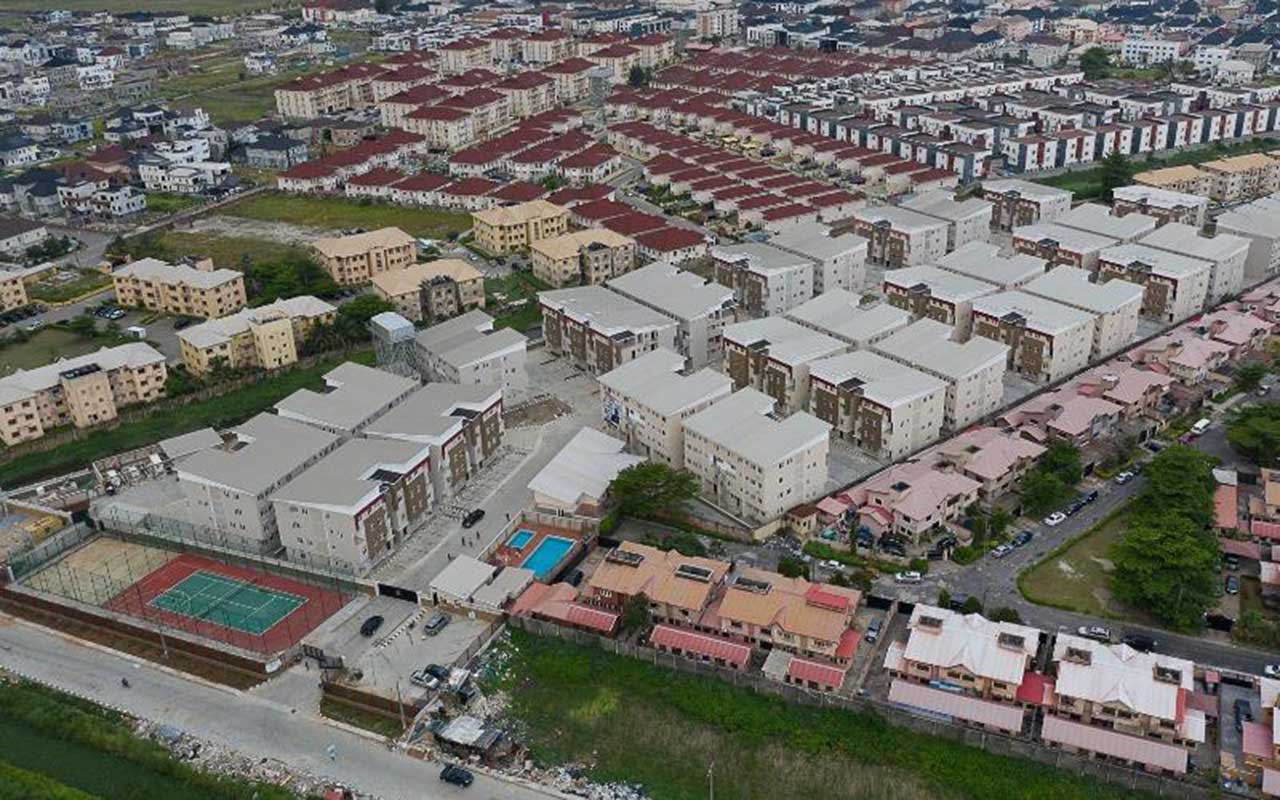
The year 2025 has demonstrated both the vulnerabilities and the resilience of Nigeria’s housing sector. While macroeconomic shocks and regulatory challenges constrained growth, ongoing government initiatives, diaspora investments and industry innovation offer a roadmap for gradual recovery. Experts argued that without decisive action, the urban housing market risks remaining unaffordable for the majority of its citizens, deepening inequality and perpetuating rental pressures, VICTOR GBONEGUN reports.
The Nigerian housing market in 2025 remained largely subdued by severe macroeconomic headwinds, most notably inflation, which fuelled relentless increases in prices of building materials, construction costs and home prices.
What followed was an erosion of housing affordability across the country, with major urban centres such as Lagos, Abuja, Enugu, Port Harcourt and Abeokuta feeling the biggest strain as rapid urbanisation deepened existing challenges.
Although Nigeria’s yearly inflation rate eased to 16.05 per cent in October 2025, the lowest level since March 2022, after 18.02 per cent the previous month, the decline did little to slow the upward trajectory of home prices, construction costs, rents and labour.
For many households, especially those earning the national median income of N70,000 or less, typical one-bedroom, two-bedroom and three-bedroom apartments remained firmly out of reach.
Affordability crisis deepens
According to recent industry reports, the national real estate market is expected to hit N2.25 trillion by the end of 2025, signalling continued interest from investors despite macroeconomic headwinds. The sector has consolidated its importance as real estate now stands among the largest contributors to Nigeria’s economy.
Yet for many Nigerians, especially in major metropolitan areas, homeownership remains out of reach. Inflation, high borrowing costs, and skyrocketing material prices have combined to make new housing unaffordable for large segments of the population.
In Lagos, Abuja and Port Harcourt, renting has become the norm. A report published mid 2025 notes that the rental segment now dominates real estate transactions, as affordability challenges push potential buyers to the sidelines. Across major cities, annual rents for standard apartments have surged; some two-bedroom units now command as much as N2.5 million per year.
The root causes are stark. Surging construction material costs, especially for cement, steel and tiles, many of which are imported, have dramatically inflated the cost of building new homes. At the same time, interest rates remain elevated, making mortgages and construction loans expensive and scarce.
The result is a deepening housing deficit. While demand for new housing continues to swell, driven by rapid urbanisation, population growth, and rising migration to cities, supply remains woefully inadequate. Experts estimate the deficit to be tens of millions of units. Meanwhile, only a limited number of homes are being delivered yearly, far short of the required volume to close the gap.
Investigations by The Guardian showed that house prices and rental rates far outpaced income growth, worsened by poor policy implementation, local regulations, lengthy building approval processes, and a web of costly taxes and fees that discouraged development.
The year was also characterised by demolitions across several states, where properties worth billions were lost due to infractions such as lack of approved permits, building on canals, encroachments and development in restricted corridors.
Nigeria’s reliance on imported building materials, estimated at 80 per cent, excluding cement, worsened matters. This dependence, shaped by fluctuations in foreign exchange rates, pushed construction costs up as the naira weakened for much of the year. Even as currency pressures eased toward year-end, the earlier volatility had already altered project costs nationwide.
With homeownership becoming increasingly unattainable, many households turned to renting. This in turn drove rental costs up by over 50 per cent in Lagos, Abuja, Port Harcourt, Ibadan, Kano, Enugu and other major cities.
Sector performance and macroeconomic context
As of 2024, the real estate sector was valued at N41.3 trillion, contributing 5.45 per cent to the nation’s Gross Domestic Product (GDP). The Real Estate Investment Trusts (REITs) market stood at N600 million.According to the National Bureau of Statistics (NBS), Nigeria’s economy grew by 3.98 per cent in the third quarter of 2025, slightly above the 3.86 per cent recorded in the same period of 2024, driven mainly by the ICT and agriculture sectors.
The construction sector grew by 5.57 per cent in real terms, down slightly from 6.80 per cent in 2024, though its overall contribution to GDP rose marginally to 3.80 per cent.
However, the sector remained weighed down by inflation, forex instability, high mortgage rates, limited funding, rapid population growth, inadequate infrastructure, persistent rural-urban migration and the rigidities embedded in the Land Use Act.
High costs dampen federal housing efforts
The Federal Government’s budget for housing once again fell significantly short of what was required to bridge the nationwide deficit. Many Nigerians continued to feel little impact from flagship initiatives such as the Renewed Hope Housing Programme, as high unit prices and accessibility issues limited uptake.
To address supply and demand constraints, the government launched the Ministry of Finance Incorporated Real Estate Investment Fund (MREIF) in 2025, designed to expand access to mortgages at 9.75 per cent interest, with up to 20-year repayment plans. The scheme targets Nigerians both at home and in the diaspora, requiring 10 per cent equity and offering maximum loans of N100 million. But despite its promise, uptake has remained slow.
Though falling inflation, interest-rate adjustments and new rental-reform proposals in Lagos and Enugu suggested a more supportive environment, the changes were not substantial enough to return the housing market to the relative stability of the 1990s.
Yet, some optimism emerged. After four months of relative currency stability, the naira strengthened to N1,422 per dollar in the official market by October 2025, while foreign reserves rose to $42.1 billion, the highest since 2019.
Analysts believe this development could spur recovery in key subsegments such as office spaces and retail, which are expected to move into a new growth cycle after years of oversupply and recession.
Experts decry inflation-induced woes
Experts across the sector lamented the inflation-induced pressures that characterised the year, while recommending reforms to ease housing access and affordability.
The Chairman, Board of Trustees, Nigerian Institution of Estate Surveyors and Valuers (NIESV), Prof. Austin Otegbulu, noted that inflation in 2025 was largely “cost-push” in nature, driven by high production and import costs for construction materials. He stressed that most essential building materials, cement, iron rods, paints, and roofing sheets have direct links to exchange rate movements.
“When the exchange rate increases by 1 or 2 per cent, the price of goods rises by 20 or 30 per cent. A construction cost of N100 million quickly becomes N150 million. This inflation is not normal; it is cost-push inflation,” he said.
Otegbulu explained that the soaring cost of construction has reduced output. A developer who could previously build a three-bedroom apartment with a certain budget can now only produce a two-bedroom unit with the same amount. This supply shortage, coupled with strong demand, has continued to push prices up in both the property and rental markets.
“Young people renting one-bedroom self-contained apartments are paying up to N1.5 million for newly built units. Developers are not smiling either. High interest rates erode their profits. Rent control laws in some states make little sense when the government does not control building material prices, labour costs, or lending rates,” he added.
He advocated lower lending rates and a stronger currency to make housing affordable, suggesting that the government buy up completed units and resell at subsidised prices.
President, Nigerian Institute of Building (NIOB), Bimbo Kolade, said the sector faced the same nationwide challenges triggered by subsidy removal and exchange rate liberalisation. The resulting inflation spiked material prices before a mild stabilisation later in the year.
He warned that high inflation has driven some contractors to adopt fake or substandard materials and has increased construction risks. “To construct a one-bedroom flat today, you need between N12 million and N15 million, an amount that could previously build a twin duplex. Roofing alone for a basic three-bedroom design now costs between N3 million and N4.5 million,” he said.
Kolade observed that the recent relative stability of the dollar has made material cost forecasting more predictable, improving client-consultant relations and construction planning. He stressed that ongoing government housing programmes and clear policy direction, including the appointment of a professional minister of housing, are positive steps for 2026.
He urged that the National Building Code be prioritised and recommended unity among industry stakeholders to ensure effective implementation of professional advice and avoid “penny-wise, pound-foolish” decisions.
Resilience amid challenges
Former Chairman of the Nigeria Society of Engineers (NSE) Apapa Branch, Dr Garba Ombugadu, said the sector demonstrated remarkable resilience in 2025, despite inflation, rising construction costs, and increasing home prices and rents.
“The sector still grew, with a market valuation expected to hit $2.61 trillion by year-end. Factors driving resilience include growing housing demand, infrastructure development, investments from the diaspora, and government support such as Federal Mortgage Bank of Nigeria (FMBN) loans,” he said.
Experts believe that enhancing access to affordable mortgage financing, promoting local raw material production, increasing budgetary allocations, reducing import tariffs, fostering digitalisation and proptech adoption, and implementing regulatory reforms will further strengthen the sector.
They also stressed sustainable and eco-friendly housing, public-private partnerships, security, transparency, anti-corruption measures, and policy consistency as key areas for improvement.
President of the Nigerian Institute of Town Planners (NITP), Dr Ogbonna Chime, argued that housing provision could only improve if developers engage professional town planners in design, approval, and implementation.
“Town planners advise developers on optimal land use, acquisition procedures, design, and regulatory compliance. Unfortunately, in 2025, many developers ignored these services and paid heavily for the negligence. Some structures were completed before authorities demolished them, representing huge national economic waste and widening the housing deficit,” he noted.
Chime emphasised that professional oversight in planning is critical to ensuring sustainable, safe, and affordable housing across the country.