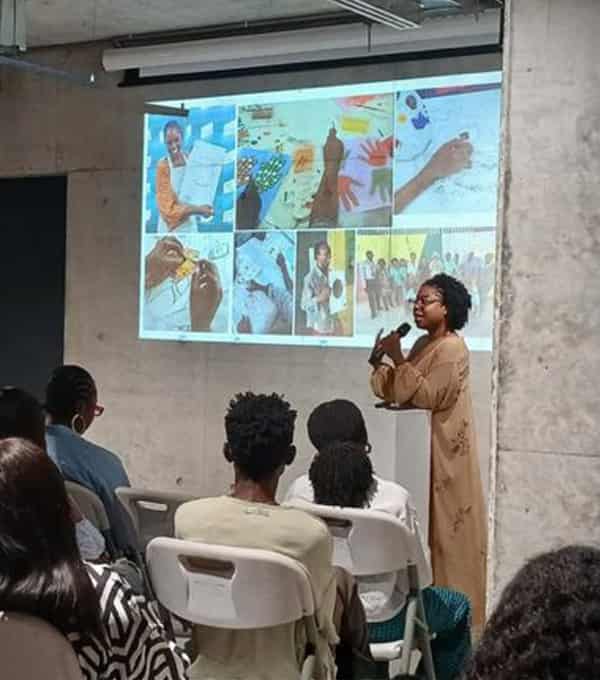
As a keen observer of the Nigerian arts and culture scene, I’m always drawn to events that celebrate creativity, innovation, and the diverse voices shaping our cultural landscape. This is precisely why on Saturday, 30 November 2024, I had to attend the ‘7 Speakers 7 Minutes’ event, part of the 9H DesignTalk lecture series in collaboration with Open House Lagos, the city’s premier architectural festival. For a young person like myself, navigating the vibrant and ever-evolving creative scene in Lagos, opportunities to witness and learn from established and emerging practitioners are invaluable. This event, themed ‘Women in Design & Art’, promised to be just that: an inspiring showcase of the remarkable contributions of women across various disciplines.
9H Media, founded by Chuka Ihonor in 2017, is a platform dedicated to fostering dialogue and critical thinking around design in Nigeria. As Ihonor himself puts it, ‘the name refers to the hardest lead pencil, the 9H, signifying a desire to dig deep into art and design ideologies and thought processes of practitioners, featuring established and rising critical work in Nigeria’. Collaborating with the Open House Lagos Festival, an event that opens up notable buildings and spaces to the public, felt like a perfect synergy. The ‘7 Speakers 7 Minutes’ format, a tradition for the 9H DesignTalk lectures, offered a dynamic and engaging way to hear from a diverse range of voices, each sharing their unique perspectives and experiences in concise, seven-minute presentations. This year’s focus on women in design and art felt particularly timely and relevant, a much-needed spotlight on the often-underrepresented contributions of women in these fields.
One of the most powerful takeaways from the evening was the sheer diversity of paths to creative expression. Each speaker, while working in distinct fields, shared a common thread: a deep commitment to their craft and a desire to make a meaningful contribution to their communities. Claire Idera, for example, shared her deeply personal journey of creating faith-inspired fashion, revealing how her spiritual beliefs are inextricably intertwined with her practice both as multi-faceted artist and the lead facilitator at CIWorkshop. She shared excerpts from her personal journal, allowing us to better understand her thought process and the inspiration behind her designs.
Nengi Nelson, in contrast, offered a more playful approach, both in her work and her presentation style. She talked about her photography and how she captures the energy and stories of Lagos through her lens. Her presentation itself mirrored this playfulness, incorporating creative edits and manipulations of her photographs that added a layer of whimsy and surprise. It was a refreshing and engaging way to experience her work, demonstrating how her personality and perspective infuse every aspect of her creative process. Whether it was Idera exploring the intersection of faith, design, and art, or Nelson playfully documenting the ever-changing Lagos landscape, each presentation underscored the importance of finding one’s unique voice and using it to connect with others. This idea of personal expression stood out, reminding me that creativity is not a one-size-fits-all endeavor, but rather a journey of self-discovery and exploration.
The evening offered a powerful reminder of the interconnectedness of spirituality, art, and design, a philosophy beautifully articulated by Claire Idera. This connection resonated throughout the presentations, manifesting in different ways. For me, it highlighted the transformative potential of expression, a power clearly demonstrated by Nengi Omuku’s work with ‘The Art of Healing’. Her charity, which uses art to promote mental well-being, showcased the impact that creative engagement can have on individuals and communities. Omuku’s work extends beyond theoretical concepts; she actively creates healing environments.
A prime example she shared was her redesign of the Alvin Kofi Psychiatric Ward Entrance at the Lagos University Teaching Hospital (LUTH) in 2023. This project demonstrates her commitment to using design to create spaces that foster a sense of calm and hope for those struggling with mental health challenges. Her emphasis on creating beautiful, healing environments, as seen at LUTH and in her other projects, echoed the sentiment shared by other speakers about the importance of considering the social and environmental context of their work.
Another message that stood out to me was the importance of innovation and pushing boundaries. Eve Nnaji’s exploration of alternative materials and her commitment to creating spaces that foster a deeper connection between people and their environment exemplified this. She described her work with sustainable materials and her vision for ecologically conscious architecture, including a ‘nest-like’ structure in Sharjah designed to be shared by humans and birds, blurring the lines between habitats. Similarly, Françoise Akinosho showed how repurposing existing structures demonstrates ingenuity and creative problem-solving. She described a project in Ikoyi, transforming an older residential building into a modern fashion concept store.
The challenge was preserving the building’s structural integrity and its connection to Ikoyi’s architectural history, while reimagining it for a contemporary purpose. Akinosho masterfully balanced old and new, retaining the building’s familiar silhouette while infusing it with a modern aesthetic. This project, and others like it, highlighted the importance of continuous learning, experimentation, and challenging conventional thinking in pursuit of creative excellence.
Ayaba Ayo-Joseph’s virtual tour of her childhood home, designed by her father, the renowned architect JSK MacGregor, provided a deeply personal and compelling example of connecting with one’s roots. She shared not just the physical structure of the house, but also the stories and memories embedded within its walls, revealing how her upbringing in this unique space shaped her perspective. The home itself, a testament to her father’s architectural vision, showcased a distinctive style and thoughtful functionality. Ayo-Joseph’s presentation highlighted how these personal connections to family history and architectural heritage can be powerful forms of creative expression, preserving and celebrating cultural identity in a deeply intimate way. Similarly in Marcellina Akpojotor’s presentation of her work, which also captures the essence of Nigerian culture and traditions, weaving personal narratives into her work. Her art reflects her identity as a Nigerian woman, telling stories of her heritage and family. Both presentations underscored the importance of connecting with one’s roots to preserve and celebrate cultural identity.
The ‘7 Speakers 7 Minutes’ event was more than just a series of presentations; it was a celebration of women’s artistry, resilience, and vision. For young creatives like myself, it was an incredibly inspiring experience, offering a glimpse into the diverse paths and possibilities within the world of design and art. Events like these are crucial for fostering a supportive and inclusive environment where young creatives can learn, connect, and find their own voices. They also serve as a vital reminder of the importance of celebrating and platforming women in society, recognizing their invaluable contributions to shaping our world. Seeing these seven accomplished women share their stories, their challenges, and their triumphs was a powerful testament to the impact women can have when given the opportunity to shine.
About The Writer:
Etseoghena Aliu is a Lagos-based creative strategist and storyteller passionate about amplifying culture through digital media. With experience in marketing, content creation, and community building, they have worked across music, fashion, and film to craft narratives that resonate. Their work centers on storytelling as a tool for connection, advocacy, and cultural preservation.