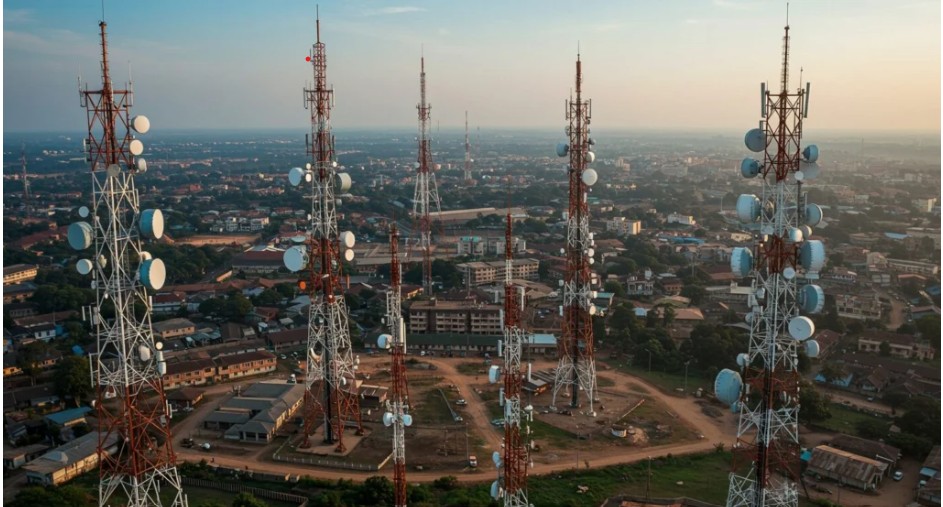
NCC eyes direct-to-mobile satellite connectivity in new roadmap
As it has become certain that Nigeria will miss the 70 per cent broadband target set for 2025, there are indications of a new five-year plan emerging anytime soon.
The second National Broadband Plan (2020-2025), which expires in two days, had set a 70 per cent broadband reach across Nigeria, but statistics from the Nigerian Communications Commission (NCC) have shown that the country is currently 19.42 per cent away from hitting that target as the latest penetration sits at 50.58 per cent.
Analysis of NCC data showed that from January to November, Nigeria was only able to expand broadband by 4.97 per cent within the last 11 months, having entered 2025 with 45.61 per cent penetration and by last month (latest subscription data), it had reached only 50.58 per cent.
Given the trajectory of growth, which has been slow, it is certain that the 70 per cent mark is now off the radar, even when the last data for 2025 are released.
As such, Nigeria appears to be preparing for another five-year plan, which is expected to boost the current efforts of the Federal Government in expanding Internet connectivity across the country.
In an interview, the Executive Vice Chairman of NCC, Dr Aminu Maida, had confirmed this.
He said: “The Nigerian National Broadband Plan (2020–2025), which expires this year, by the way, we have already begun engaging our Ministry on a third iteration.”
MEANWHILE, attention is fast shifting towards satellite-powered mobile connectivity in the country.
The NCC, which is promoting this new narrative, is examining Direct-to-Device (D2D) satellite service, viewed as a key technology for expanding coverage between 2025 and 2030.
This is part of the draft Spectrum Roadmap for the Communications Sector (2025–2030) published by the Commission.
In the 44-page document, the NCC’s roadmap positions non-terrestrial networks as a critical complement to traditional mobile infrastructure, particularly in a country where millions remain underserved by terrestrial networks due to geography, security challenges, and high deployment costs.
Recall that earlier in the year, the Minister of Communications, Innovation and Digital Economy, Dr Bosun Tijani, had disclosed that some 4,834 communities, mostly in rural areas, lacked access to basic mobile connectivity.
In April, the Universal Service Provision Fund (USPF) informed that in 2013, the number of people living in unserved and underserved areas amounted to 36.8 million and fell to 23 million by last year.
Secretary of USPF, Yomi Arowosafe, said these 23 million unserved/underserved people are housed in over 3000 communities, predominantly in rural areas, and still lack basic mobile connectivity.
Indeed, to NCC, Direct-to-Device (D2D) satellite services are emerging globally as a viable way to deliver voice and data services directly to standard mobile handsets without the need for ground-based towers.
“In Nigeria, D2D connectivity could play a transformative role by extending voice and data coverage to signal blackspots, vast rural, riverine, and border communities currently beyond the reach of mobile towers,” the Commission stated.
“It would also strengthen network resilience, serving as a fallback during fibre cuts, power outages, or emergencies that disrupt terrestrial networks,” it added.
NCC noted that beyond consumer use, D2D adoption could enhance public safety, disaster response, Internet of Things (IoT) deployments, and smart agriculture in underserved areas.
The document also pointed to new investment opportunities through collaboration between mobile network operators (MNOs) and satellite providers, particularly via shared spectrum usage to improve efficiency in Nigeria’s national spectrum management.
The NCC’s roadmap also places strong emphasis on Low-Earth Orbit (LEO) satellites as a tool for bridging Nigeria’s broadband gap.a