 Follow Us on Google News


 Follow Us on Google Discover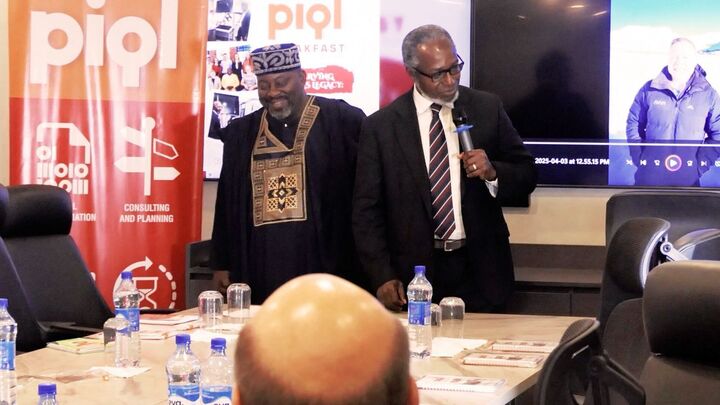
Stakeholders, who gathered in Abuja, have called for the creation of a secure and inclusive national data ecosystem, describing preservation of records as a priority for governance, economic growth, and public trust.
The call was made at the Piql West Africa Public Sector Breakfast Meeting, where the Office of the Secretary to the Government of the Federation (SGF) endorsed the collaboration between the National Archives and Piql to establish a “secure, accessible and future-proof national data repository.”
Officials said the initiative supports the government’s digitisation and efficiency agenda and will ensure that critical public records are preserved for future generations.
Director of the National Archives, Evelyn Odigboh, warned that Nigeria risks a “digital black hole” if it fails to deliberately preserve digital records. “These records are not relics. A nation without archives is like a person without memory, unable to chart a clear path to the future,” she said.
Director-General of the National Council for Arts and Culture (NCAC), Obi Asika, also stressed that heritage management must be a policy priority. He said the NCAC had set up a Council for Creative Technology Futures to integrate modern technology into cultural preservation efforts.
Speakers at the meeting highlighted the difference between digitisation and preservation. While digitisation makes files searchable for immediate use, they said preservation ensures records remain authentic and accessible decades into the future, regardless of changes in technology.

Piql’s technology, demonstrated at the event, allows records to be written bit-for-bit onto offline film that is tamper-evident, human- and machine-readable, and capable of lasting for centuries. Copies can be stored both within Nigeria and in Norway’s Arctic World Archive to ensure resilience against disasters and geopolitical risk.
The Abuja forum brought together a wide range of participants, including representatives of the National Library, defence and security agencies, the data protection regulator, diplomatic missions, the Central Bank of Nigeria (CBN), and private sector organisations.
The SGF’s office linked archival infrastructure to the administration’s target of building a trillion-dollar economy by 2030, describing record preservation as an enabler of governance, accountability, and economic planning.
The CBN delegation emphasised the importance of reliable archives for institutional memory and regulatory credibility. Military representatives addressed the handling of classified information and continuity planning, while data-protection officials discussed lawful data retention and audit trails under Nigeria’s data protection rules.
Two speakers from Imo State used the platform to highlight opportunities for state-level action. Professor Emeka Oguzie of the Federal University of Technology, Owerri (FUTO), said durable and verifiable record-keeping would support research reproducibility, grant compliance, and technology transfer.
Director-General of the Imo Data Management Centre, Sir Terence Onyejiaku, said the state would explore the use of Piql’s solution to secure and authenticate public records, beginning with land and cadastral documents. He said such a system would reduce land disputes, speed up property transactions, and improve confidence in government records.
Participants suggested that Imo could serve as a pilot state for preservation efforts by establishing a regional preservation lab at FUTO, digitising and securing land registries, and including archival infrastructure in the state budget.
Speakers noted that tamper-evident archives would reduce litigation, simplify audits, and provide each administration with a verified record of decisions taken by its predecessors, helping to improve governance and attract investors.
The event concluded with the presentation of awards to public officials and cultural leaders, including Prof. Chinwe Anunobi of the National Library and Ugoma Ebilah from the cultural sector, for their contributions to information management and preservation.
Organisers also announced plans for a Nigerian delegation to make a large-scale deposit at the Arctic World Archive in 2026, marking the country’s first sovereign archival contribution to the international vault.

