 Follow Us on Google News
 Follow Us on Google Discover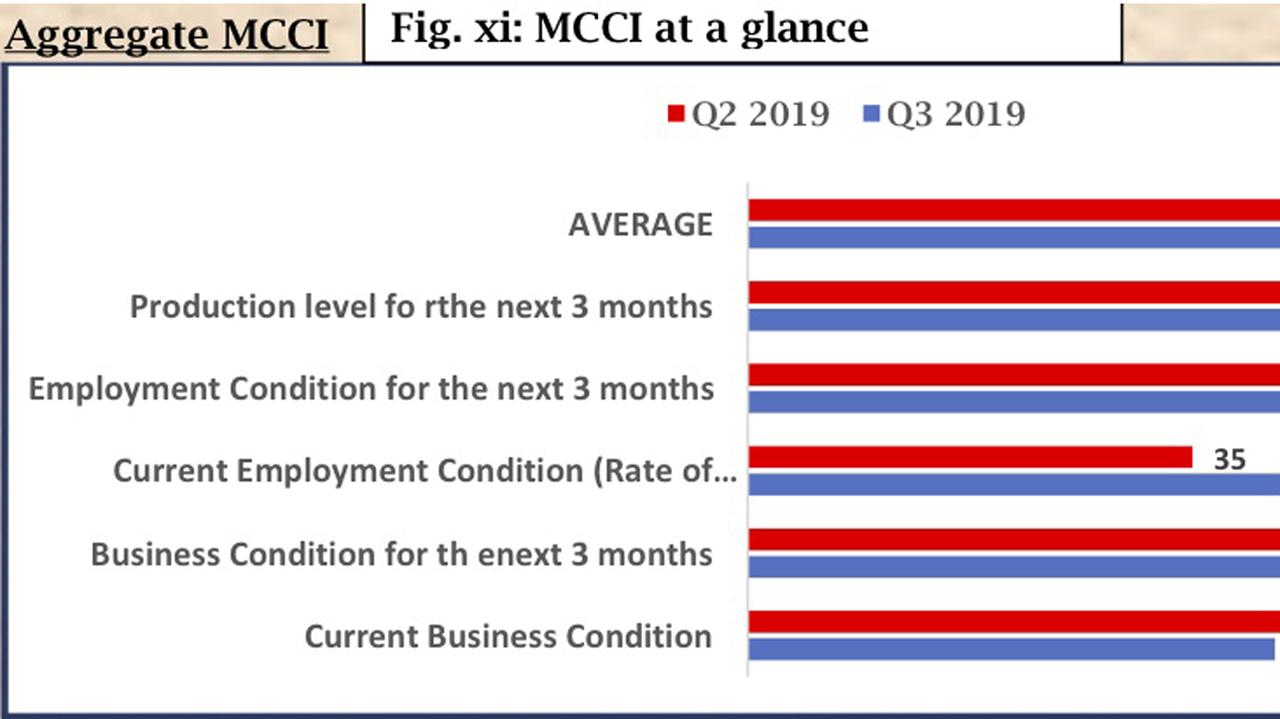
 Every year, for many forward-looking businesses, declarations and resolutions are made on how to make the New Year better than the previous years. In Nigeria, it is often times, business as usual, with government policies and environmental factors determining the pace of growth of the economy as driven by the private sector. As 2020 begins, set goals will be achieved only if challenges are addressed. FEMI ADEKOYA writes.
For local manufacturers, inadequate and epileptic power supply, high taxes, poor infrastructure, and supply variability of rain-dependent agricultural inputs are familiar challenges they have had to deal with, year after year.
To many of them, being innovative and exploring cost-cutting measures is not enough, without considering shocks from the business environment and regulators.
While it is not all gloomy, there are some strengths, as the National Bureau of Statistics (NBS) observes that in Nigeria, labour is cheap, domestic demand is buoyant, and some inputs are available and cheaper domestically.
[ad]
These advantages notwithstanding are presently being eroded by high inflation, competition from foreign products and weak consumer purchasing power.
Latest NBS data showed that the manufacturing sector grew marginally by 1.1% in the third quarter, up from -0.13% in the previous three months, bringing average growth between January and September at 0.59%.
Between July and September, growth in the sector was buoyed by rapid expansion in the cement industry, which grew 6.87%. Unpacking the components, growth in the sector was not broad-based as only four of 14 sub-sectors including cement and paper industry saw growth printed higher quarter-on-quarter.

The manufacturing sector has been the biggest beneficiary of CBN’s aggressive credit push to the real sector, receiving N459.69 billion out of N1.17 trillion disbursed by deposit money banks between May and October.
According to the Lagos Chamber of Commerce Industry (LCCI) research, local manufacturers still find the business environment unsupportive given the myriads of challenges such as epileptic power supply, poor road network, high cost of borrowing, over-regulations, multiplicity of levies, weak demand, sluggish economic recovery, port-related challenges -delay in clearance of imported raw materials, heavy congestion, among others.
The chamber noted that these constraints make local manufacturers produce at higher costs, making their products less competitive compared with cheap foreign ones, the reason local producers operate below full capacity as capacity utilization is some 55% as of December 2018.
The Director-General, Manufacturers Association of Nigeria (MAN), Segun Kadir, added that traffic gridlock makes manufacturers more susceptible to miscreants who take advantage of the situation.
[ad
Kadir in a chat with The Guardian, however, urged the government to embark on road repairs in the night when there is less traffic, saying that road repairs during the day time are not the best option.
On measures to address power challenges in the real sector, he said: “What we have is what we call the manpower development company which was facilitated to give our members access to power. As you know, power is like blood to the manufacturers; so, what we have done is to create a company that is a special purpose vehicle that will be able to have an arrangement with suppliers of power whether captive or through the national grid to be able to reach our members in clusters.
However, we have been hampered by the not too successful attempt of the Eligible Customer Scheme. What has hampered is actually the fact that we are required by some regulation to have a no-objection letter if you like from the Discos, with whom we are also engaged in a court case. So, it is like asking your enemies to pray for you. I think essentially, we are trying to go around that, but we are saying that there has to be more ingenious ways for us to benefit from capturing the so-called stranded power.
He stated that the border closure by the federal government is not a sustainable strategy, advising the government to find a more convenient way in managing the crisis for businesses to survive.
According to the Director-General, National Association of Chambers of Commerce, Industry, Mines and Agriculture (NACCIMA), Ambassador Ayoola Olukanni, the government should implement trade policies and adequately enforce better result.
He pointed out that the border closure negatively affected some of their members, while some others benefited from it.
MAN CEOs in their latest confidence report, however, urged the government to make conscious efforts at addressing the challenges currently rocking the manufacturing sector.
The CEOs also recommended the need for urgent resolution of the Nigeria-Benin border dispute so as to resuscitate Nigeria’s export trade within the ECOWAS region, as well as the deliberate channelling of economic infrastructure to strategic economic hubs across the country; resolution of issues of re-classification of manufacturers as strategic users of gas; dredging of other seaports cross the country to accommodate big vessels and expansion of the roads leading to Lagos Ports.
The CEOs urged government to sustain the implementation of the backward integration policy by properly funding relevant institutions, initiating policies that would prioritise development of local raw materials in commercial quantities.
“The slight increase is a welcome development as it depicts uptick in the performance of the manufacturing sector and shows that manufacturers’ confidence in the economy improved in the third quarter.
“Nevertheless, the slight improvement in performance was attributed to the doggedness of manufacturers as the operating environment remains very challenging,” the report reads in part.
On his part, LCCI’s Director-General, Dr Muda Yusuf said: “As a sustainable solution, it is imperative to fix the fundamental issues of high cost of domestic production, the prohibitive cost of cargo clearing at the Lagos ports, prohibitive import tariffs, high cost of logistics within the economy, and border policy capacity”.
However, from a policy perspective, Yusuf expressed the view that prolonging closure of the land borders would further add impetus to agricultural output in 2020.
“The monetary value of agriculture output has been on the upward trajectory, rising 40 per cent quarter-on-quarter to N5.41 trillion between July and September from N3.86 trillion between April and June, compared with N3.60 trillion in the first quarter.
[ad]
“The CBN like it did in 2019, will maintain status quo by not relenting in supporting the sector with much-needed funds in ensuring that the wide gap between local demand for food and supply is bridged.
“However, risk factors to our prognosis include security challenges in the North-east zone; a major food producing region in the country, resurgence in the herders-farmers clash in the North-central region.
“Overall, we expect the sector to sustain its upward growth trajectory in 2020,” he stated.
To unlock the potential of the Nigerian economy, Yusuf proposed the promotion of economic inclusion through a right mix of fiscal, monetary and investment policies, regulations, and institutions.
“The potentials for growth of the Nigerian economy are immense, but we should not remain a nation of potentials.
“In order to unlock these huge potentials, we need to put in place appropriate policies, regulations, and institutions.
“Investment is critical to the growth of any economy: this is even more so in an economy that is struggling with revenue and other resources.
“Growth in private investment will boost employment, impact on revenue, promote social stability and enhance the welfare of citizens.
“It is thus very fundamental that we create an enabling environment for investors [domestic and foreign] to create wealth and jobs for the country.
“There is also a need to deepen the consultative process between the policy makers and the private sector,” he said.
With regards to the budget passage, the finance bill and their implementation, the LCCI chief urged the government to create a monitoring mechanism to ensure compliance.
He said the government should also release progress reports about the budget performance quarterly.
“While the early passage of the budget is commendable, our concern is about the implementation following Nigeria’s poor budget performance in years past.
“In furtherance, we believe the implementation of the finance bill will ease the tax burden of small businesses, but will probably not translate to improved performance as the operating environment is still tough,” he said.
[ad]

