 Follow Us on Google News


 Follow Us on Google Discover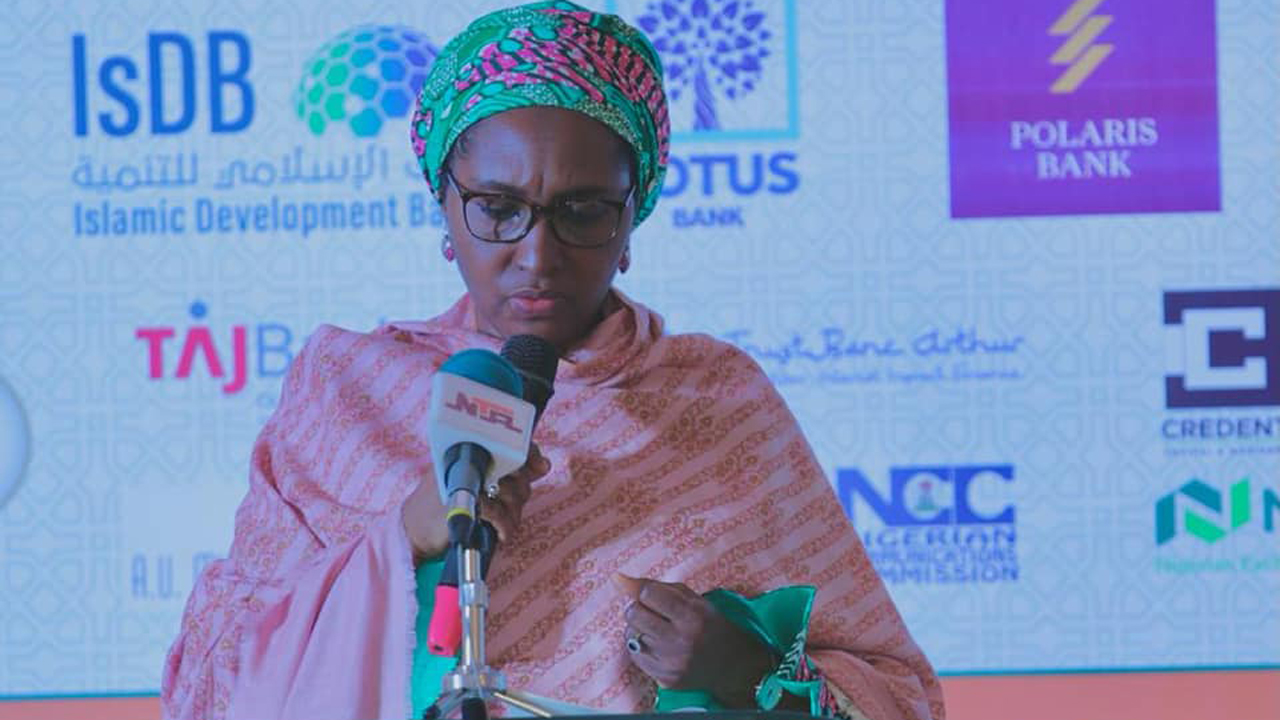

The Federal Government is focusing on comprehensive gender mainstreaming across fiscal policy and public financial management aimed at improving the safety, livelihoods and economic status of women and girls.
The Minister of Finance, Budget and National Planning, Dr Zainab Ahmed, who disclosed while speaking on, ‘Fiscal policies and interventions for women’s economic empowerment: A Key driver for sustainable and inclusive development in Nigeria’ at the one voice: women uniting for progress, APC National women conference in Abuja, said the wholistic approach represents a critical paradigm shift towards systematic and scalable reforms, and leverages the coordination benefits of having the finance, budgeting and planning functionalities under the same federal ministry for the first time in Nigeria’s history.
The Minister added that the interventions include gender responsive budgeting, and assessments of the gender responsiveness of key fiscal interventions – including fiscal stimulus packages – with specific commitments.
[ad]
Dr Ahmed said the economic and social empowerment of women and girls is critical to the collective vision of a prosperous and resilient Nigeria.
She added: “It is therefore imperative that we prioritize the advancement of women in all spheres of society, and specifically in areas relating to their socio-economic empowerment.”
While significant progress has been made in addressing gender equity issues both globally and domestically, and across different subject matter areas, the Minister insisted that a lot more work needs to be done.
She added: “If we are to have a stronger and more inclusive economy, it is crucial that we take a long term and strategic approach to ensuring that women are economically empowered. We must continue working towards the development and implementation of policies, regulatory frameworks, and programmes that are inclusive and gender-sensitive; and we must remove the socio-economic and cultural barriers that prevent women from participating fully in society and from reaping the economic benefits of their participation. This is especially important given the evidence that gender-neutral policies are often applied in ways that exclude and disenfranchise women stakeholders and other vulnerable communities.”
She highlighted that recognizing the critical importance of equitable budget allocation and implementation, government has formally introduced a gender lens for national budgets, with an express provision in the 2022budget call circular mandating the use of Gender Responsive Budgeting in the preparation of the recently approved 2022 Budget.
According to Dr Ahmed, this step was taken following months of stakeholder consultation, saying capacity training is currently ongoing, and the Budget Office will be working with MDAs on implementation of the gender budgeting provisions, with an initial focus on those sectors that are critical to human capital development, including health, education, and humanitarian affairs.
[ad]
She stressed that another area government has some progress is a UN Women supported review of the gender responsiveness of the National Economic Sustainability Plan (ESP), a N2.3 trillion COVID-19 fiscal stimulus plan.
The Minister revealed that in December 2019, government initiated the development of a Nigeria Integrated National Financing Framework which is designed to help countries strengthen planning processes and overcome existing impediments to financing sustainable development at the national level.
She insisted that women must work collaboratively across the Federal and State Government, and hand in hand with citizens, CSOs and the private sector to design and implement the policies and programmes that ensure women’s participation and economic empowerment.
“Furthermore, women must have a ‘seat at the table,’ and be co-creators of any strategic interventions – this is key for sustainable change. At the individual level, we each must take the time to support and mentor the women and girls in our lives, and we should each feel empowered as agents of change. By economically empowering women and ensuring their full participation in society – particularly in leadership and decision-making roles – we can ensure improved economic development outcomes for all,” she stated.
[ad]

