 Follow Us on Google News


 Follow Us on Google Discover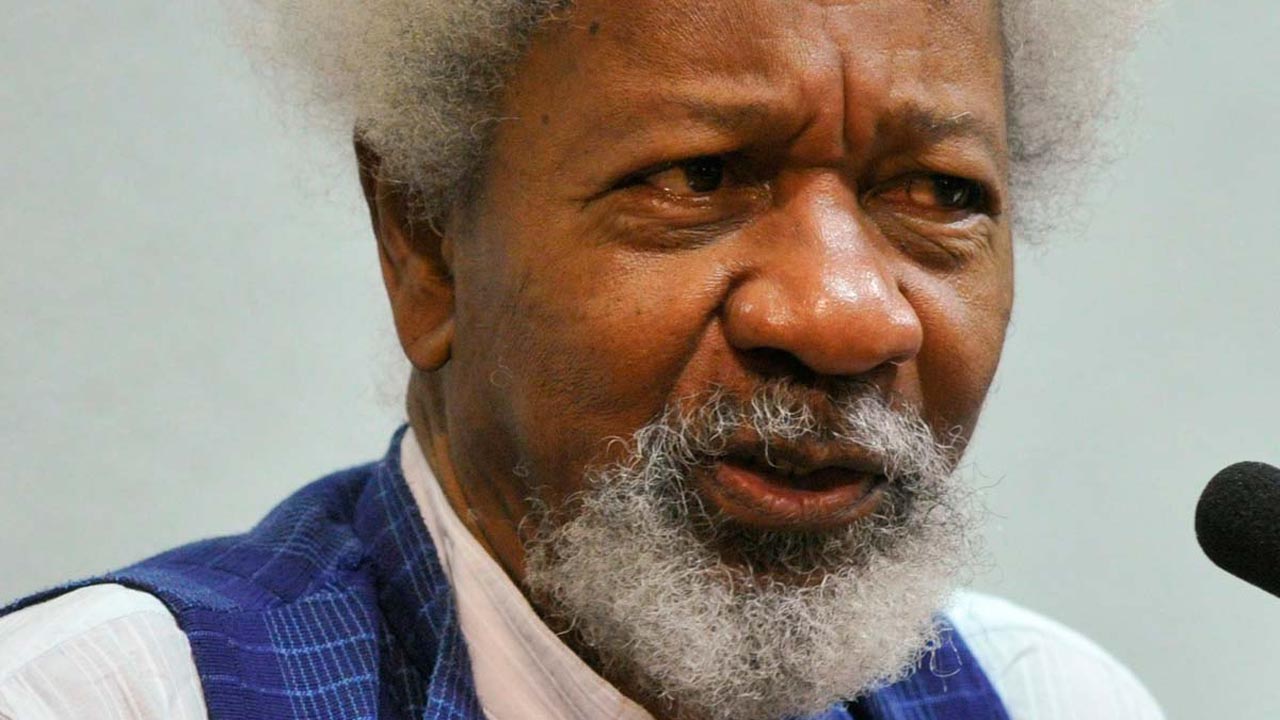

Unarguably, Nobel Laureate Professor Wole Soyinka has through his works and person subverted our inclination to moral self-satisfaction and social complacency. He has stirred our unquestioning acceptance of given modes of thoughts; and disheveled our chosen pattern of a particular or externally-shaped existence. It will however appear that we are today confronted with a problem respecting a sense of special urgency for how best to organise society in order to be able to provide true or observable fulfilment for the people. The Nigerian situation, for instance, as it has developed since independence, has brought in its wake despondency, disillusionment and a general sense of helplessness. The hopes, aspirations and enthusiasm that propelled the desire to be free from colonial bondage or to be charged with the responsibility for one’s own destiny have been visibly mired by the incorrectness of the activities and actions of public authorities and those who superintend them.
[ad]
Whereas Soyinka in his youth used his art, specifically his poetry, to confront the divisive pressures of life, today’s sorely-divided society will appear to have spurned those old prescriptions. In Soyinka’s art, Ogun is ornately and pragmatically presented as the creative essence for uniting a divided or fragmented society. Ogun’s zeal and dedication to the attainment of social order, etc. are eminently earned in Soyinka’s works. Co-terminously, Soyinka’s unflinching dedication to social kinesis has earned him considerable personal discomfort or suffering. The extension Soyinka sought to give his art in his extramural intervention activities has rightfully presented Soyinka the man as a rounded character whose vocation in and out of the printed word is informed by a correctness of vision and a radical objectivity or sincerity. Soyinka un-arguably uses language to an unmatched degree to stem divisive pressures. Today however, Soyinka appears trapped by the definite borders of his own experience, his considered choices and the necessity to employ his creative talent to escape the consequences of some not-well-heeled intervention. He is, for instance, employing some cryptic explanation of a popular idea or signification just to counter a generally-perceived strange metamorphosis.
Soyinka’s scurrilous criticism or wrong use of word regarding the Labour Party’s Vice Presidential candidate’s admonition to President Buhari and the Chief Justice of Nigeria not to swear in Tinubu as President on the 29th of May 2023 has received a serious backlash largely on account of a feared mobilisation of Soyinka’s international clout to divert attention away from the main issue of a grossly-flawed election process. Soyinka had descended on Datti Baba-Ahmed and the feverishly-effervescent band of Obi’s supporters facetiously referred to as “Obidients” – describing them as “most repulsive, off-putting concoctions” in the political space. Soyinka further in-appropriately referred to them as “Fascists”. Soyinka was promptly reminded that his own act of seizing a radio station studio and forcing it to broadcast a call for the cancellation of the Western Nigeria Regional election in 1965 is far more outlandish and nowhere comparable to Datti’s patriotic call on the Chief Justice of Nigeria not to swear in an alleged victor.
In many more instances of political activism, Soyinka has remained the harbinger of good omen for all Nigerians who desire true change away from the country’s desultory development. His heroism has been truly unmatched even as he was a star player in the anti-military coalition that birthed the Fourth Republic which reins have now been hijacked by persons who thought the Abacha years were interminable or who perceived that regime’s detractors as courting annihilation or embracing hara-kiri. Ironically, and this has been argued with some validity, it is this association with certain blighted stars in the NADECO firmament that has progressively removed from the potency of Soyinka’s offerings or of the public perception of him. Many people are perplexed going by what they know of Soyinka regarding his relationship with Tinubu. More damning is what is popularly perceived as Soyinka’s uncharacteristic refusal or avoidance of a forthright comment on the growing expression of angst or dissent regarding a generally-adjudged flawed presidential election.
[ad]
Soyinka merely drew a red-herring as when he said in relation to Peter Obi, “It was depressing to watch his lieutenant, a crucially-positioned voice of a movement that has ‘broken the mould’ threatening the totality of social existence…” Sounds, sounds, sounds! Filibustering further, Soyinka intoned in a later clarification of his interview on Arise TV on the same subject matter, “I denounced the menacing utterances of a Vice Presidential aspirant as unbecoming. It was gladiatorial challenge directed at the judiciary and, by implication, the rest of the democratic polity”. The not-too-civil army of social media journalists will not brook Soyinka’s thinly-veiled partisanship. They, like the proverbial later Pharaohs, do not know Joseph. Most of them are children who are unaware of Soyinka’s historic gallantry. Soyinka has become for many of them the butt of derisive jokes on social media platforms. These are children whose parents ironically deified Soyinka in their own time. Their off-springs have disdainfully charged Soyinka with hypocrisy in the face of the requirement to forthrightly denounce political shenanigans or chicanery.
Sadly, the real casualty of the scenario that has played out these two weeks or so regarding the face-off between Soyinka and persons who can only qualify to be his grandchildren is a feared slump of the Soyinka mystique. Revered and hallowed, it is troubling that Soyinka may be deemed an associate of “the prime beneficiary of the electoral heist that triggered Baba-Ahmed’s outburst”. It has even been rudely suggested that that associate is Soyinka’s benefactor.
It will appear that Soyinka is no longer faithful to the crucially-important poetic imagery in his lyrical poetry which revolves around the images of creativity, especially the image of Ogun – the Yoruba fertility god who has many manifestations in Soyinka’s writings. For Soyinka, Ogun is the spirit that utilises the natural environment and turns it to pragmatic use. It is the spirit of inventiveness; always desirous of developing society’s full potential. Ogun as the spirit of non-conformism, rebellion and revolution is sometimes unmindful to destroy what is, in order to bring forth new life. Evidently, the dangerous and the creative cohere in Soyinka’s patron god. One wonders whether today Soyinka is enamoured or afraid of the consequences of the manifest reincarnation of Ogun’s tragic excesses so bravely embraced by his grandchildren in the Obidient movement.
It is truly a matter of inexplicable tragic irony that the radical Soyinka of the days of yore is today at daggers drawn with children for who he is putative alter ego. The kind of hostile, acerbic or vitriolic criticism that the younger ideologues in the Obidient movement have unleashed on Baba Soyinka will tend to suggest their rejection of the ways and means of a “wasted generation”. With respect to Datti’s angst expressed at the controversial TV interview, it is idle to seek to restrain an angry or dispossessed people. Their language is a function of their sense of privation or deprivation. You cannot continue to beat a child and expect it not to cry. Today’s children are not as pliant as their parents. They will not brook any nonsense.

Even as they are in his mould, it is strange that Soyinka is labouring to understand them. Soyinka’s language engagement of his adversaries has always been sentient but clinically acerbic or caustic. The earlier we recognise that Soyinka’s fore-running ethic has germinated and has borne fruits, the better for our understanding of the present impasse. The youth population number largely among Soyinka’s admirers. They however fear that Soyinka is today running with the hound.
Soyinka needs to creatively manage his political interpersonal relations.
• Rotimi-John, a lawyer and public affairs commentator, wrote vide [email protected]
[ad]

