 Follow Us on Google News
 Follow Us on Google Discover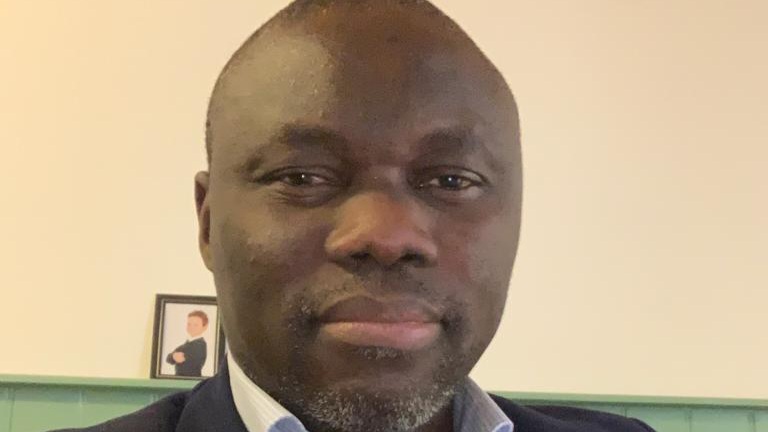

Talk of upward mobile guy who has done phenomenally for himself in the fintech industry, Joseph Bitrus will readily come to mind. In this revealing Interview with us, Joseph reveals a lot more of Zynopay with the aim of expanding to Nigeria B2B markets
Who is Joseph Bitrus?
I am an explorer, educationist, a new tech kid in the block passionately interested in changing the world in the direction of good using technology and product. I’m from Adamawa state, a North Eastern part of Nigeria (a place attacked by Boko Haram, the terrorist group for years- I’m sure your newspaper covers these news extensively), obtained my first degree in East London University. Worked in education fixing things up and later was a Co-founder in a fintech payment startup Benepay in the UK. Currently I live in the UK where I build a great network of friends and colleagues who bring innovative minds and edge to changing the world appetite for financial services. I enjoyed a good wheel to wheel Formula One F1 race and my favourite driver is Lewis Hamilton. In Men’s tennis Andy Murray is my favourite.
Elected Students’ Union president twice at my London University. Love to relax with friends when time permits and love cream tea – so I can argue about jam or cream. I now work in fintech and am super excited about this area.
‘What is your background in the area of technological advancement?
I have always been a product person, with a deep passion for utilising technology to drive progress in various fields. I’m careful about the word ‘advancement’ as it relates to technology and science such as on a scale of industrial revolutions, it completely changes what answer I would give. I prefer the word innovation.
[ad]
However, my background is actually rooted in education. We all used technology in various ways. The new digital technology innovation however changes how our attitudes towards adoption of new products transformed the way we now use it – consumer behaviour is driving more innovation solving some of the critical mass problems that require massive infrastructure with tiny software. These are what fascinated me to look at all the areas where the most innovative impact could be felt or rather reach billions of people across the world regardless of the tiny Island you are operating from. After graduating from a London University, I joined a former board colleague who was running Oxbridge Capital as consultant on education spinouts.
I then worked with educational institutions for a short stint before getting the opportunity to work with Michael and Cecilia Foundation foundation (MCF) to serve as a Board member on the Michael and Cecilia ibru University board, probably the youngest member. The foundation owns a University, a College of Education and Schools, they are – Michael and Cecilia Ibru University, MCF College of Education and MCF Demonstration Schools.
[ad]
When I joined the institutions, the University had just a single professor who doubled as the acting Vice Chancellor, but today the University has more than 30 professors in 5 faculty as at the time I left. I championed and spearheaded the institution’s growth working with the visionary president and founder through recruiting new 250 students within a year, , digitising the transformation of the library, digital classroom lectures, connecting all the three schools with internet connection, computerisation of entire institutions from the age of 4, basically bridging the digital divide and improving the portfolio’s value proposition plus revenue generation for all areas. So that is my little pivotal role I played in moving the whole institution into a new era of business focus of the future. This is where my journey in tech began, I would say a learning journey that gave me a fresh perspective about the future.

How long have you been in the digital space and what are your accomplishments so far?
Since pivoting to Fintech and joining Benepay in 2020 and that opportunity is such that it is impossible for me to turn down because payments would transform the problems I mentioned in my earlier comments. So my digital footprint may not be significantly huge as you would expect, however, we have worked with great customers such as banks and insurance houses as well as businesses that we onboarded during the early days starting technically approach before the usual KYB, then complete the necessary compliance process of knowing a company properly as required by law. To answer your question, I am newbie in fintech and have been in the payments space a little over 2 years if you exclude my year of studying at Oxford University in 2019..
From education to finance is a big leap, what has changed to make the pivot?
The pivot from education to finance indeed represents a significant leap, but several factors have facilitated this transition. First and foremost, my personal experience and exposure to a decade-old problem in education sparked the desire to find a solution. Recognizing the limitations and challenges within the education system, I felt compelled to address these issues and make a meaningful impact. This realisation, coupled with a passion for problem-solving, propelled me towards the finance sector.
One crucial realisation was the transformative potential of fintech in solving the problems I encountered in education. Fintech offered innovative solutions to the long-standing issues in education and in general how we access capital and use it, problems such as inefficient payment processes, lack of financial inclusion and access, and fragmentation of the processing leaving customers digitally detached. What should solve their problems have rather added to their woes and made life difficult in the process. Don’t get me wrong, lot has changed since then with some good innovation around but those around need to take this a step further to not be the same old same old product offerings that goes nowhere.
I did a research to understand how fintech’s capacity to revolutionise the educational landscape and create life-changing transformations could be adopted for this industry specific problem. I recognised the need to explore and leverage this emerging field.
To prepare for this transition, I pursued further education in fintech at Oxford University. This provided me with the necessary knowledge, skills, and tools to navigate the finance sector effectively.
Studying fintech equipped me with a deep understanding of the technological innovations, trends, and opportunities with which to achieve my goal of solving these problems.
When the pandemic of 2020 came it exposes what I have been saying all alone for all industries but also the education sector too. No industry was immune or prepared and the COVID-19 lockdown presented a unique opportunity for reflection and exploration. It was while reflecting I got the opportunity to join Benepay as the fourth Co-founder in November 2020. This was the first proper foray for me into digital technology in fintech with Benepay’s ambition to be a global company bringing access to 180 countries – it was surreal. I joined Benepay to drive the product development side of the application and engage with businesses about our value proposition from a unique perspective of payments and collections using data, not the traditional approach that you find out there.
The educational sector faced unprecedented challenges during this time, highlighting the urgency for digital transformation and innovative solutions.
This experience further reinforced my belief in the power of fintech to bridge gaps, enhance efficiency, and transform traditional systems. In summary, the pivot from education to finance was driven by a personal desire to solve long-standing problems in the education sector and beyond. Recognizing the transformative potential of fintech and the need for innovative solutions, further education, the impact of the global pandemic, and the opportunity to join a fintech startup all played significant roles in facilitating this transition. I am grateful to Sid (CEO of Benepay) for giving me the opportunity.
I have since left Benepay to pursue the development of Zynopay as Founder and CEO as we are taking a unique perspective on the market with an aim of bringing one billion people to financial access and out of poverty. Zynopay is a remittance cross-border payments serving the B2B and B2C market offering products such as virtual accounts and cards and a real time payment transaction for friends and families to send and receive funds.
What is your take on the various fintech startups currently in Nigeria like Opay, Moniepoint, Paga, flutterwave among others? Do you think it is the future of digital banking or remittances?
Yes I do. The emergence of various fintech startups in Nigeria, such as Opay, Moniepoint, Paga, and Flutterwave, among others, signifies a promising development for the country, a good omen for the citizens. These startups are challenging the traditional industry status-quo and trying to transform that, which operates on legacy systems that often fail to meet customers’ demands for efficient, on-demand applications that prioritise user experience and interface. The rise of these fintech startups is a good omen for Nigeria as it indicates a shift towards more technologically advanced and customer-centric financial services. By leveraging technology, these startups are able to offer businesses real-time collections and settlements, operating 24/7. This level of convenience and accessibility has been well-received by customers and has disrupted the traditional banking landscape. While banks will undoubtedly continue to play a role in the future, the form they take may undergo significant changes. The pace of innovation and the adoption of fintech solutions will shape the future of the banking industry whether in Nigeria or elsewhere in the UK or US.
Only time will reveal the ultimate outcome. It is an exciting time of transformation, and the success of these fintech startups reflects the appetite for innovative financial solutions in Nigeria. The presence of fintech startups in Nigeria represents a positive development, you only need to see the growing adoption going on globally in this area.
‘What does it take to build trust in a fintech startup?
Building trust in a fintech startup requires a combination of key elements.
[ad]
First and foremost, transparency is essential. Fintech startups need to be transparent about their operations, security measures, and data handling practices. Clearly communicating how customer data is protected, encrypted, and used responsibly helps build trust.
Fintech is a highly regulated industry, the regulators would be breathing down your neck if you failed the basic test of compliance with customers data – that is why some regulators for example the FCA in the UK has recently introduced the Strong Customers Authentication SCA to support multi-factor compliance over customers making transaction and fintech taking responsibility. Having an MLRO if you are a payment company or compliance team who employs industry-standard encryption, multi-factor authentication, and other security protocols would demonstrate a commitment to protecting customer data, provide regular security audits and compliance with relevant regulations also contribute to building trust. We in the UK operate a tightrope with data breaches and trust.
Reliability is another crucial aspect. Fintech must ensure that their platforms are robust, secure, and perform seamlessly on safer UX, not exposed UI. Building a strong customer support system is important as well, being responsive to customer inquiries, resolving issues promptly, and providing clear communication channels demonstrates a commitment to customer satisfaction and builds trust in fintech.
[ad]
Partnerships and collaborations with established institutions can also enhance trust. Aligning with reputable financial institutions or working with established trusted licensed fintech service providers can provide an added layer of credibility and security. Lastly, testimonials, reviews, and referrals from satisfied customers can greatly contribute to building trust. Positive feedback and endorsements from existing users help potential customers feel more confident in choosing a fintech startup. By focusing on transparency, reliability, security, customer support, partnerships, and positive customer experiences, fintech startups can gradually build trust with their target audience, establishing a solid foundation for long-term success.
As an influential figure in fintech, what message would you like to give to young
professionals entering this field?
Haha (laughs) I am also a young professional not that old by the way however my usual suggestion has always been there’s no one size fits all approach in everyday life. In life you have to decide where you want to go or do with your life and what problems you encounter through personal experience or through observations and feedback would be an interesting adventure. Know that you would make a lot of mistakes on the way or make some bad decisions, it won’t be the end of the world – just keep going. Sometimes nothing prepares you but the resilience and determination with which the problems are tackled may just be smaller steps that build that confidence to succeed.
Ultimately, keep building your skills and learning the rope, doesn’t matter or at which organisation. Working at Startups are better but they may not be able to pay you the full wages but their passion and work ethics is a much desired formula of growth. Finally, use your spare time to help out with some charity work, something outside your daily hustle to support the charity of your choice with the skills in your armoury for free.
Which jurisdiction does Zynopay operate in and your customer base?
Zynopay would operates in India, Nigeria, Philippines, Egypt, South Africa, Ghana, Canada, US and of course our base in the UK. These are combined markets of more than 200 billion dollars but markets are these have the capacity to expand with more and more people coming into contact on everyday needs and the digitalisation of their payment experience especially ease of use, easy access, cheaper offering, fraud protection and enhancing strong customer values, there’s no reason we shouldn’t be ahead of the curve. Our customers varied in size and markets but all our customers are treated equally, the best treatment and experience. When you visit someone’s house they then offer you jollof rice -nothing tops that but the jollof rice is an example, we do more than just a jollof rice.
[ad]
What is your team size?
Zynopay continues to build and expand gradually in an organic fashion – slow and steady wins the race, well not always but most times there are elements of truth in this statement. We have our engineering team all over in Canada, Nigeria, UK and looking to India for resources as well since it is one of our important markets.
We are lean, let’s just say and hope to operate with that mindset that growth does not always mean splashing the cash for boxes you do not need, certainly good from a PR perspective, but not so from a cash flow front. Additionally our product and designer people also work remotely, trust me we manage excellently.
How do you think Nigeria can benefit from your wealth of experience being an emerging market for fintech?
First of all I have to recognise the giant pioneers of fintech in Nigeria such as the CEOs and senior leaders of Systempsec, Flutterwave, Paga, Interswitch, Paystack, Kuda and the many others not mentioned here. Whatever your argument they have certainly transformed the landscape from zero to where it is today. So my experience in comparison is that of a humble one that we can all learn from to build a great product for Nigerians but also globally. I strongly believe that if you are not thinking global with your business, then you are not in business for the impact.
Look around you all the successful fintech companies everywhere have had a global culture, a deliberate vision to not just be local but become relevant elsewhere solving the issues people care about. My hope is that we would see that with Nigeria fintech companies, I know it’s happening already.
Finally, our wealth of experience if combined can bring hundreds of millions of Nigerians out of poverty for just providing them access. My passion is financial inclusion and access, giving people opportunities that do not exist to empower themselves.
Do you think Nigeria is lagging behind when it comes to this new age of digital revolution?
The short answer is no. Before you misquote me Nigeria certainly has challenges with infrastructure and its education system however, the innovative minds coming out of the woodwork are outstanding. Harnessing these and building the skills base as well as regionally expanding the opportunities, could unlock significant potentials. I understand where you are coming from, the ecosystem is not as vibrant as the one in the UK where fintech is not concentrated in one location, but almost every corner you go there are vibrant fintech activities happening. It is just what they need. Have fintech Jos, Fintech Yola, Fintech Enugu, Fintech Abia, Fintech Sokoto, Kano etc or call it what you want.
[ad]
Are you not thinking of establishing or investing in Nigeria’s fintech market?
Nigeria is one of our corridors so we already operate here. Like I said earlier every company should have a global outlook, that is what we are exactly doing operating from the UK with Nigerians enjoying that benefits as well as other jurisdictions. This is not a trickle down economics, but working in partnership of a locality in mind but global in culture.
What are the solutions you can offer for Nigeria to measure in the area of fintech?
Not sure I understood the question clearly but if your question relates to measuring fintech impact, I know the CBN already has tools in its disposal to measure down to the details the impact of fintech in Nigeria. You also have to look at the millions of users using one of the fintech products. We support businesses to grow and help retail customers to have great experience with their money.
[ad]

