 Follow Us on Google News


 Follow Us on Google Discover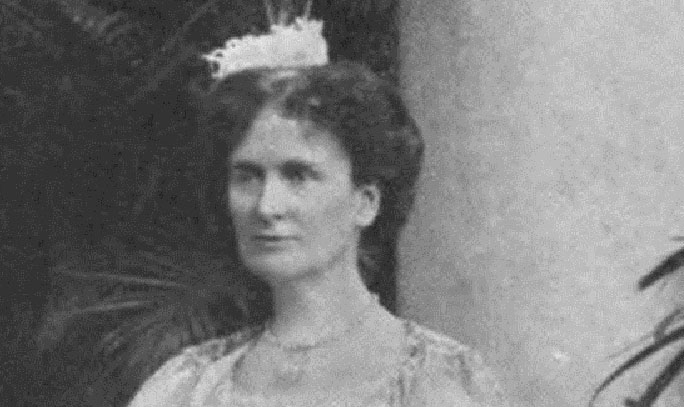

Unarguably, Mrs Flora Lugard was the first woman to play the role of first lady in Nigeria, when her husband, Lord Frederick Dealtry Lugard, governed Nigeria from 1914-1919. Therefore, the office of the first lady is as old as Nigeria herself.
[ad]
Following Nigeria’s attainment of political independence and subsequent departure of the last colonial governor-general, Sir James Robertson and his wife (the last colonial first lady) in November 1960, Mrs Flora Azikiwe became the first Nigerian woman to play the role of first lady, when Dr. Nnamdi Azikiwe took over from Robertson, as governor-general (from 15th November, 1960 to 1st October, 1963).
She also maintained this position, when her husband became Nigeria’s ceremonial president (from 1st October, 1963 to 15th January, 1966). Although, Sir Abubakar Tafawa Balewa was the head of government (as prime-minister), from 30th August, 1959 to 15th January, 1966, but he never allowed his wife to play any active role in both government and public affairs. Thereafter, Mrs Victoria Aguiyi Ironsi came on board with her husband, who was Nigeria’s first military ruler (from 16th January, 1966 to 29th July, 1966).
Gen. Yakubu Gowon (Nigeria’s second military ruler) became head of state as a bachelor and also the youngest head of government in Africa, at the age of thirty-one (31) on 29th July, 1966. After he got married to Mrs Victoria Gowon and they had their first child in 1969, he gave marching order that all the monetary (cash) gifts sent to him and his wife, by some eminent personalities for the naming ceremony should be donated to the Lagos Babies Home.
He did so in strict compliance with the standing order then, that public office-holders must not receive gifts (considered as inducements) in order not to compromise the sanctity of their office. Interestingly, in the course of my ongoing research-work on Nigeria, I came across the receipt issued to Mr and Mrs Yakubu Gowon for the donation of the sum of ten pounds (the cash gifts) to the babies home; dated 16th January, 1970. Another impressive discovery was the fact that Gen. Gowon’s second child was delivered at the Lagos University Teaching Hospital (LUTH), Idi-Araba, Lagos on 28th August, 1972. This shows how public hospitals and other public service facilities were efficient and proficiently managed, within the first two decades, after the departure of the colonialists from Nigeria.
After the overthrow of Gen. Yakubu Gowon on 29th July 1975, the office of the first lady became inactive, from 1975 to 1985 (under Murtala, Obasanjo, Shagari and Buhari’s era). However, the emergence of Gen. Ibrahim Babangida (from 27th August, 1985 to 27th August, 1993) was a watershed in Nigeria’s history, as far as the office of the first lady was concerned. Strategically, Mrs Maryam Babangida swiftly established an office for herself at the State House, Lagos. Therefrom, she ran the activities of her pet project, named Better Life Programme for Rural Women (BLPRW), which was later launched on 18th September, 1987. Thus, she turned the office of the first lady into a potent springboard for women’s empowerment.
The peak-point of her debuts was of course, the foundation-laying ceremony for the construction of the monumental National Centre for Women Development (NCWD), by former President Ibrahim Babangida on November 5, 1989. The centre, modeled after the United Nations International Research and Training Institute for the Advancement of Women (INSTRAW) was later commissioned on October 17, 1992.

Mrs Maryam Babangida also used her office to set necessary machinery in motion, for the empowerment of women and children. Thus, a department for children and women development was established in the Federal Ministry of Social Development, Youth and Sports in 1986. Therefore, this novel initiative became the in-road, which eventually led to the establishment of a full-fledged Federal Ministry of Women Affairs in 1999.
[ad]
The journey actually began in 1985, when the National Commission for Women (NCW) was upgraded to become Federal Ministry of Women Affairs and Social Development. In a strategic attempt to honour and immortalise her, the director-general of the National Centre for Women Development (NCWD), Hon. (Dr) Asabe Vilita Bashir, has successfully pushed the bill, seeking to rename the centre in honour of late Mrs Maryam Babangida, through. The 9th National Assembly passed the bill into law, after it lingered for 12 years. Thereafter, the immediate past president, Muhammadu Buhari (GCFR), assented to this act of the parliament on May 28 of 2023, before leaving office.
The initiative of the Family Support Programme (FSP) of Hajiya Maryam Abacha enjoyed enormous support from the Petroleum Trust Fund (PTF), particularly for the construction of some specialist hospitals for women and children, nationwide. This collaboration also led to the construction of the National Women and Children Hospital, Abuja. The project was backed by Decree 36 of 1999. Upon its completion, the hospital complex was eventually commissioned by Gen. Abdulsalami Abubakar on May 22, 1999. However, the name of the hospital was later changed to “National Hospital”, Abuja in order to expand its mandate, to cover male patients. Alongside Family Support Programme (FSP), the Family Economic Advancement Programme (FEAP) was also on course, under Hajiya Maryam Abacha. However, there is no gain-saying the fact that both the FSP/FEAP initiatives, thrived on the laid-down structures of the Better Life Programme. It is therefore, very pertinent to mention that both the FSP/FEAP initiatives, were backed by Decree 11 of 1997.
As the Interim National Government (ING), led by late Chief Ernest Shonekan (GCFR) was hurriedly constituted in order to pave way for the exit of Gen. Ibrahim Babangida from power, due to the rising socio-political crisis, which followed the annulment of June 12, 1993 presidential election, Mrs Margaret Shonekan was therefore, unable to make any significant impact as first lady, because the government existed for less than 3 months (August 26 – November 17, 1993); being the shortest administration ever in Nigeria’s history.
Based on her background as a legal luminary, Hon. Justice Fati Abubakar set a new pace, when she became Nigeria’s first lady in 1998. She was therefore, the first to have a registered NGO, named Women’s Rights Advancement and Protection Alternative (WRAPA); for running the activities of her pet project, with the objective of advocacy, mobilisation, empowerment and protection of women’s human rights; as well as the elimination of all forms of repugnant practices and violence against women.
It is therefore, very pertinent to mention that since the office of the first lady became relevant to governance as from 1985, various pet projects were ran in unitary order, from the federal to the 36 states and across all the 774 LGAs, down to the ward levels, most especially under the Better Life Programme, Family Support Programme and Family Economic Advancement Programme, respectively. But the trend has changed since Nigeria returned to democratic system of government in 1999.
As a result, first ladies across the 36 states have been independently running their respective pet projects, rather than being appendage to the office of the first lady in Abuja, as it was then the order, from 1985 – 1999.
Comrade Owolabi-Abdullahi, formerly general secretary (Lagos State Youth Council)/National vice-president, SW (National Youth Council of Nigeria) 08055048925/[email protected]
[ad]

