 Follow Us on Google News


 Follow Us on Google Discover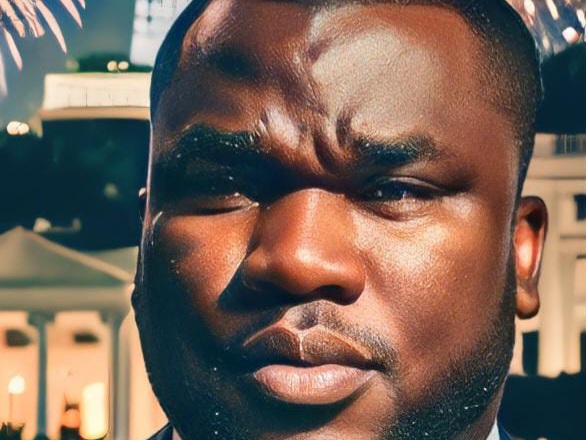

Says 39 countries still subsidise product
An Ibadan-based philanthropist and business mogul, Gbemileke Eleniyan, has added his voice to the raging debate on subsidy removed from the price of premium motor spirit (PMS) otherwise known as petrol in Nigeria, just as he argued that the Bola Tinubu-led Federal Government was mistaken in its assumption that Nigeria was one of the few countries subsidising the price of petrol.
The philanthropist made this known during an interaction with the newsmen, insisting that the welfare of the masses should be the top priority of any government.
[ad]
Subsidies exist because the government fixes the price of petrol for consumers below the international price, and uses government resources to pay for the difference. On May 29, in his inaugural speech, President Bola Tinubu said Nigeria’s fuel subsidies would be scrapped, citing budgetary concerns. The decision led to a steep rise in fuel prices and the attendant economic consequences.
Eleniyan said: “The All Progressives Congress (APC) administration met the dollar at about N180 and it is now about N950 in the black-market and about N800 at the official Import and Export window.
Since we are import-dependent, the value of our currency determines both our cost of living and our standard of living. The price of food items have skyrocketed. A bag of rice is now over N40, 000 and in 2015 it used to be about N8, 000. Food inflation has set in and the average cost of food items is more than the minimum wage.
“On the issue of subsidy removal, Tinubu’s government is starting wrongly with false assumptions that we are one of the few countries still subsidising fuel. No, there are over 39 countries with various forms of fuel subsidies. You cannot remove subsidy when you do not refine the crude locally.

The unstable rate of our naira will make a mess of whatever gain you intend to achieve as the prices will keep increasing since the dollar keeps gaining over the naira. If I had the same chance that Tinubu has, I would follow this sequence within 12 months and I will roll out a four-year gradual plan to eliminate subsidy with good palliatives. I will send the EFCC after fraudulent oil marketers and recover billions of naira; eliminate smuggling of PMS and other crude products.
I will ensure proper tracking of imported PMS with correct data and eliminate stealing of crude oil by installing pipeline intrusion detectors system across the country as well as aerial surveillance. I will ensure that our refineries are working optimally and partly privatised to raise fund for the country.
“When all refineries are working optimally, we can then embark on four years subsidy removal plans and each aspect will have equal palliatives. Tinubu’s hasty removal of subsidy is not strategic and it shows lack of critical thinking on the part of the government.”
Earlier, he fingered poverty and a lack of self identity as the bane of greater youth participation in governance.
“The system is structured to keep impoverishing the younger populations. Imagine in a country like ours, crypto currency is illegal and cannot be traded openly. Crypto currency uses block-chain technology and it is a way of empowering youths economically.
“Our education is also a problem. Our universities have failed to train our youths to be creators of employment, instead they have molded their graduates to be hunting for jobs. Our financial institutions give loans only to existing businesses and not starters and even when those loans are available they are with high interest rates and low repayment periods.
“Subject anybody to poverty and the person will struggle to only survive and not to lead others. But I encourage that we must wake up and as the demography that should control who gets into the political offices, use the power of the ballot to create positive changes that will ultimately better our lots.
[ad]
“I honestly think that various administrations have come up with policies to further marginalise the youths. Forget about the not-too-young-to-run law and movement. You need economic liberation to be able to contest for any political position. And systematically, various administrations have totally excluded youths from political appointments. They only need the youth when it comes to voting; immediately after that, youths are no longer important. We must work to change this narrative by creating a paradigm shift. Our involvement should not be few months into the elections; we must be systematic and strategic in our engagements,” he stated.
[ad]

