 Follow Us on Google News
 Follow Us on Google Discover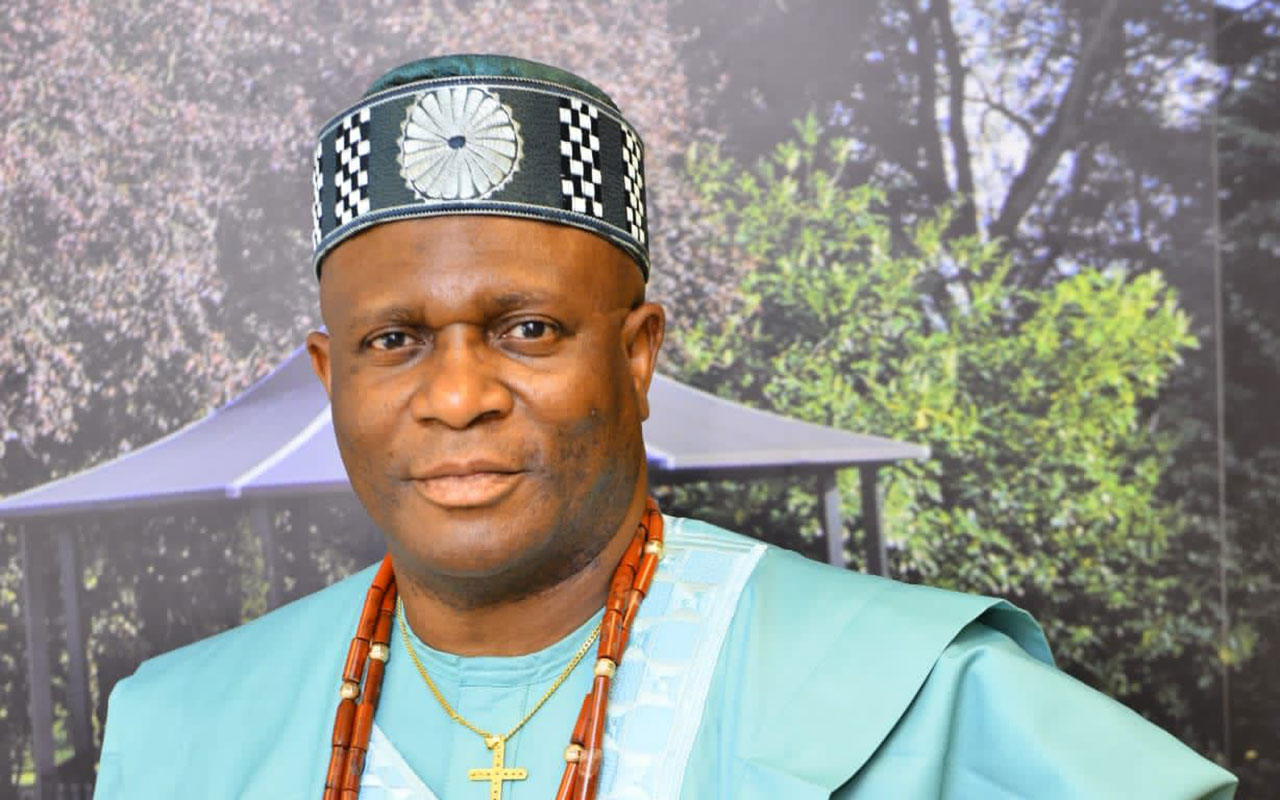
He Is A Leader Of Leaders
Mr Adebayo Adeshina, Director General, BTSO UK and Diaspora Grassroot Support for Better Governance in Nigeria analysis of the present administration they worked for and supported since 2019. Bola Tinubu Support Organisation UK and Nigeria group was founded in November 2019, for the political amazon of our times, Asiwaju Bola Ahmed Tinubu.
[ad]
Ade Adeshina affirmed that Tinubu’s philanthropic life is worthy of emulation and gathered professionals and patriotic Nigerians together to support and rally round Tinubu to emerge as winner of the 2023 presidential election. Profess Tinubu is not a saint but the most qualified southwestern politician we know, that have successfully bridged the south, west, east and north gaps with credible acumen for the job. They set out as a Not-for-profit (international Not-for-profit Voluntary Organisation) to support Tinubu’s ambition and beyond, so as to create a legacy and work towards development of future leaders from this great leader’s of men.
On Sept. 6, 2023, President Tinubu and Vice President Kashim Shettima completed the first 100 days of their respective four-year term since assumption on May 29, 2023.
BTSO UK detailed some of the endeavours and achievements of the President and his Vice since they took over the administration, as an evidential confirmation of the diaspora faith in ability of His Excellency.
In just 100 days, President Tinubu’s administration has set a remarkable pace for transforming Nigeria. From bold economic reforms to visionary international engagements, the progress made is undeniable. Here are some highlights:
Fuel Subsidy Removal: President Tinubu took the courageous step of removing the fuel subsidy to avert economic catastrophe. While it was a tough decision, the government swiftly rolled out intervention programs to cushion the impact on the most vulnerable.
Legislative Achievements: In a matter of weeks, President Tinubu signed several crucial bills into law, including those addressing retirement age for judicial officers, electricity regulation, student loans, and data protection. These laws are pivotal to modernizing Nigeria’s legal and economic landscape.
[ad]
International Engagements: President Tinubu embarked on a series of international trips, securing investments and partnerships to boost Nigeria’s economy. Notable engagements included meetings with leaders from China, France, Guinea-Bissau, India, and the United Arab Emirates. These partnerships are set to drive economic growth and job creation.
Infrastructure Development: The administration has approved the construction of 1,000 houses in seven northern states, demonstrating a commitment to addressing regional disparities and enhancing living conditions.
Digital Innovation: President Tinubu’s government is actively promoting digital innovation. Partnerships with global technology companies are being explored to ensure accurate and transparent data, which will enhance public sector planning and service delivery.
Economic Inclusion: Recognizing the importance of economic inclusion, the government is focusing on creating opportunities for all Nigerians, regardless of background. Initiatives like the Infrastructure Support Fund and CNG-powered vehicles for public transportation are set to improve livelihoods and economic competitiveness.
Foreign Relations: President Tinubu’s diplomatic efforts have been commendable. The lifting of visa bans and resumption of flights by Etihad and Emirates Airlines demonstrate a commitment to improving Nigeria’s international relations.
Local Governance: Local governments play a pivotal role in ensuring economic inclusion and development. BTSO UK’s strategic policy on the role of local government aligns with the government’s vision, emphasizing equity, diversity, and economic inclusion at the grassroots level.
Call for Equitable Appointments: BTSO UK urges the government to ensure equitable appointments, considering the contributions of supporters and activists. It’s essential to have a diverse and skilled team to drive the nation forward.
As we reflect on these achievements, we acknowledge that the journey ahead is long, but the commitment to a better Nigeria is unwavering. President Bola Tinubu’s leadership has set a strong foundation for transformative change, and together, we can build a brighter future for all Nigerians. Let’s continue to support and work towards a prosperous Nigeria under his leadership.
Below are some highlights of the new administration’s journey so far:
Foreign Trips/Bilateral Engagements After Inauguration
May 31: President Tinubu met with the Special Envoy of the Chinese President.
June 20: Just over three weeks after assuming office, Tinubu embarked on his maiden trip to France, to participate in the Paris Summit for the New Global Financial Pact.
Tinubu met separately with the President and Chairman of the Board of Directors, African Export-Import Bank, Prof. Benedict Oramah, and the President of the European Bank for Reconstruction and Development, Odile Renaud–Basso, and he asserted that Nigeria was open for business and ready to host investments from foreign partners.
July 8 – 10, the President was in Guinea-Bissau to attend the 63rd Ordinary Session of the Authority of Heads of State and Government of the Economic Community of West African States, where he emerged as the chairman of the regional bloc.
Aug. 1: President Tinubu’s first foreign ceremonial engagement began in the neighbouring Republic of Benin. He honoured an invitation from his counterpart, Patrice Talon, to attend the country’s 63rd independence anniversary.
Sept. 5: Tinubu attends the two-day summit on the special invitation of the Indian Prime Minister, Narendra Modi.
The President leveraged on the platform to attract foreign direct investments in key labour-intensive sectors of the economy for job creation and revenue expansion.
Sept. 10-11: Tinubu in New Delhi, India, to participate in the G-20 Leaders’ Summit.
Sept. 11: The President departs for New York, United States, ahead of the 78th United Nations General Assembly, beginning Sept. 19.
Similarly, July 23-26: the Vice-president Shettima in Rome, Italy, to represent the President at the first Stock taking Moment Summit themed: “Transforming Food Systems for People, Planet and Prosperity”.
July 26-29: Shettima proceeded to St. Petersburg, Russia, for the Russia-Africa Summit.
He also participated in bilateral meetings with representatives of relevant Russian senior government officials and business leaders to discuss relations between Russia and Nigeria.
August 21: Representing the President, Shettima arrived in South Africa for the 15th BRICS Summit of Heads of State and Government at the Sandton Convention Centre, Johannesburg, scheduled for August 22 to 24.
The Vice-president, however, expected to visit Havana, the Cuban capital, in Sept.
Meetings:
June 8: President Bola Tinubu met with Exxon Mobil Executives, led by Mr. Liam Mallon, President of ExxonMobil Upstream Company, at the State House.
June 19: The President met with Co-founder of Bill and Melinda Gates Foundation, Mr Bill Gates, at the State House, Abuja
June 19: Tinubu met with Founder and Global Chairman of Bharti Airtel, Mr. Sunil Bharti Mittal, at the State House, Abuja
June 19: President Bola Tinubu met with United States Assistant Secretary of State, Bureau of Energy Resources, Ambassador Geoffrey Praytt, at the State House, Abuja.
June 23: The President also held separate bilateral meetings, in Paris, France, with:
President of Benin Republic, Patrice Talon President of Switzerland, Alain Berset and President of the African Development Bank, Dr Akinwunmi Adesina
June 23: President Bola Tinubu met with executives of Airbus/ATR, led by Senior Vice President of Airbus/ATR, Public Affairs, Laurent Rahul Domergue.
July 1: President Tinubu met with President Umaro Sissoco Embaló of the Republic of Guinea Bissau, former ECOWAS Chairman, at his private residence, Ikoyi, Lagos
[ad][ad]
July 3: President Bola Tinubu met with delegation from Shell Petroleum Development Company (SPDC), led by Global Upstream Director, Ms Zoe Yujnovic, State House, at the State House, Abuja
July 4: The President met with Bank of America delegation, led by President of International, Bank of America, Mr Bernard Mensah, at the State House, Abuja
July 7: President Bola Tinubu met with delegation from MTN led by Group Chairman, Mcebisi Jonas, at the State House, Abuja.
July 28: The President met with Google delegation led by Global Vice President, Mr. Richard Gingras, at the State House, Abuja.
July 30: President Tinubu hosted an extraordinary ECOWAS Summit on Socio-Political Situation in the Republic of Niger, at the State House, Abuja.
Aug.4: President Tinubu meets with President of the World Bank, Mr. Ajay Banga at the State House, Abuja
Aug. 15: President Bola Tinubu met with Special Envoy of President of Gabon and Chairman of ECCAS, Ali Bongo Ondimba, Minister of Foreign Affairs of the Republic of Gabon, Mr. Hermann Immongault, at the State House, Abuja.
Aug. 16: President Bola Tinubu met with Managing Director of Energy and Natural Resources in Europe, Africa and Middle East for Standard Chartered Bank, Mr. Ade Adeola, at the State House, Abuja.
Aug. 16: President Bola Tinubu also met with delegation from Google (West Africa), led by Director, Olumide Balogun, at the State House, Abuja
Aug. 24: The President Bola received Letters of Credence from three envoys: Ambassador of the Federal Democratic Republic of Ethiopia, Mr Awall Wagris Mohammed; Ambassador of the Republic of Cuba, Mrs. Miriam Morales Palmero, and Ambassador of United Arab Emirate, Salem Saeed Al-Shamsi, at the State House, Abuja.
Aug. 24: President Bola Tinubu met with delegation of Islamic scholars (Ulamas), led by Sheikh Bala Lau, who were engaged in mediation to facilitate restoration of constitutional democratic governance in Niger Republic, at the State House, Abuja.
Achievements:
Fuel Subsidy Removal:
Upon assumption of office the President removed the fuel subsidy to avert a national economic catastrophe of epic proportions.
Due to the fuel subsidy removal, government rolled out intervention programmes to help cushion the unintended negative impacts of the reforms.
In two weeks of President Tinubu’s assumption of office, he signed four laws, which includes;
June 8: Tinubu assented to bill new retirement age for judicial officers.
With the signing of the Constitutional amendment Bill, retirement age and pension rights of judicial officers have been effectively brought into uniformity.
June 9: Tinubu signed the 2023 electricity Bill into Law
The Act is expected to de-monopolise electricity generation, transmission and distribution at the national level.
Student Loan Act
Tinubu on June 12, Democracy Day, gave assent to a law that will facilitate the provision of financial assistance to Nigerian students in tertiary institutions.
June 14: Data Protection Law
Tinubu signed the data protection bill into law.
The legislation empowers Nigerians to seek redress in the event of a data breach among others.
June 19: Retirement and Replacement of Service Chiefs
President Bola Tinubu likewise on June 19, approved the immediate retirement of all Service Chiefs, including the Inspector-General of Police from Service and replaced them with new ones.
June 27: Introduction of N1,000 Annual Fee for Motorists as Proof of Ownership Certificate Verification
The certificate will help vehicle owners and the government to guarantee the integrity of all vehicles registered on the National Vehicle and Identification Scheme (NVIS) database and track car theft and recovery of stolen vehicles.
July 9: Emergence of President Bola Tinubu as the new Chairman, Economic Community of West African States (ECOWAS)
In a unanimous endorsement, President Bola Tinubu emerged the new Chairman of ECOWAS at the 63rd Ordinary Session of the Authority of Heads of State and Government in Bissau, Guinea-Bissau.
July 20: Tinubu approves Infrastructure Support Fund (ISF) for 36 states
This is part of measures to cushion the effects of fuel subsidy removal.
The new infrastructure fund will enable the states to intervene and invest in the critical areas of transportation, including farm to market road improvements; agriculture, encompassing livestock and ranching solutions.
Also, in health, with a focus on basic healthcare; education, especially basic education; power and water resources, that will improve economic competitiveness, create jobs and deliver economic prosperity for Nigerians.
Also, provision of fertilisers to farmers, grains to households, cash transfers to people with low incomes.
July 20: NEC endorses deployment of CNG-powered vehicles for public transportation
The National Economic Council (NEC), endorsed the proposed mass deployment of Compressed Natural Gas (CNG) vehicles to all States for public transportation.
The decision was part of resolutions reached at the fourth meeting of the Council, chaired by Vice President Kashim Shettima, at the State House Executive Council Chambers.
The decision was part of the measures to cushion the effect of petrol subsidy removal.
Shettima also said government would pursue vigorously, the mass deployment of CNG-powered vehicles and establishment of Autogas conversion plants/kits in all States in the short-term.
He stated that the Federal Government will deploy electric buses and cars with charging infrastructure across the country.”
[ad]
Shettima also revealed that government to support enhanced engagements between State Governors and the leadership of the labour unions across the States, and proposed the provision of the cost-of-living allowances to be paid to civil servants in both the State and Federal Civil Services.
July 25: Nigeria mobilises $500m for food system transformation
while chairing a high-level meeting on the first day of the UN Food Systems Summit in Rome, Italy, Vice President Kashim Shettima disclosed that Nigeria mobilised more than half a billion dollars for innovative, profitable, equitable and sustainable food system transformation initiative.
Shettima explained that the funds were mobilised through domestic resources, multilateral development banks, international financial institutions and climate funds by leading agro-businesses.
The vice president said that the funds would be used for financing food system transformation, development of Nigeria’s agro value chain and the setting up of Special Agro-Industrial Processing Zones.
Aug. 5: FG partners Wema Bank to set up MSME technology hubs in 7 states
The Federal Government said it was set to launch a digital hub that will empower one million youths across the country with digital and related skills.
The hubs will be run in partnership with a leading financial institution in Nigeria, WEMA Bank.
The arrangement for the initiative was reached after a meeting between representatives of the bank and Vice President Kashim Shettima.
The move is in line with President Bola Tinubu administration’s commitment to providing more digital jobs for young Nigerians,
The centres, to be known as FGN/ALAT Digital and SkillNnovation Hub, would open first in Lagos and Borno States with Katsina, Cross River, Anambra, Oyo, and Kano states to follow afterwards.
Aug. 12: Tinubu restates commitment to enhance operational capability of security agencies
President Bola Tinubu said his administration would make adequate provision for the enhancement of the operational capabilities of security and law enforcement agencies.
Tinubu, represented by the Vice President, Kashim Shettima, gave the assurance at the Passing Out Parade of the 5th Regular Course of the Nigeria Police Academy, Wudil, Kano.
Sept. 1: Tinubu declares support for 5m eyeglasses for Nigerians
President Bola Tinubu declared his support for the provision of five million eyeglasses for Nigerians with sight impairment.
Tinubu while receiving the founder of Peek Vision Foundation and Co-Founder of the Vision Catalyst Fund, Prof. Andrew Bastawrous highlighted the pressing need for improved eye health services in Nigeria and expressed concern about the more than 24 million Nigerians grappling with varying degrees of vision impairments
The initiative would be between the Peek Vision and the Federal Ministry of Health’s National Eye Health Programme (NEHP).
Sept. 2: President Bola Tinubu directs recall of all career and non-career ambassadors from their duty posts worldwide, with the exception of Nigeria’s United Nations Permanent Representatives in New York (USA) and Geneva (Switzerland).
[ad]
Sept. 4: Tinubu mulls partnership with tech firm for data accuracy, transparency
President Bola Tinubu expressed support for partnerships with global technology companies to ensure that data from public institutions are accurate and transparent in providing templates for public sector planning and accounting.
at a meeting with Mr Andres Arroyo, Global Vice President of Oracle, said government aimed to promote the ease of doing business, digital innovation, effective identity management, efficient payroll administration and qualitative citizen-centred service delivery.
Sept. 6: Tinubu secured $3bn steel investment for Nigeria
President Bola Tinubu successfully attracted a monumental 3 billion U S dollars investment pledge from Indian investors, to boost steel industry in the country.
The president made the commitment during the Nigeria-India economic roundtable in India.
Sept. 8 Tinubu approves construction of 1,000 houses in seven northern states – Shettima
Vice President, Kashim Shettima said President Bola Tinubu had approved the construction of 1,000 houses in Sokoto, Kebbi, Katsina, Zamfara, Kaduna, Niger, and Benue states.
Speaking on behalf of the President, Vice President Kashim Shettima at the commissioning of a housing project in Maiduguri announced the construction.
Shettima said the houses will be located in Benue, Kaduna, Katsina, Kebbi, Niger, Sokoto and Zamfara states.
The Vice President explained that the projects were part of a broad plan by the Federal Government to address conflicts in the north.
He also disclosed that the President had approved N50 billion to the National Emergency Management Agency (NEMA) to kick-start the Pulaku initiative.
The Pulaku initiative is a non-kinetic solution to the crisis confronting the people of the northwest.
Sept. 10: Tinubu strikes multiple deals with Germany, Korea and India
So far, President Bola Tinubu has secured major investment commitments and economic cooperation from three of world’s largest economies.
The President got commitments from German Chancellor Olaf Scholz, South Korean President Yoon Suk Yeol and Indian Prime Minister Narendra Modi to expand their investment frontiers in Nigeria.
The pledge was in acknowledgment of the policies initiated by the Tinubu administration to reboot the economy. He held business talks and stepped-up bilateral engagements with key economic partners on the sidelines of the G-20 Summit which closed in New Delhi, India.
Sept. 10: FG obtains $163m AfFB loan to boost wheat production
Also, on food security, The Vice President, Kashim Shettima, disclosed that the Federal Government had obtained 163 million dollars loan from the African Development Bank to support wheat production in the country.
Shettima re-affirmed the determination of the Tinubu administration to fulfill all its promises to Nigerians, particularly in the agricultural sector.
Sept. 11: Tinubu Secures Visa Lift, Return of Etihad, Emirate Airlines
President Bola Tinubu and President of the United Arab Emirate (UAE) Mohammed bin Zayed Al Nahyan, finalised agreement on the lifting of visa ban placed on Nigerian travellers and the immediate resumption of flights by Etihad and Emirates Airlines.
This followed the visit of President Tinubu to the emirate after his visit to the G20 summit in New Delhi, India.
[ad]
At the receiving of letter of credence of the UAE Ambassador to Nigeria, Mr Salem Al-Shamsi, Tinubu pledged to influence the return of cordial relations with the emirate at a personal lev
Telephone Calls
Five telephone conversations (reported) so far:
June 7: President Bola Tinubu in telephone conversation with the President of the European Council, Mr Charles Michel others are;
United States Vice-President Kamala Harris (July)
United Nations Secretary-General, Antonio Guterres (July)
Canadian Prime Minister, Justin Trudeau (August) and
US Secretary of State Antony J. Blinken (August).
In conclusion, speaking on how well the Tinubu-led administration has performed
Though it is still early to adjudge this administration, I can say that Tinubu’s administration has started well by taking decisive decision to end corruption in the oil industry through subsidy.
This is a right step in the right direction only that the government should have provided a soft landing for the masses before taking such step.
Also, l suggest that the money saved through from the fuel subsidy removal, should be targeted to fix a national challenge each month.
On Air Travels
Nigerians are advocating for its own National carrier (Nigeria Air) with government owning part of the shares but private sector driven.
It should be noted that the amount of foreign exchange we are losing to the foreign airlines is enormous.
Just like the likes of Ethiopian Air and Kenya Airways that have set the right template, government needs a lot of infrastructural support to make Nigeria an Operating Air Hub.
This is what the Nigeria Air project is about.
Let’s pray it succeeds.
Similarly, the comprehensive fiscal policies and other reforms by the new administration has been laudable but efforts should be made at ensuring that it addresses the challenges it was established to tackle, in order to bring about transformative reforms.
Not only should be the reforms /policies improve Nigeria’s revenue profile but create a more conducive and internationally-competitive business environment.
Nigerians are waiting and hoping to witness the much-expected economic turn-around that would herald an improved standard of living for all and inclusive growth.
Asojuoba Gbolahan Shodiya, executive of Bòla Tinubu Support Organisation UK, (BTSO UK), diaspora and Nigeria fully agreed with Otunba Ade Adeshina DG BTSO UK/Diaspora Grassroot Support for Better Governance in Nigeria.
Gbolahan’s assessment of His excellency president Asiwaju Bola Ahmed Tinubu hundred days in office has given rise to hope for better governance in Nigeria and other related event in 100 days and going forward from the hundred days.
[ad]
His excellency President Bola Ahmed Tinubu started on a very welcoming and well received footing by removing the fuel subsidy and faction out a way to cushion the effect of the removal even though the work is not for the federal government per say but rather more of the states and local government because we all come from States and local government and l believe these governors and the chairmen of the councils has critical roles to make sure the palliative from the federal government reaches the most in need people of our nation. With this kind of exercise our organisation BTSO UK executives and professional Community Economic Regeneration expert strategic policy on the role of local government in supporting economic inclusion: Unlocking talent to level-up akin to the UK communities Economic Rejuvenation strategy for His excellency considerations.
They cite: Equality, diversity, and economic inclusion are vital to unlock talent and level-up local areas. This means equity and inclusion in Biodiversity infrastructural development, Housing, education, skills, and employment provision for everyone. This strategic team looks at the role of state and local government in supporting to deliver a localised offer to improve access to Biodiversity infrastructural development, Housing, employment, and skills opportunities.
Our analysis of the employment and skills landscape revealed that equality and diversity is not completely reflected in jobs, skills, and training opportunities – stark inequalities are prevalent in both people and places.
Local government has a key role to play to ensure that people and places flourish. By working in partnership with businesses, education and employment sectors, and individuals’ local government can create policies and practices that promote diversity and economic inclusion to unlock talent and level-up local areas.
Economic inclusion roundtables
To build on our initial research and evidence base, we hosted a series of roundtables between December 2022 and January 2023 to hear directly from some local government around the country.
The three roundtables were as follows:
the first roundtable focused on rural and coastal issues
the second looked at urban challenges.
the third and concluding roundtable focussed on Lagos, FTC Abuja, Northeast, Southeast.
specific needs of individuals and lack of data digital connectivity transport connectivity the role of employers and businessespartnership working.
How local government is engaged in supporting equality, diversity and economic inclusion in employment and skills:
Economic inclusion is essential for building strong and resilient communities, reducing inequality and poverty, and promoting economic growth. Local government as leaders of place can play a key leadership role in supporting economic inclusion both as employers and enablers of local economic growth if entrusted, “as they say – Politics is Local”.
This important role includes:
Supporting everyone regardless of their age, disability, gender reassignment, marriage and civil partnership, pregnancy and maternity, race, religion or belief, sex, sexual orientation, caring responsibilities, ‘children in care’ or offending background is equipped to achieve their full potential in education and employment.
[ad]
Promoting equal access to sustainable employment or skills opportunities.
Creating job opportunities for all to benefit from.
Ensuring its workforce better reflects its local communities.
Assisting businesses to provide training/skills opportunities for everyone.
Promoting policies that can create a more inclusive and equitable local economy.
In fact, it’s governing from the bottom up to deliver dividend of democracy. With the appointment of ministers and other positions by the presidency, we have some concerns where people that did not worked before and during elections campaign for the emergence and of our principal are been given appointments and positions whilst supporters group and local activists are neglected. We believe our principal and other people around him should revisit to ensure equity. Also, we heard and read a lot of alleged information on social media concerning the chief of staff of the federation in person of Honourable Femi Gbajamiabila collecting money for ministerial post. We would like Honourable Femi Gbajamiabila to provide clarity on these rumours and silent the evil plotters permanently because we don’t want our principal name and our party to be rubbished. At BTSO UK we have qualified men and women in various capacity that their skills, knowledge, experiences would be beneficial to our country if given the opportunities under our able leader Otunba Ade Adeshina who has laboured day and night since 2019 to champion our principal long time ambition and put all of us together with our individual resources to support, promote and delivered on behalf of our principal the president of the federal Republic of Nigeria Asiwaju Bola Tinubu, without soliciting or collected a penny from anybody other than our own personal money to support our principal course. Today it looks like we are not been seen or l should say neglected but l believes it’s not too late to reach out to us and let us to contribute our own quota in the affairs of dear nation.
Ade Adeshina is Director General, BTSO UK/Diaspora Grassroot Support for Better Governance in Nigeria. For further information in respect of any assertions within, here is my contact details: email: [email protected].
Social media handles: ç
[ad]

