 Follow Us on Google News
 Follow Us on Google Discover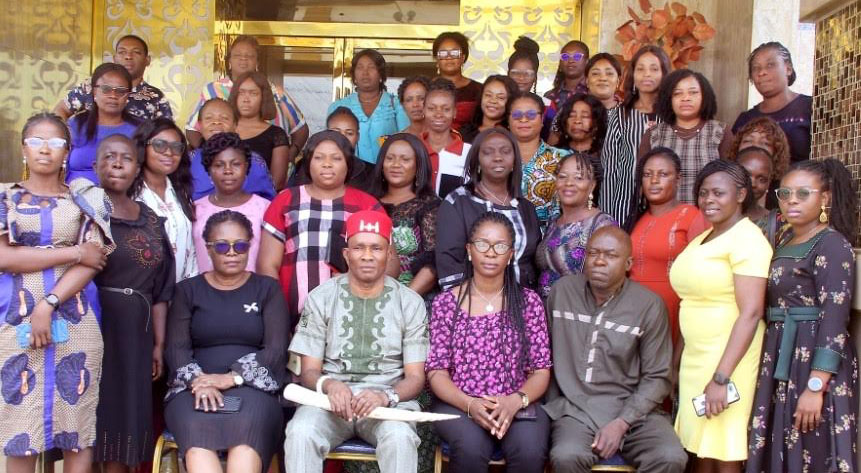
 Lack of transparency and accountability in the public procurement policies by the state governments has been a major concern in the polity. Most states have failed to maintain updated open procurement policies, rendering their promises of transparency and accountability below bar.
[ad]
A report by a non-governmental organisation, the Civil Resource Development and Documentation Centre (CIRDDOC), revealed that four out of the six states of the South-south region ranked poorly in terms of transparency and accountability in budget and procurement process.
It revealed a decline in the average degree of public availability of budget documents in the six states of the region, showing that states such as Akwa Ibom and Edo were relatively transparent and provided some considerable amount of budget information to the public, as they scored 60 per cent.
Others such as Rivers, Bayelsa, Cross River and Delta recorded below the average score (43 per cent) scoring 37 per cent, 42 per cent and 25 per cent respectively.
Given the foregoing, Niger Delta Budget Monitoring Group (NDEBUMOG), with support from OXFAM, organised a two-day capacity building workshop for women in Uyo, Akwa Ibom State.
The event, targeted at increasing the knowledge base of women in the extractive value chain, was part of activities for the FAIR for All (F4A) Power of Voices Programme currently being implemented in the country by Oxfam through its strategic partners.
Participants were drawn from NDEBUMOG’s affiliates alongside other participants from Akwa Ibom, Cross River, Delta, Enugu and Rivers states.
CEO of NDEBUMOG, Dr. George-Hill Anthony, stressed the need for women to be involved in the extractive value chain and have an understanding of how budgets are implemented.

According to him, it is important that women are conversant with budget allocation in their communities for them to hold government to account.
“Without knowledge the people perish, like it’s commonly said, so, with the knowledge that the women have in this workshop, they will be able to identify areas and opportunities that can enhance their economic prosperity both to themselves and to their immediate communities and in the long run that is going to enhance societal development.
“Government alone cannot enhance budget transparency. The people also have a role to play. It’s a two-way responsibility that’s why we are here so that the demand and supply side should be able to have access to information and measure the expenditure targets. It’s the constitutional right of every citizen to be able to demand accountability from the government, provided that is done constructively and through democratic approaches.”

Speaking on the achievement of previous capacity development programmes, Anthony said women tracked some projects and were uploaded in NDEBUMOG portal.
“When the people show interest and participation, it will enhance transparency and physical inclusion because the Government will now realise that people are following up and tracking physical expenditure.”
Anthony, however, lamented that the people are rarely aware of projects and programmes meant for economic empowerment of women due to lack of access to documents by ordinary citizens.
[ad]
He bemoaned lack of transparency in allocations for effective service delivery, noting that just as billions are allocated to security, yet, insecurity is unabated.
According to him, though government has responsibility to provide basic amenities and infrastructure such as, roads, power, education, health, among others, citizens are forced to provide these amenities for themselves, due to the failure of the government to live up to its fiscal and governance responsibilities.
In a communiqué, signed by Raymond Victor (NDEBUMOG), Stiv Obodoekwe of Nigeria Civic Space Protection Alliance (NCSPA) and Joy Eze of NDEBUMOG 30 Affiliates Women Shadow Budget Groups, the participants regretted that women were often excluded from governmental structures and community governance executives.
The communiqué urged government to adhere strictly to budgetary provisions and do proper needs assessment to ensure that citizens are involved in budget consultations and preparations and mechanisms created by law to make budget participatory.
“Budget documents and fiscal information should be made accessible to citizens as these information/documents are public information. Government should also put citizens friendly budget information on their websites to enable citizens to access them online.
“Government should extract projects/programmes around clusters and print them in local languages for the citizens.
“Women should begin to give attention to gender equity in the budget and should always endeavor to track public expenditure allocated to them, including, advocating for gender equity always.
“Governments should wake up to their responsibilities by providing basic amenities and services, such as roads, power, education, health etc to reduce suffering and hardship on citizens, which is excruciating daily.
“Participants resolved to embark on project monitoring as a way of holding the government accountable on budgetary implementation, infrastructural developmental and on empowerment projects, as contained in governmental budgets.”
In the same vein, stakeholders in Nigerian Civic Space Protection Alliance (NCSPA) have lamented systemic shrinking of the civic space, while noting that the legislature has not been living up to its responsibility of protecting it.
This was equally disclosed at a two-day workshop on sustainability strategy meeting with NCSPA, organised by NDEBUMOG, supported by OXFAM in Nigeria. The workshop held in Akwa Ibom State.
Participants noted that fiscal governance has become a tool used by successive governments in Nigeria to confuse the citizens and make them vulnerable and docile in the face of biting poverty.
They bemoaned that the National Human Rights Commission (NHRC) created by law to protect human rights and civic space, and as well as serve as remediating mechanisms for victims of human rights violations is systematically underfunded through poor budgetary envelopes.
[ad]
The participants also observed that despite huge amounts allocated to defence and security in the country’s annual budgets, insecurity has continued to worsen across the country.
This was contained in a communiqué signed by Dr. Anthony (NDEBUMOG), Onyeukwu Miracle (Karachi Rural Urban Development Initiative), Godday Nwafor, (Okehi Youth Forum, Etche, Rivers State), Ugwu Uzoamaka (Udi Shadow Budget Group) and Stiv Obodoekwe (NCSPA).
They maintained that though open civic space, human rights and democratic freedom are key pillars of democracy, the civic space has continued to shrink, as voices of dissent are systematically repressed with impunity.
“Citizens are often subjected to all forms of intimidation and victimisation for trying to exercise their right to freedom of expression, association, and to peaceful assembly, among others. That media houses are often shut down and journalists hounded and harassed in a country, even when press freedom and freedom of expression are guaranteed in the constitution.
“A free or open civic space is a blessing to all, including those in authority, as it promotes inclusivity, minimises suspicion, political mistrust, and creates an atmosphere for mutual political cohesion between demand and supply sides. On the other hand, a shrinking civic state is a fertile environment for corruption and mis-governance. Such should be halted for the sustenance of democracy in our country.”
They urged the government to prioritise human rights/civic space protection in the yearly budgets and review upwards, the budgets to agencies saddled with the duties of protecting civic space and human rights, especially, the National Human Rights Commission (NHRC) to enable them carry out the tasks of human rights protection and civic space watchdogging.
“Government should take serious steps to end attacks on civic space protectors and ensure respect and promotion of human rights and rule of law. Incidents of civic space violations should be properly investigated, with state actors found culpable brought to book.
“Citizens and CSOs, including the media, should not relent in asserting their rights to freedom of expression, democratic association, and peaceful assembly, among others, without fear of intimidation and oppression. The media should continue to hold the government to account, report violations and provide channels for citizens, including underrepresented and marginalised persons’ voices to be heard.
“Government should call its agents to order and educate them about the importance of civic space protection, which is a democratic element that should be always respected. Participants resolved to join forces with the NCSPA in its drive to ensure civic space protection, human rights, and democratic sustainability in Nigeria.”
[ad]

