 Follow Us on Google News
 Follow Us on Google Discover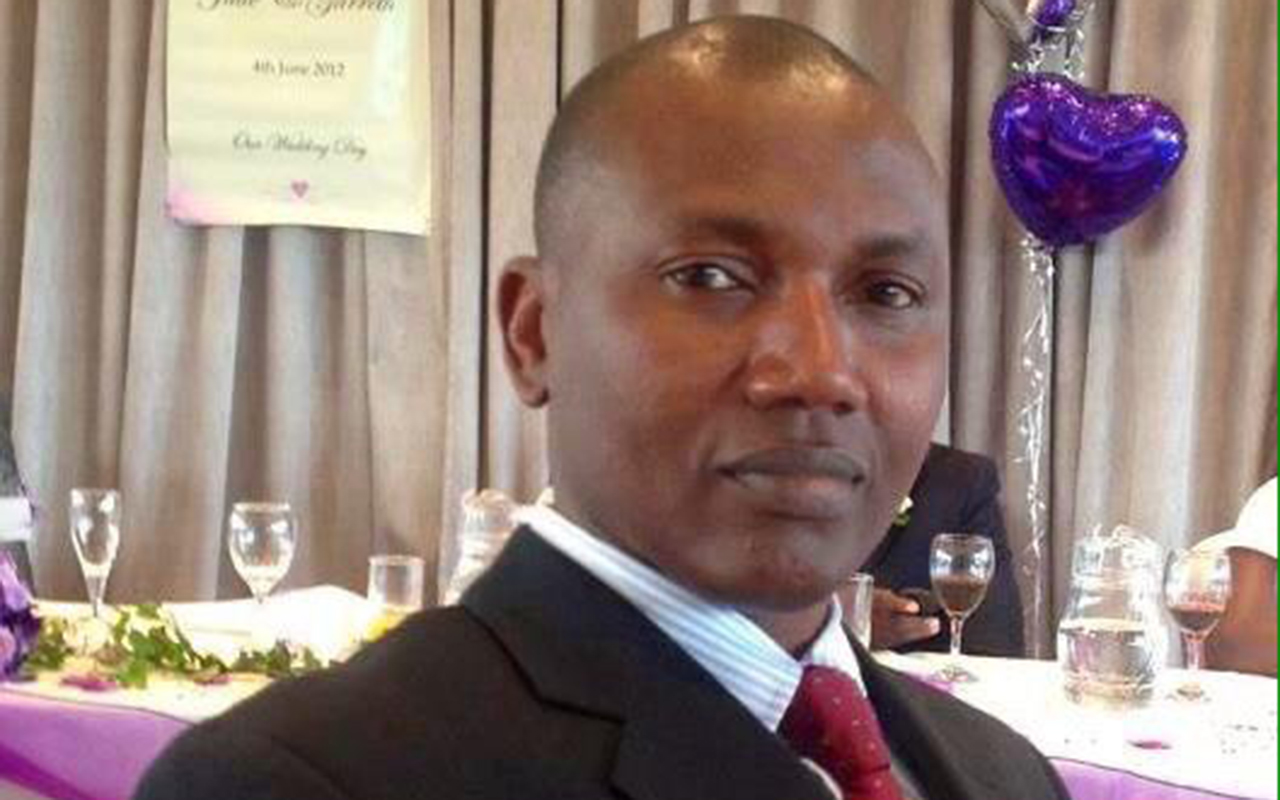

• How Meningitis Changed My Life
• My Encounter With Religious Charlatans
This is a conversation that took so many years to get. Musibau Olawale Alade was reluctant to share it with The Guardian, but eventually, he agreed. He wanted to inspire many others. Despite obstacles thrown his way at age 17, he has remained determined and focused. GREGORY AUSTIN NWAKUNOR captures Alade’s battle with deafness at adolescent age.
[ad]
He hadn’t thought much of the significant milestones lurking around the corner. An unexpected short message took him 40 years back. An invitation came asking him to enlist in alumni WhatsApp group. Like many areas of human life transformed by the emergence of social media, connecting with long forgotten and hard to reach former schoolmates, in a group format, had become possible just by the click of a button.
Riven by challenging thoughts after that short message, he began putting himself back together. He remembered the famous quote of Williams Faulkner, “the past is never dead.”
Those words gave currency to when it started. Like a movie reel, the scene began cranking out. Before long, he found himself in a mobile text conversation with people he grew up with, young people then, whose carefree lives shaped his, and gave him a sense of identity. He immediately wormed to the idea that he could, within his limited time and resources, recapture years gone by.
“That was the moment it dawned on me that I was no longer the same person many in the group knew way back early 1983. How was I going to disclose to them that the vibrant young Wale Alade they had known now limps socially, stumbles personally and that this interactional crippling occurs in ways that they cannot readily see, and easily understand?” He asks.
He says: “The impact of deafness can be socially limiting. It changes the whole person.”
IT was Friday, February 26, 1983. And, like most Fridays, he had mentally insulated himself from the usual demands of domestic chores; parental control and economic burdens adolescents of his background could not escape.

“Supporting my parents with the management of their provision store was a responsibility I had consciously delegated to my siblings. I had a lot planned, and besides, the West African School Certificate (WASC) examination was only three months away. I had to get stuck into my studies early if I was to cover the syllabus and my study plans. I was in my final year at the Jibril Martins Memorial Grammar School II, Iponri, that year,” Alade says.
Leaving football was like having an arm amputated, “if I had asked, I knew my parents would have denied me permission to go and play that match. I planned to sneak away. I knew it wasn’t without consequences. The punishment that would follow the discovery I had gone to play without permission, I calculated, would be worth it if I helped my team win,” he recalls.
On that fateful weekend, he made an all-night study session his priority. “I remember reading William Shakespeare’s Julius Caesar. I crammed copiously, quotes from the book that had me buzzing ahead of the following week’s Literature-in- English classes. The cup of coffee I had prepared, and the well-oiled lantern (like now, frequent power outages were a recurrent feature of life at that time) I had before me to provide illumination ensured I studied into the early hours of the morning. By the time I went to bed, I felt good I had spent the day just as I had planned. Bring on the weekend, was my silent battle cry,”Alade demurs.
[ad]
He went to bed as normal as you would expect an adolescent of his age —with a slow, soulful music that lulled him to sleep and visual imageries of how he would play in the next day’s match, a game he wanted to win like no other.
“I was a hearing young man, with a functioning auditory mechanism when I went to bed,” he chips in.
According to Alade, “I woke up the following day, earlier than expected, but the moment I stepped out, I sensed a strangeness. I wanted to shrug it off as fatigue from keeping awake all through the night. However, quite unexpectedly I started vomiting. A dizzying feeling enveloped me and within the next few minutes, my health deteriorated.”
He must have spent the day, sleeping. It dawned on everyone the next morning that his illness, which was initially thought to be malaria, was something more serious, as his mobility had quickly diminished.
“I was now unresponsive to the barest of support,” he says. When he gained semblance of consciousness, he was being piggybacked into the nearest private hospital by one of his father’s friends: a heavily built, broad shouldered gentleman. The hospital was about 10 minutes walk from his home.
“Before me on one side of the room, seated on a chair, was my father. On the other side, as far as I could see, was the doctor. Both were a few meters away from where I was seated. They were obviously having a conversation about my illness. Try as I could, I could not hear a single word all through the consultations,” he recalls. It dawned on him that morning that his hearing was not functioning.
“I was sedated, so, I slept off. The following morning, when I was woken up, it was to make the short, but draining trip from the hospital building on a wheelchair to a waiting ambulance. My clinical presentation must have been judged to be quite serious to warrant my transfer to the Lagos University Teaching Hospital (LUTH), Idi-Araba,” he concedes.
What was thought to be fever or malaria that Saturday morning had swiftly turned into a life and death situation on Monday morning requiring swift, rapid evacuation and an emergency admission. All this while, no one knew what the diagnosis was or what kind of illness would afflict a healthy, hearing adolescent, who went to bed the night before following a study session into one, unresponsive chap at death’s door.
“One lasting imprint on my memory was that as I was being wheeled into triage at LUTH, I momentarily took in what my eyes were able to capture in the moment, but I could not hear anything, neither human voices nor environmental noises. However, at the time, I was unable to fully determine what was the issue with my hearing or make a firm conclusion that I was deaf in both ears. I thought that the illness must have temporarily disabled my hearing and that all would be back to normal when I fully recover. It was all I could hope for in the circumstance,” he adds. His heart froze. He was numbed.
“The doctor said I had meningitis, but I didn’t know what this was.” Alade spent the next four weeks bedridden in a ward at the LUTH. Life in the ward didn’t register much in his mind, because he was dealing with a strange noise whose source, he could not fathom. There was a constant buzzing and continuous humming in both ears.
[ad]
These noises, like the ones you hear at night, were distracting, disturbing and annoying. The noise, he was later informed, was tinnitus. It took all his attention. His mind snagged on it like a nail: “I was mentally imagining that, perhaps, a strange, inexplicable scientific process was going on in my ears that would eventually cease at some point, and I would start to hear again. Day in day out, I was hoping for this scientific miracle so I can get discharged and go back home to my life and to my family,” he says.
ONE significant event happened that saddened and made him realise the agony his parents were going through with medical bills, medicines and frequent Ear Nose & Throat (ENT) clinic consultations, plus discharge fees.
“Mobility was an issue for me as the long and enforced lying in bed with a catheter had wasted my muscle strength. I could not stand up on both feet, and walking was an impossible task. When eventually the catheter was removed, I couldn’t endure having to signal to nurses each time I wanted to pee. So, one day, I was determined I would get up from bed, and walk the short distance to the toilet, which I had located and mentally calculated was just a few steps from my bed as other patients frequently walked in and out, passing my bedside,” he confessed.
The gangling Alade required mental strength to successfully accomplish what he contemplated. He got up from bed, and held, with all his strength, the walls and railings that led to the toilet.
“One of the nurses saw my difficulties, but she assumed he was trying to escape from the ward. She didn’t say much in words, but her actions registered all too well. She ordered me back to bed and she indicated and gestured that if I attempted what I had tried again, they would chain me to my bed. It registered immediately that my parents were struggling to pay the hospital bills and the physio-sessions that I badly needed at the time. When I returned to my bed, I started to cry, and for the first time, the enormity of my disabilities overcame me. I slipped into depression. I started wondering if I would ever be discharged, worrying about how my siblings at home had taken the news that their big brother is now deaf,” he reflects.
In April, when he returned to school, he found himself at a crossroads. He could no longer be part of the class, as he no longer heard what the teachers said, but equally, he did not want to miss the rapport he had with classmates. Mentally, I withdrew from subjecting myself to the emotional pain of watching teachers teach subjects I could no longer be part of. I was in a world of silence and reduced to deliberating on my own inner thoughts and emotions. I didn’t even know how to relate with my peers again. I could not bring myself to explain what had happened, but in those days, the word deaf never crossed my mind. I would just say, ‘I can’t hear you’. It was both a painful realisation for me, and a subject of bewilderment for my peers.”
[ad]
How Meningitis Made Me Deaf
IN 1983, meningitis had robbed Alade of his hearing. He says: “It was a deep and devastating blow. Hearing loss and deafness, a condition that resulted from the illness, is the disability I now suffer with. Educational aspirations, which I had thought my disability had stripped away from me, were the enlightening and empowering tools that reawakened my mind.”
Try as much as he could, this miracle never happened. He began to transition from a natural reliance on the ears to pick human voices, sounds and environmental noises, to absorbing and inferring understanding with his sight. “My eyes started to assume a status hitherto unrecognised. I started paying attention to the movement of people’s lips.”
MENINGITIS is an infection and inflammation of the fluid and membranes surrounding the brain and spinal cord. These membranes are called meninges. The inflammation from meningitis typically triggers symptoms such as headache, fever and a stiff neck.
It is an infection of the protective membranes that surround the brain and spinal cord (meninges). It can affect anyone, but is most common in babies, young children, teenagers and young adults.
The disease can be caused by many different pathogens including bacteria, fungi or viruses, but the highest global burden is seen with bacterial meningitis. Several different bacteria can cause meningitis. Streptococcus pneumoniae, Haemophilus influenzae, Neisseria meningitidis are the most frequent ones.
Between October 1, 2022 and April 16, 2023, a total of 1686 suspected cases, 532 confirmed cases and 124 deaths (CFR: 7 per cent) have been reported from 81 local government areas (LGAs) in 22 out of 36 administrative states, including the Federal Capital Territory (FCT), in Nigeria.
Meningitis can be very serious if not treated quickly. It can cause life-threatening blood poisoning (sepsis) and result in permanent damage to the brain or nerves.
Symptoms of meningitis develop suddenly and can include: a high temperature (fever), being sick, a headache, a rash that does not fade when a glass is rolled over it (but a rash will not always develop), a stiff neck, a dislike of bright lights, drowsiness or unresponsiveness and seizures (fits).
Bacterial meningococcal meningitis threatens the lives of 450 million people across 26 countries in Africa’s meningitis belt.
[ad]
My Encounter With Charlatan
THE search for a cure for his deafness began in earnest: Deafness, especially, to an otherwise healthy, vibrant and athletic adolescent like him benumbed everyone. Various causal factors were inferred. There were those who believed his illness and subsequent deafness was an attack by enemies of progress, who were jealous of his parents. Some others came up with egregious conjectures that there were certain people, who had deciphered his rising star and did not want him to succeed in life.
“I recall being woken up very early one morning and taken to a secluded spot right in the forest. As I could not hear and visibility was severely limited, I had no idea what my grandfather did, and if there was anyone else present apart from the two of us. However, I was still feeling sleepy, and I must have slept all through the process. By the time I was woken up, there was a bale of roots and herbs my grandfather and I brought back home. These were prepared into a concoction and immersed in a big earthen pot filled with water, which was placed strategically in a corner of the house. I bathed in water from this pot every day,” he says.
After almost a year living in the village, he was back in Lagos. He started doing the rounds to recommended traditional healers. He could only imagine the cost and challenges his parents were facing: the cost of transportation, accommodation and fees paid out to these ‘healers’, “whom I will later come to consider as charlatans. The type of treatments proffered always followed the same trope, attempts were made to cast out evil and repel curses. There were body incisions and herbal concoctions, which were almost always hideous and repulsive. I struggled to swallow them. After a year trying all of these to no avail I surprised mother, as well as myself, when I told her pointedly that I was done with it all. That I would not be going to anymore. My mother begged and cajoled me, but I stood my ground,” he reveals.
Quick on the heels of all of this came the flood of religious advisers. He suddenly had invitations to attend healing crusades, prayer meetings and miracle revival programmes he had never felt so popular in his life. “Although my mother was of the Islamic faith, she nevertheless succumbed to these persuasions. Her focus was to ensure her son could once again ‘hear’ the world around him, participate meaningfully in family and social life and to secure his future. Any other thoughts or considerations were secondary to this endeavour,” he confesses.
It was while attending some of these healing services and miracle crusades that he experienced “some of the worst physical abuses and degrading treatment I have ever experienced in my life. I remember one terrible event, which I shall never forget, happened in a popular church in Epe, Lagos State,” he says, angrily.
His mother had been told, unknown to him that once the evil curse of deafness was exorcised, he would be on my way to wellness. At the prayer meeting, he had no clue what was going on, he nodded and followed directions. At the culmination of the session, he was left alone in a room full of incense and cloud of white smoke.
“Before I knew what was happening, my hands were tied behind my back. Fearful I wondered what was going on, and then two robed gentlemen entered the room. They grabbed my head and retched it backwards. One of the robed men grabbed my face and covered my eyes. The other then used a syringe to force down, what l later learnt to be holy water, a liquid into my nostrils. After the liquid was administered my nose was forcibly held closed. All of this happened without my consent. The horror I felt was immeasurable. I fought hard against my two assailants, whilst still bound to free myself and I repeatedly pleaded that didn’t want their help to be healed. After the event I was left feeling attacked, devastated and abused. I was helpless and lost my dignity, I felt less human. It was after this, life changing, attack that I decided to better my life and live it to the fullest potential regardless of deafness.”
[ad]
He had attended nearly 10 different churches, all of which with their own uniquely similar miraculous cures. There was in fact no change in the ability for him to hear. The humming and buzzing in my head continued unabated and social encounters continued to evoke personal discomfort. He began to withdraw from people and engage more with his own inner thoughts.
“In fact, when I lost my hearing, I thought I was the only one in the world unfortunate enough to have had the misfortune to get ill at such an important stage in my life. I have since met and read about hundreds of other people who have had similar experiences to mine. Some dealt with their newfound status better than other, they built around it promising careers,” he says. “I knew of many others who succumbed to society limiting views and imposed sneers borne of ignorance. They were, and have been, unable to emerge from the ruin deafness visited in their psyche. From the shame and ridicule they imagined their deafness had unwittingly imposed.”
Emerging consciousness, enlightenment and awareness spurred by initiatives that were steeped in, and shaped by, the pains and humiliation people with disabilities have had to cope with. These have elevated the issues of disability within the country.
According to him, “my parents were exploited and ruined because they sought help, help from people who themselves knew they lacked both the knowledge of the problem and solution asked of them to remedy. They were untruthful and deceitful. Greed became a guiding principle of their trade. I say this of both the traditional healers and miracle peddlers.”
How Education Gave Me Back My Groove
HE wanted to sit for university entrance examination; however, all he could hear was the constant discouraging voices. “You are Deaf, where in the world have you heard anyone with hearing loss attend university?” Admission to FCE (Special), Oyo, changed everything. The family was at least able to put the previous five years of upheaval behind it, even though at this time, in September 1988, the economic situation in the country had severely affected its fortune.
There was a renewed hope that a future for their first son would not be as bleak as was previously imagined. The first few days at the college were overwhelming. I had started learning sign language less than a year before resuming college.
Alade eased into social and academic life at FCE, after a difficult start. The presence of sign language interpreters in lectures, the teaching of Sign Language as a mandatory course in the first year and regular encounters with some awesome colleagues, who themselves had varying degrees of hearing loss, made socialisation on the college campus and at various students hostels one of the most enriching experiences he ever had.
He continues, “I gained a better understanding of the sudden, unexpected, and life-threatening illness that happened to me on that fateful Saturday morning in 1983, when I started to take classes in audiology in my second year at college. Significant and illuminating insight began to flood my mind, as I learnt about the anatomy of the ear – Its structure and the functions of the various elements within the ear and causes of hearing loss. With this understanding, I came to an awareness of, and answers to, the questions that tortured my mind – That robbed me of peace at the heights of my isolation, that engulfed me following my discharge from LUTH. By the third and final year at FCE, my confidence had been restored, my social life had taken a different turn and I now entered new social contracts with new friends, acquaintances and associates. All of whom were people with varying degrees of hearing loss like me, generally and socially referred to as deaf people.”
[ad]
IN January 1992, he started life as an undergraduate at the University of Ilorin (Unilorin). By this time, there was a shift in the Federal Government’s policy on tertiary education for deaf people.
The Federal Ministry of Education had decided that the University of Ilorin would be a dedicated centre for the provision of support services. Comprising an array of support from sign language interpreters to note-takers and other resources providers. So that Unilorin would become a university accessible to deaf people in various disciples.
As one of the first cohorts enrolled into this programme at the University of Ilorin, admission into courses preferred by candidates that applied via direct entry was ignored. Instead, deaf applicants that applied through the direct entry route were processed into education courses. The Centre for Supportive Services for the Deaf at the University of Ilorin, had, however, proved to be a successful and well-intentioned programme.
By the middle of 1998, as well as continued communication with this friend who had by then migrated to Fiji on a missionary work, “I was offered a life changing recommendation that would take me and my young family to Fiji Island in October 1999. This recommendation led to one of the most pleasant and rewarding experiences of my adult life. In Fiji, where I worked both as a project officer and school administrator and teacher of the deaf, we built a community. We changed lives and inspired a generation of teachers of the deaf, support workers, young deaf people and adults alike. The reception we received in Fiji, even as a deaf person, and the love shown to us by the people we worked with, and the community as whole, was impactful. The total acceptance of us as people and work we did were a stark contrast to my experience as a deaf person in Nigeria.”
BORN March 6,1966 in Ita-faaji, Lagos Island, Olawale Alade is the first of seven children. He is a nurse in the United Kingdom, where he attends to deaf adults with varying degrees of mental health challenges.Currently, he is a Trustee of Hope For Deaf Africans UK. This charity, which has been recently registered, which aimed at empowering People With Disabilities (PWD). The charity makes grants to individuals and organisations, as well as provide advocacy and advice to PWDs.
HE says, “it is exactly 40 years since the illness that changed my life occurred. I remember the disappointments that enveloped my friends, the broken friendship that resulted from the lack of simultaneity of our shared communication. I remember every attempt made to ensure that I understood what was trying to be communicated to me. The placing of their faces to mine, the speaking closer to my ears and the fun that accompanied attempt of the more inventive ones. The ones that tried to tell me we were going to Ojuelegba by pointing a finger at the eye then used the index finger to whip a flogging motion. It would seem odd to many readers, but I celebrate these milestones with mixed feelings. These friends that stuck by me, showed me tremendous love and courage. They will never know how their acceptance and their display of humanity kept me going, especially when I found life tough and challenging.”
[ad]

