 Follow Us on Google News


 Follow Us on Google Discover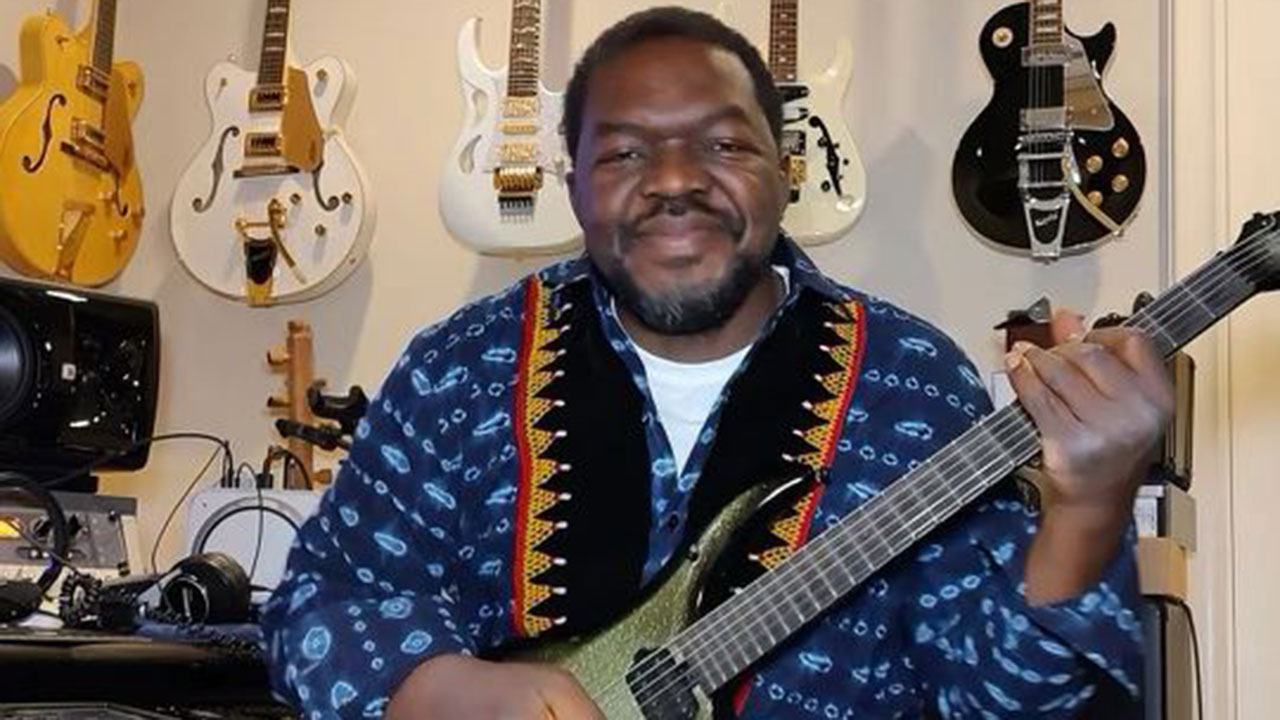
 Hundreds of African languages are sharply going extinct, researchers from global institutions including the United Nations, have alarmed. Sharper still is the apathy sweeping across younger generations of Africans. There’s a lot to be done in protecting these languages and cultures, but there’s just so very few helping to make a real impact.
US-based Cameroonian singer, Dr Okwen, is among the contemporary sect of musicians wielding their music as tools for education and cultural transfer. Native to over 100,000 speakers in the North-Western region of Cameroon, the Moghamo language is accelerating to a wider mix of younger audiences, thanks to Dr Okwen. His debut song dubbed, ‘Nwa Kwa’, has totaled over four million views on YouTube, less than a year since its release. And his sophomore and most-recent record, ‘Acha Nwe’ is strengthening his legacy as a noble custodian of the Moghamo language and culture.
[ad]
With decades of experience as a dentist working in the city of Texas, Dr Okwen’s multi-hyphenate life as a singer, producer and composer finds fulfillment in his social-impact advocacy via art. Drawing from a real experience with his son, Dr Okwen plants hope through his song ‘Nwa Kwa’, for autistic individuals. And his sophomore song, ‘Acha Nwe’ follows in this didacticism as he tributes God in the euphoric track.
Built with mildly stiff and groovy percussions, soulful guitars and energetic piano chords, Dr Okwen’s Moghamo-tongued music weaves a semblance to the Highlife music most commonly found in South-eastern Nigeria. Interestingly, Okwen’s come-up is laced with several lengthy experiences with growing up as a young adult in Enugu, a popular city in South-eastern Nigeria. The Moghamo maestro stands akimbo as the culture’s most vibrant bridge to the future, as he explores the versatile world of Moghamo music.
In a sit-down with Guardian Music, Dr Okwen flicks on a spotlight on this historic music style, peeling back layers of his own come-up, including balancing music with medicine; as well as his creative processes and mission to galvanize Moghamo music for future generations.
At what point did you find yourself exploring music?
I started when I was four-years-old. My father does play and sing. But when I actively started copywriting music and publishing, I was in Nigeria. As for history, my grandfather lived in Nigeria, while my father lived and worked in Enugu. My older brother actually stayed on Orlu road, in Owerri, and also he was a doctor but he passed away a while ago. But when I was in University of Benin, in 1992, a lot of the songs that are being published now were written in VDPA in Benin, opposite the Ugbowho campus.
So, when you were writing those songs, did you ever have an interest in recording and releasing them?
Yes. When I was in Nigeria, at the time, I was one of the few people that worked with MIDI, Musical Instrument Digital Interface. So, myself and Sam Odins – who was my recording engineer – went round Benin scouting for studios. We actually went to Victor Owaifo’s studio and then we finally recorded in a studio in new Benin. We did some recording but then as a medical student who hardly had the time to do a lot then, I had to finish school. But the scenario then was very different from now. I liked juju music and the traditional Igbo music because it felt to me like it was deeper. At the time, juju music was not very popular outside Yoruba land, but the musical landscape has changed now. So, yes I had the interest to record and publish, but I did not have the time.

Okay, it makes sense. Now that you can pursue a career in music, how does it feel for you?
The thing is I play music from across the board. So, I’m starting with African music with the hopes that artistes from other African countries, including Nigeria, South Africa, Kenya and so on, would sing in their own African languages and that will allow us to tolerate each other’s language and culture better. And, in that way, we can develop a mental unity that can allow us, even at national and international levels, to sit down and discuss our challenges without having to fight. Take for example, if Igbo music is very popular, Yoruba music is very popular, Zulu music is very popular, music sounds in Swahili is very popular, or Moghamo is popular, Kikuyu is very popular, then for the mere fact that we listen to these musics, we develop a soft spot for the people that listen to those languages. People are no longer as apprehensive of Yoruba music, for example, now, as they were before Yoruba music became very popular.
The same thing with Igbo music. You know, the initial Nigerians were mostly from the East. So, as a result of that, if I have a meeting with Flavor, and let’s say Flavor only spoke Igbo and I only spoke Yoruba or I only spoke Moghamo, I won’t start the meeting with any negative feelings, instead I will start the meeting with subconscious positive feelings from the music that he sings. And as a result, I will be more receptive to what he has to say. So, that mental unity is the goal. My generation might not enjoy that, but future generations definitely would.
Yeah, it’s more like preserving heritage for the next generation basically.
Yes. Preserving heritage for the next generation with the purpose of unifying our ability to tolerate each other in challenging situations.
[ad]
Tell us more about the Moghamo-speaking people. How do you pick up influences from the culture?
Moghamo music is a very rich part of Moghamo culture. Moghamo is one of those few kingdoms that has a music style for every occasion. Like you have Ambolo that is sung when a child is born by the children. Then you have Ilugbu that is sung by adults when a child is born. You also have music for when somebody dies, and you can feel the music. You don’t even need to be told that this music is for when somebody dies, because you can feel the doom in the melody.
You have music that is sung during hunting. Then you have war-time music and it really feels like war. So, you have music for every occasion. You have music for different types of parties and it’s something that even those who claim that they are ahead of us musically – and I say this because European culture thinks they are ahead – would be shocked when they see the structure in African music. When I was little, I had this Book of Music from Oxford, and in that book I remember reading from one of the authors claiming that they are 300 years ahead of us. Why? He bragged about their European skills and some of the skills that they brought from Africa, comparing them to the only little African music he is aware of. And so, the musical aspect of Moghamo culture can actually showcase the riches of the multiple African kingdoms in terms of musical contributions.
Your music has some sort of religious undertones. I’d like to understand what drives you to make the music you make.
Okay, yeah. Like “Nwa Kwa” , the first song I released recently talks about the charm of an autistic child over his communication challenge. So, a palm wine tapper’s wife is in labor, goes into labor while the husband has gone to harvest palm wine. Now, as it is in Africa, the neighbors hear the cry of the mother who is in labor. They all come in, leaving whatever they are doing, they were supposed to be going to the farm and so on. They come in to assist her, take her to where they have babies; where they had babies before the Europeans came was where the mother and the child would have help and the older ones who have experience with having babies would be able to handle the delivery.
They might not have called it hospital or maternity as we call it today, but that’s really what it was. Now, they have the baby, and the baby doesn’t cry at birth. Then later on, the child is diagnosed with autism. Not necessarily diagnosed with the way we have it today, but a child is diagnosed with autism when they can’t communicate. And then the child grows up with the support of the elders and the younger ones as well in the kingdom. The child starts speaking and everybody is excited, they are having a party. So, that’s what the song is about. Everybody is thanking the Lord for protecting the baby and giving communications. Yes, people thanked the Lord even before the Europeans came to Africa. So, the Europeans should not think that thanking the Lord, like the kingdoms in Africa borrowed from them, you know, especially in the light of the fact that they misuse that aspect to overrun and treat us in a very unfair manner. Then the second song, “Acha Nwe” describes the dawn of a new day, of a people, a kingdom that discovers that their forms of worship also lead them to God, contrary to what they had been told in the past.
And so the message is carried by a bush fowl which carries the message and comes in early in the morning at sunrise, and is telling the people that this is the message that we have for you people. You don’t have to abandon your forms of worship like you were told. Your forms of worship are not bad, your traditions are not bad, this is the message from the Lord. Now, the people are excited, so they are singing and dancing that the Kingdom of God is wonderful- Acha Nwe. And the video for Acha Nwe for example was shot at Varadero beach in Cuba. Now, a lot of the people in Cuba as a matter of fact, in Havana, the dominant religion is African religion. So, when they pray, they go to the beach, turn and face where they came from, which is Africa, and pray for us to join them to, you know, get their lives better and hopefully someday we would be back together. So, Cuba for example is a very strategic country in African culture.
Cubans have maintained, especially the Yoruba culture, from the 14th century, in a form that even many parts of Africa have not maintained the country the same way. So, it’s a message that maybe we should really consider refining our own forms of worship and understanding that we all worship one God and not abandon the forms of worship. That’s where faith comes in. Now, I have other songs for other situations, you know, hunting songs like ‘Nbubo’, a very fast song, but it’s a hunting song. I also have songs for the western society where I spent a lot of time in, so I have dance songs. There are fifty-two songs in general, and the music ranges across the board. But I wanted to make sure I started from home and really bring that message, that hope that we can sing more in our language.
Or at least if we sing in pidgin, let’s also sing in our languages. That way, Africans are exposed to their own languages and they feel the beauty of their own languages. That way, they would have more consideration for each other when they sit down to discuss the challenges that we all have. We all have huge challenges in Africa. I mean, imagine the fact that we have the majority of the countries, almost all the countries, except maybe Ethiopia and Togo. All countries were not drawn by us, they were not drawn for our interest. So, you have a situation where the colonizers went to Africa, carved out their geographical interest and then exploited that interest. And then when they were leaving, we still maintained those carvings. I mean, how can someone who hurts me, name me or name my child. So, those are some of the challenges.
[ad]
Hopefully when we have mental unity, all Africans would be able to see. I might not be alive of course, but I mean, nobody knows, they may be able to see and discuss some of these very severe challenges without fighting. Because these are not challenges that you can just come up to the table and start discussing. People would say “hey, wait a minute, are you trying to say that we have to do this, do that?” It’s a very challenging thing, but then, if we come with the common purpose, that mental unity, we would actually be driving towards the same goal. So, it’s like preparing a patient for surgery. If you don’t prepare properly for surgery, then you go into surgery, you’ll have trouble. You might not have enough oxygen, you might not have the tools to monitor during your surgery, and everything will fall apart.
Seeing your very busy schedule, how do you find time to create your music?
Well, my creative process is that a lot of times I do the lyrics which will normally come to my mind in melodic form. I will write it down. I have a studio at home, a pro tools MTRX studio at home. I have a studio in my office. The studio at home, the MTRX studio in the office is pro tools HD, and then I also have creative tools on my laptops, that’s how I do it.
Okay, so you are self-taught?
Yeah. I mean, I grew up in it. I have been using pro tools when they were still with Digi design. Before Avid acquired pro tools, I have been using pro tools. I started using MIDI when MIDI was a very clumsy tool at the time, in 1989.
Why are you even not a music producer?
Well, I produce all my music, and I just don’t have the time to produce for others.
Wow. So, does that include all parts of your composition?
All parts of my composition are done by me. Now, I do go to a very sound proof environment to lay down the final audio. Like parts of my songs I will write them, note by note in MIDI. So, I don’t like where I take a drum machine and I route it, no I don’t do that. Or play on a keyboard and record, no. I write the note because I want it to be 100 percent unique, because it’s not primarily for money. So, by doing that, you listen to my music, and you can tell that it’s different. Sometimes, that difference might be a problem because people say okay, “this is not my format of music. It’s too different from what my listeners listen to, so we can’t run it on my channel, radio and all that.” So, I write it, and then when I write it in MIDI, I sign the soft instruments and then the live instruments like the guitar, I add them, I play them into pro tools through an interface.
And you are just one person?
Well, yes. I am up at 5:00am. You see, anybody that creates something that adds to mankind, doesn’t have as much sleep as they would like or as other people who enjoyed the things that they create.
[ad]
What do you want this to turn to, like in the next five years, what’s the vision for the music?
Well, the next five years is too soon for the mission to be close to accomplished. So, I want that at least, ten years from now, probably more than ten years, it would be a movement where Africans would always prefer to sing in their own language, to over singing in the European languages. Because the European languages like English, including pidgin, are foreign and what the European languages have done is that they have suppressed and almost obliterated our languages. I mean, if you listen to someone speaking Moghamo, Lingala, Swahili, especially like Lingala, the language is way sweeter than English, French or any of the European languages. In terms of someone who doesn’t understand either language and just sits and listens, they will tell you, like for instance, many animals might not speak to us, but you know when they are enjoying something. I have my biography translated in multiple African languages. I play my biography in Lingala. And then I play my biography in French or in English. When you are playing in Lingala, the dog will sit still. When you are playing in English, the dog will walk away. What does that tell you? Maybe it doesn’t tell you something, but it does tell me that the dog is interested when they sit still and they are not interested when they walk away from the sound. So, we should still sing in the foreign languages for economic reasons, and then once we have the economic ability to express ourselves in our own language, even if we didn’t sing it in our own language before, we should sing in our language, or promote someone who is singing in our own language.
And in the future, the foreigners will learn our language. Imagine a situation where China for example decided that okay, “Let’s make Igbo an option, like an elective at the universities in China.” They are going to need all our elders who are considered illiterates to be professors to teach this language. So, the employment of people at a high level of such competence would be very high. So, every language that we lose, we lose the beautiful culture behind it, the music behind it, the employment and the stories that we can convert to books and all that stuff. So, hopefully, that’s the movement, I hope at least, ten years and above from now we can have. But five years from now, I would also sing songs in pidgin and English, but continue singing songs in Moghamo sounds, and showing the world the rich structure in Moghamo music.
[ad]

