 Follow Us on Google News
 Follow Us on Google Discover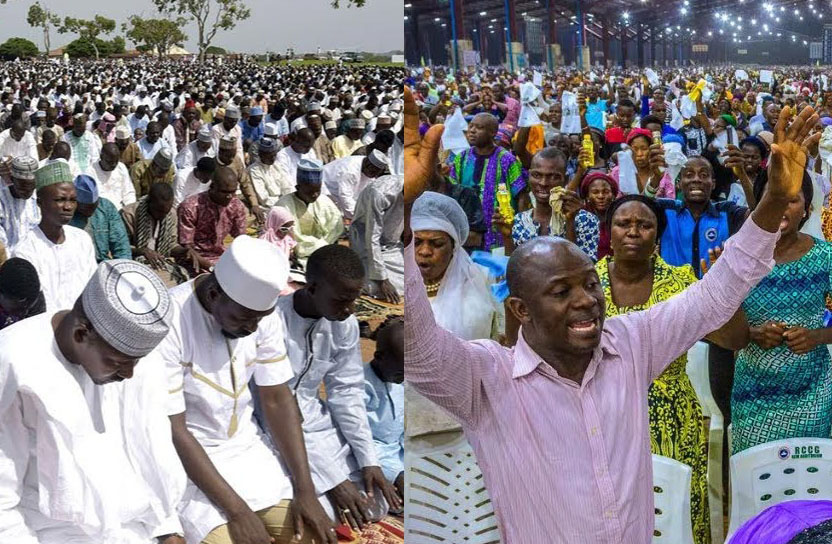

Nigeria is a land of diversity of faith-traditions. Our faith-traditions differ because we have divergent subscription and allegiance to what we believe to be media of divine revelation.
[ad]
The Christian subscribes to the Bible, the Muslim to the Quran, the African ancestral worshipper to the oracle of his faith tradition. But we are all human, we are all citizens, and that comes before our divergent religious affiliation.
Considering our diversity, we need to come to a mutual or at least reconcilable understanding of what good governance is before we can inquire as to how there can be inter-faith collaboration in matters of good governance.
What is good governance? What is the purpose of good governance? What are indices of good governance? I propose that we understand good governance as policies, pronouncements and conduct of institutions and functionaries of government that enable the citizen to actualize his potential because actualization of the potential in citizens is a necessary condition for development in the polity.
The first responsibility of governance is protection of the land and its peoples as they go about in pursuit of their self-actualization and fulfillment. For nothing works where there is no security.
Good governance protects the land and the citizen so that the citizen can work for his or her own good by working for the common good, and work for the common good by working for his or her own good. Good governance protects the citizen so that the citizen can develop the land, and good governance obtains where there is provision and security of an enabling environment for the citizen to work for his good and for the common good.
The first thing to be done in this regard is to take a critical look at our constitution to ascertain if indeed the current constitution can be described as a good instrument for good governance.

In this regard, it is my submission and contention that current constitutional arrangement in Nigeria militates against good governance because it does not work for the people, it only works for those in government. Here I highlight three defects in our constitution.
First, we have a constitution that makes government to be more powerful than the citizen; secondly, the same constitution is incapable of enforcing respect for separation of powers since every arm of government is, in practical terms, an extension of an over-bearing executive, and the executive at the center lords it over state and local governments; and three, we have a constitution that is incapable of protecting Nigerians from one another.
In a nutshell, we have a constitution that does not adequately address three fundamental questions that a constitution worth the name must address: first, what ought to be the relationship between the government and the citizen? Secondly, what ought to be the relationship among the three arms of government—the executive, the legislature and the judiciary—and, by way of a corollary, what ought to be the relationship among the three tiers of government—federal, state and local? Thirdly, what ought to be the relationship between a citizen and a fellow citizen?
Prolonged absence of adequate and clearly articulated responses to these fundamental political questions has left Nigerians with a constitution that is incapable of bringing about good governance because the same constitution has established institutions of governance incapable of ensuring that constitutional rights and obligations are protected.
[ad]
There is no good governance where government disables the citizen through its policies, through arrogant pronouncements and misconduct of government officials. There is no good governance where government and its functionaries are at the vanguard of violation of fundamental human rights. There is no good governance when government is itself a formidable impediment to development.
But there is good governance where there are rights enshrined in the constitution, and good governance ensures that these rights are protected. For it is by protecting those rights that the citizen is able to actualize his or her potential, and a developed polity is an aggregate of citizens who, precisely because their rights are protected by good governance, are able to excel and bring the best out of themselves. A developed polity is a cohabitation of citizens of actualized potential. It is not for nothing that societies where there is a tradition of respect for fundamental human rights are societies where quality of life is highest. Free persons are free minds, and free minds bring about innovations that improve quality of life within the polity.
One does not need to belong to any faith-based community before recognizing the fact of our common humanity and the rights and obligations of our common humanity. Long before Christianity and Islam, reason forbade theft. One does not need to have read from the Bible or from the Quran before knowing that theft of public funds is antisocial behavior. Reason enables us to understand this irrespective of what we profess by way of religion or creed. Irrespective of our religious affiliation, reason enables us to see that there are rights that pertain to us that must not be violated, and there are duties to be assumed precisely because we are human.
Inter-faith collaboration for good governance obtains where Nigerians of diverse faith-based communities mutually agree not to allow their religions to be used to violate fundamental human rights; where faith-based communities agree that, in government offices, persons are neither hired nor fired because of their religious affiliation; and where faith-based communities do not provide hiding places for their members who have acted and or still act in ways that are inimical to the common good.
Inter-faith collaboration for good governance begins when different faith communities work in synergy for the protection of our common humanity, for protection of fundamental human rights. That is where the shoe is pinching us in Nigeria at this point in time. In concrete terms, Nigerians are held down from authentic development by an abysmal and repeated disregard for fundamental human rights on the part of government or on the part of citizens themselves.
Considering the confident, resilient and restless Nigerian spirit, considering the can-do Nigerian spirit, give freedom to the Nigerian, and Nigeria will become a superpower. Religion must be used to protect and not used to violate our common humanity and common citizenship. Where this is what obtains, it can be said that there is inter-faith collaboration for good governance.
• Fr Akinwale, OP is Professor and Deputy Vice Chancellor at Augustine University, Ilara-Epe, Lagos State
[ad]

