 Follow Us on Google News


 Follow Us on Google Discover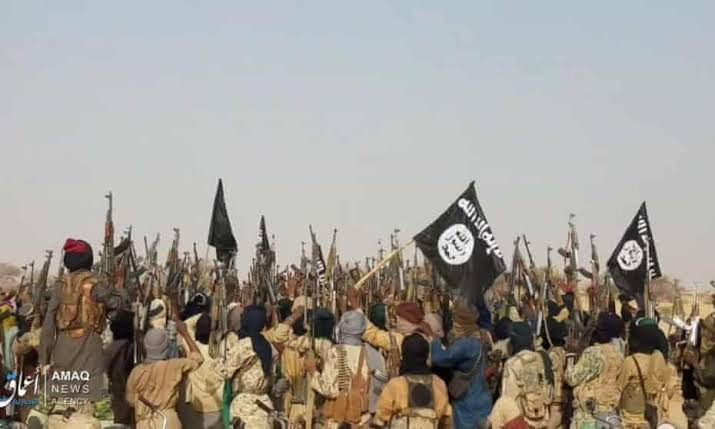

Continued from yesterday
International cooperation is at its most efficient as countries are, for any of myriad reasons, either victims of or threatened by it. In September 2021, in pursuance of its duty to international collaboration against terrorism, the government of the United Arab Emirates (UAE) revealed to the public a total of 38 persons including six Nigerians, and 15 entities designated as supporters of terrorism. But Nigeria is averse, apparently, to follow in a similar direction.
[ad]
A former senior officer in the Department of State Security, Dennis Amachree remarked in effect that whereas other nations are willing to assist Nigeria in its fight against terrorism, the government of Nigeria does not appear eager or willing to accept such offers or to even act decisively against terrorism.
A former senior naval officer, Kunle Olawunmi, once said directly that the Nigerian government under Muhammadu Buhari was unwilling to move decisively against terrorists even though it knows the sponsors. This strange, sad, and unjustifiable behaviour of a government may continue under the Tinubu administration going by the statement of his chief law officer. It is strange that any government, as construed by the constitution, will be so uncaring about the fate and fortune of the people it exists to serve. Section 14 (2) (b) of the constitution of the Federal Republic of Nigeria states that the primary purpose of government is to guarantee the security and the welfare of the people. From many indications, this appears not to be so.
Bad enough it is that the government is failing so miserably in this ‘primary’ constitutional obligation. It is unconscionable to dare to tell the hapless Nigerians the government they elected will not disclose to them the sponsors of their misery, on a not-at-all-tenable excuse such as offered by Fagbemi. This is not acceptable.
Under the erstwhile president Buhari, an estimated 53,148 persons were killed by terrorists, said the Nigerian Security Tracker. The carnage has continued under the new government, despite its well-documented campaign promise to ‘mobilise the totality of our national security, military and law enforcement assets to protect all Nigerians from danger and from fear of danger’.
[ad]
Most recently, in May, over 100 persons were killed in 48 hours of barbarity in the Mangu/Bokkos federal constituency of Plateau State, mid-August, terrorist dared to kill 36 soldiers in the Zungeru area of Niger State; early October 10 people were killed by terrorists who attacked a convoy of passenger vehicles in Zamfara State.
Terrorists are similarly on the rampage in Katsina and Kaduna states where they reportedly killed eight persons. Many local councils in some northern states are controlled by terrorists who impose and collect levies on traders on market days. Senior Councillor of the Birnin Gwari Emirate, Zubair Abdurrauf, said in some parts of the Birnin Gwari LGA, ‘the Ansaru [terrorist] group administer this territory …give directives to the citizens [on] who they are and they decide what to be done [including] a decree that nobody should go to any school or have any form of education’. The governor of Katsina State, Umaru Dikko has been reported to say that terrorists have taken over some schools in 21 of the 24 LGAs in the state.
But terrorism is not confined to the North. So-called ‘unknown gunmen, for different reasons including separatist agitation, kill, maim, and kidnap at will in the eastern region of Nigeria. The immediate human and material cost inflicted on society by terrorism is unquantifiable, not to talk of the emotional and psychological dimensions.

The atrocities of the Boko Haram terrorist group have cost an estimated 35,000 lives, inflicted ‘grave violations’ on more than 300 children and destroyed schools and medical facilities. Indeed, the activities of this group were considered sufficiently serious to attract the attention of the Chief Prosecutor of the International Criminal Court who thinks they may be liable for crimes against humanity.
Terrorism has also resulted in humanitarian emergency situations whereby more than eight million Nigerians are in need of emergency assistance of food, water, and other basic necessities. Farmers cannot go to their farms, fishermen cannot fish, traders cannot freely buy and sell, and many others cannot go about their respective businesses to earn a living and contribute their little parts to the national economy. Millions are now in internally displaced people’s camps.
And yet, sponsors of this and similar murderous terror groups are being shielded from public knowledge (and condign opprobrium) by the Nigerian government for reasons that defy common sense. This is a terrible thing to do by any government worthy to be so called. We call on the Tinubu administration to depart from the wrong path of old and instead live up to its written commitment in the Action Plan for a Better Nigeria.
To this end, this government must first deal with every aspect of terrorism as laid down in the extant act, and second in line with global laws and conventions. A country like Nigeria so much in need of help in so many areas cannot afford to treat terrorism with kid gloves, nay, to do things differently from the way of civilised values and global best practice, including exposing terrorism sponsors and collaborators in her midst.
[ad]

