 Follow Us on Google News


 Follow Us on Google Discover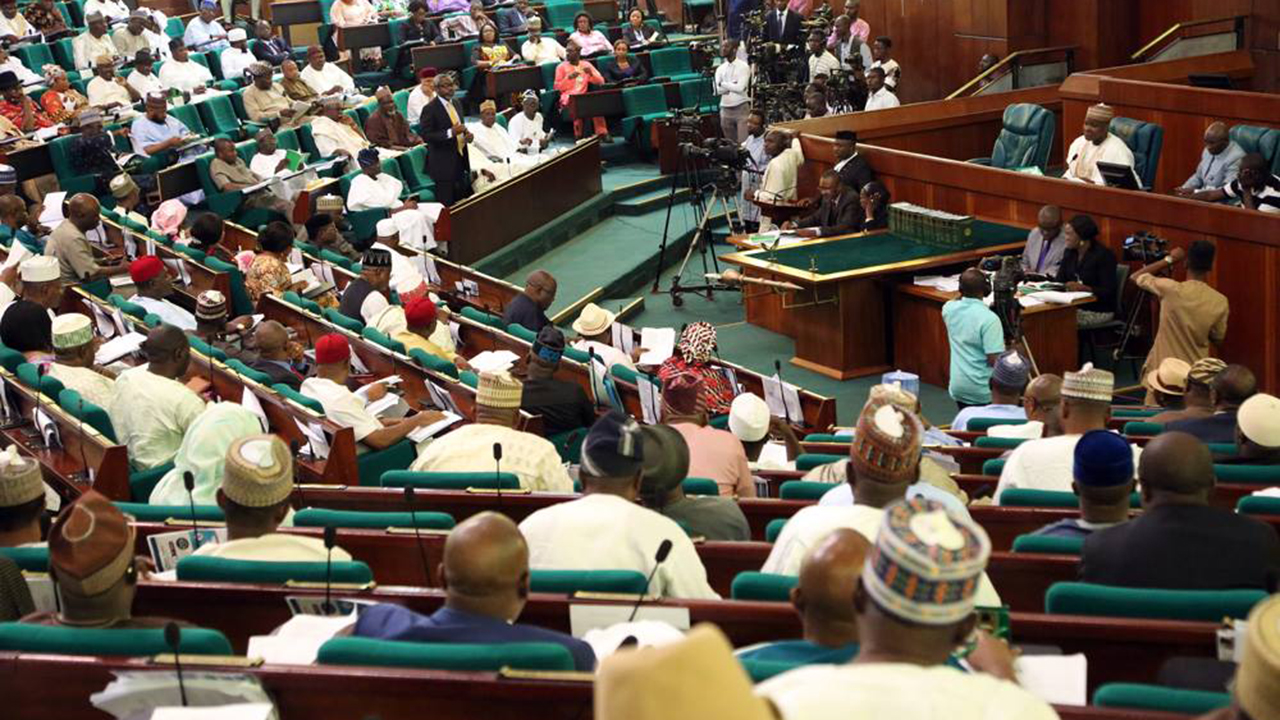
 A bill seeking to alter the 1999 Constitution to provide for state police, yesterday, passed second reading in the House of Representatives.
Sponsored by the Deputy Speaker, Benjamin Kalu and 14 others, the proposed piece of legislation was titled: “A Bill for an Act to Alter the Constitution of the Federal Republic of Nigeria, 1999 to Provide for Establishment of State Police and Related Matters (HB. 617).”
Recall that President Bola Tinubu and state governors, last week, hinted on the creation of state police as solution to the nation’s lingering security problem.
[ad]
Though in the public domain since the Seventh Assembly albeit failures, the fresh bill, which comprises 18 clauses, seeks to alter Sections 34, 35, 39, 42, 84, 89 and 129 of the 1999 Constitution.
It also wants to amend Sections 153, 197, 214, 215 and 216 of the law book.
In the draft obtained by The Guardian, Section 214 is to be tinkered with to promote the existence of federal and state police.
The bill reads in part: “The National Assembly, shall by an Act, prescribe for the structure, organisation, administration and powers of the Federal Police and provide the framework and guidelines for the establishment of State Police.

“The Federal Police shall be responsible for the maintenance of public security, preservation of public order and security of persons and property throughout the Federation to the extent provided for under this Constitution or by an Act of the National Assembly; and the State Police will be responsible for the maintenance of public security, preservation of public order and security of persons and property within a State to the extent that the State has power to make laws under this Constitution.”
If passed by the lawmakers and assented to by the President, the piece of legislation proposed that the Federal Government may provide grant or aid to state police subject to approval of the National Assembly.
[ad]
Sections 216A and 216B were inserted to tackle concerns of funding for the much-awaited concept.
The bill also moves to transfer police from the exclusive to the concurrent legislative list, a development that effectively empowers states to have self-policing.
It would also introduce a comprehensive framework to ensure cohesion, as well as accountability and uniform standards between the federal and state police.
While the bill will see the establishment of State Police Service Commissions as distinct from the Federal Police Service Commission, the proposed legislation reorganised the National Police Council to include chairmen of the state police service commissions.
It also provided for separation of powers, noting: “The Federal Police shall not interfere with operations of any State Police in the internal security affairs of a State except if it is to contain a serious threat to public order which the State Police is unable to contain.”
The bill equally seeks to give the governor of a state the power to request the intervention of the “Federal Police to prevent or contain a breakdown of law and order in the State where a State Police is unable to function, owing to administrative, financial or other problems which render it inoperative at a given time.”
However, such intervention must be made after approval by two-thirds majority of the senate.
[ad]
RELATEDLY, President Bola Tinubu has been urged to urgently sponsor an executive bill for creation of state police in the face of prevailing insecurity in the polity.
A policy analyst, Jide Ojo, noted that the country “is in an emergency situation following the rising spate of killings and abductions, as well as other woes being witnessed across the regions.”
He cried: “We are actually in an emergency, hence the need to fast-track this move. Almost every state now has local vigilance groups, but there is a need to get a proper structure between the federal and state police to give it legal backing.”
Also funding and sustainability are key.”
Similarly, Director General of the collapsed Rivers State Neighbourhood Watch Agency (RNA), Dr Mike Chukwuma, described the central government’s move as apt, advising that when the concept takes effect, the states should avoid politicising or sentimentalising it.
The Assistant Commissioner of Police (ACP) regretted lack of proper funding for the local security outfit.
[ad]

