 Follow Us on Google News
 Follow Us on Google Discover
As the world ventures further into a tech-oriented future, the tech sector finds itself in a constant state of revolution and necessary evolution to accommodate the rapid changes in global dynamics and socioeconomic developments. Numerous strides are being made with consistent technological advancements (both hardware and software) in a variety of sectors, and data indicates an astronomical rise in the net good for accessibility and general usability across these various sectors. In a WebAim survey (2020), more than 40% of people with disabilities experience considerable difficulties in accessing digital content due to a lack of simplicity and user exclusivity sometimes inherent in most designs. Disability technology and the importance of usability and accessibility have become more obvious than ever.


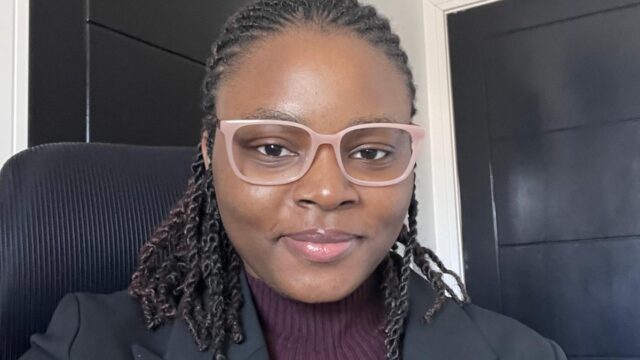
In light of these global trends, Precious Nnamani, a notable design expert in the sub-sector of Disability Technology, hailing from Abeokuta, Nigeria, has undertaken the task of strengthening the need for accessibility in design by adopting a keen interest in eradicating the divide between the abled and the disabled concerning the usage of technology. In 2021, it was estimated that 60-70% of older populations develop disabilities globally. As the current technology-savvy customers get older, they will want to keep using digital products. As a result, the customer/user base has a high likelihood to increase even further. Precious ample additions and knowledge to the sector illustrate her as a prominent figure who is skillfully maneuvering this terrain of the technology sector. There are, however, a variety of working elements that are crucial to forging a user experience that includes every demographic. Some of these working elements include screen readers, Alt text, typography, color contrast, and text sizing.
Within the scope of product design, screen readers serve a very important purpose in design and accessibility, especially for the visually impaired. “A well-provisioned screen reader can be an extension of a product’s user interface, therefore making the experience user-inclusive,” notes Precious. Precious Nnamani, fondly called ‘Bumblebee’ by peers and volunteer organizations, is working to create and retrofit screen reader designs on devices that have user-inclusive features such as high contrast modes. This is also evident in her open-sourced Framer template, Simon Jack, where she put accessibility as the core of her template, as a proof of concept. She is also making actionable plans to add audio descriptors, large texts and icons, and screen reader compatibility in subsequent projects.
Furthermore, the advent of Alt Texts, fully known as Alternative Texts, has helped individuals with visual impairments or cognitive limitations to fully engage with digital products. Alt text is a text-based representation of non-text content that is read by screen-reader software or other assistive software to allow people with visual or cognitive disabilities to access and understand the non-textual content. Alt texts for an image present the content and function of the image, not necessarily a detailed description. Over the years, Precious has placed a strong emphasis on Alt texts in her designs in the bid to be more user-inclusive, which is equally in line with modern accessibility compliance. “I never joke with it,” she quoted from one of her design masterclasses. The Alt text also assists search engines in narrowing down the content of images, thus improving SEO (search engine optimization).
Integrating Alt texts into digital products also greatly benefits those with different learning preferences, i.e., certain people prefer text-based content and would prefer supplementary information added to the visual content they come across. The Alt text also accommodates a large array of languages, preventing the exclusion of non-English speaking users.
On Typography, Precious sees this as the art and technique of arranging types (letters and words) to communicate a message or express a visual style. The relevance of typography is summarized into:
– improving readability and legibility,
– conveying meaning and emotions,
– creating aesthetic appeal,
– bolstering brand identity and visual hierarchy,
– and improving user experience and engagement.
Typography, as described by Precious, involves selecting and arranging font styles, sizes, line spacing, and other elements to create visually appealing and readable text. Simple font choices are essential in design accessibility. Fonts that are clear, simple, and sans-serif, such as Arial, Helvetica, or Open Sans, are appropriate for body text because these fonts are easy to read, navigate, and understand, especially for end-users with visual impairments and learning differences. Conversely, Precious Nnamani has discovered from various surveys and research that fonts with fancy details, like serif fonts, can be difficult to read and should be avoided to accommodate the disabled.
Additionally, Precious is exploring the application of color contrasts and text sizing in design. Color contrasts are a way a set of colors appear in relation to each other. Tools such as color wheels and contrast analyzers serve as peripheral software to help create the most accessible arrangements of colors. Text resizing, sometimes known as font size adjustment or simply text scaling, is a design principle that simply allows users to adjust the typography to suit their visual preferences or aesthetics. These features help with motor disabilities. Text resizing aids users with motor disabilities to adjust text size without any difficulty with font size adjustment controls. Color contrasts also help with various cognitive disabilities by ensuring visual hierarchy. Organized content with befitting color contrasts and text size helps users with cognitive disabilities to focus and access content better. Adding these principles to design enables assistive technologies like screen readers or magnifiers to function properly.
In the world of design accessibility and user inclusivity, Precious Nnamani has been known to be emphatic about these principles being the foundation of accessible design. According to WebAim (2020), 71% of people worldwide use assistive technology to access the Internet and engage with digital content, further highlighting the need for continued accessibility. Another source (Lighthouse, 2020) states that 85% of people with disabilities prefer using websites and applications in high contrast modes, while 76% of people with disabilities utilize text resizing features.
Precious emphasizes that the tech market holds significant potential if everyone in the industry commits to inclusivity and the advancement of disability technology. As a product designer leading design growth at Sociability, a disability tech startup in London, and a notable contributor to the evolving digital landscape, Precious is making impactful strides to ensure that marginalized groups, like people with disabilities, are considered in our tech-driven world. She hopes to see more startups and tech companies incorporate user-inclusive features in the near future, fostering a more accessible and equitable digital environment.

