 Follow Us on Google News
 Follow Us on Google Discover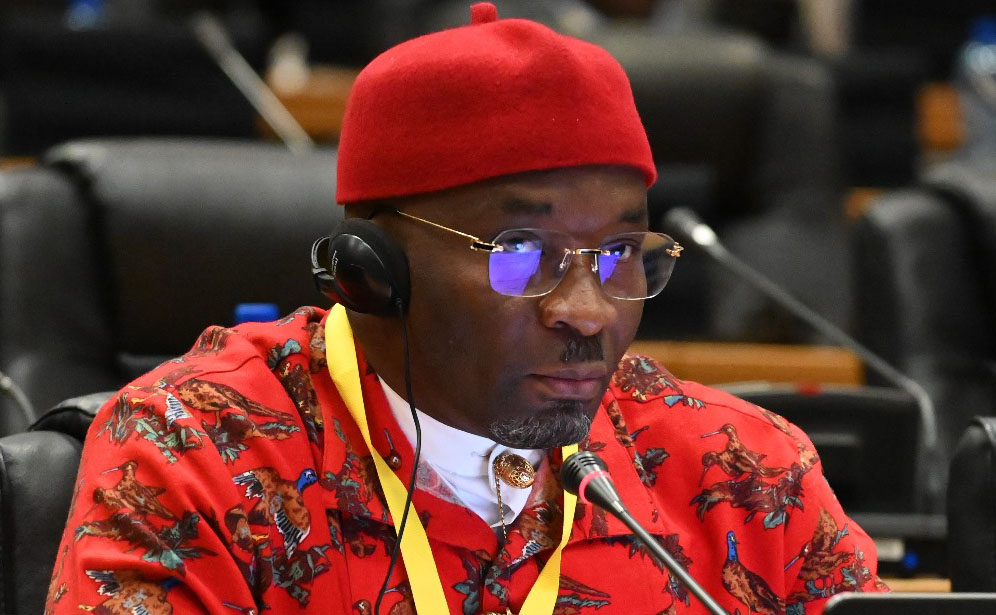
 Deputy Speaker of the House of Representatives, Rt. Hon. Benjamin Okezie Kalu, says about $200 million is needed to mitigate the humanitarian impact of the flood disasters in Borno, Yobe, and Adamawa States.
[ad]
Addressing a special session at the 12th Annual Conference of Speakers of National and Regional Parliaments at the Pan-African Parliament (PAP) of the African Union (AU) in Midrand, South Africa, Kalu noted that over one million people were displaced in one of the states by the natural disaster, with tens of thousands of families still lacking shelter, food, water, and access to healthcare.
He highlighted that flooding is one of the adverse effects of climate change in Africa that must be addressed.
Kalu, leading the Nigerian delegation to the conference, informed African leaders that the tragedy has severely impacted the economy and infrastructure of the affected states and Nigeria as a whole.
He urged the AU and international organisations to assist Nigeria in resolving the humanitarian crisis, and at his request, the parliament observed a minute of silence in honour of the flood victims.
He said: “Across our continent, the losses from climate change are unquantifiable, but the loss of lives is the hardest to bear. Whether in Nigeria, Mali, or elsewhere, our brothers and sisters are grieving for those lost to the consequences of climate change.
[ad]
“Currently, Nigeria is going through one of the worst periods in our history. For those lost due to climate change, I request we observe a one-minute silence.
“Nigeria recently experienced climate change-induced flooding that affected Borno, Yobe, and Adamawa states. This crisis has severely impacted our infrastructure and economy.
“From August to September, torrential rainfalls and the collapse of major dams caused severe flooding, leading to widespread destruction in already vulnerable communities.
“This particular flood displaced over one million people in one state and left tens of thousands of families without shelter, food, water, and healthcare access.
“One consequence of climate change is job losses, along with agricultural damage. Local businesses have been crippled, infrastructure destroyed, and key roads and bridges broken down. The impact on education is also significant, as many schools are being used as IDP centres to house displaced people.
[ad]
“The estimated cost of the humanitarian response to this flood is about $200 million.
“How is the AU working to ensure a coordinated response to climate change-induced crises like the recent flooding in Nigeria? Are there specific intervention frameworks in place for mobilising resources for member states facing climate-related disasters like Nigeria?
“I am calling for help, seeking visibility for the disaster area in Nigeria. We need the AU and international organisations to come on board and assist.”
[ad]
In a related development, Kalu, responding to a presentation on the challenges hindering the achievement of the Africa Free Trade Agreement (AfCFTA) goals, called for the removal of various obstacles.
“There are challenges hindering the achievement of the Africa Free Trade Agreement’s goals. One major challenge is the overlapping regional economic council memberships. If we don’t remove these bottlenecks, they will impede success.
“Another challenge is the trade adjustment cost, which is the transition to a single African market that requires significant adjustments in national economies. It’s a bottleneck we need to clear.
“Additionally, capacity for domestication is an issue, as members may struggle to promptly incorporate these protocols into national laws and policies,” he said.
[ad]

